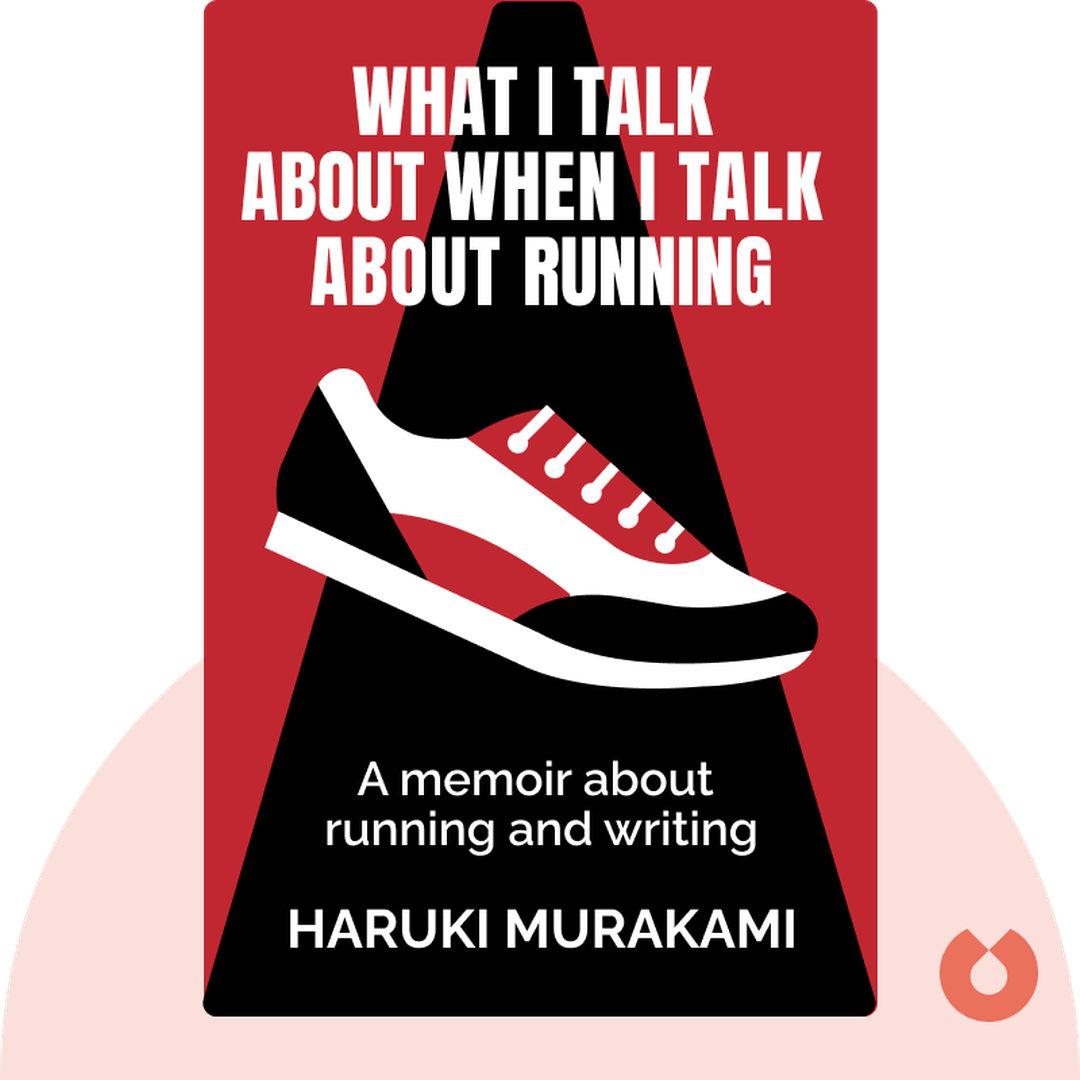
What I Talk About When I Talk About Running
Start ListeningDownload Try free on iPhoneScan to start in 5 seconds
Categories:
If You're Curious About These Questions...
You should listen to this audiobook
- Have you ever wondered why one of the world’s most famous novelists believes that the secret to creative mastery isn’t found at a desk, but on a long-distance running trail?
- What’s the secret to reinventing your life in your thirties and building the mental stamina required to sustain a high-level career for decades?
- Are you curious about how the 'void' experienced during a grueling marathon can actually become a powerful source of inspiration for your most important work?
Listen to What I Talk About When I Talk About Running — Cinematic Audio Edition
Loading player...
Key Takeaways from What I Talk About When I Talk About Running
- Discover how entering an almost meditative state called 'the void' during daily exercise can clear your mind, provide emotional peace, and smooth over life's rough edges.
- Learn why measuring success against your own personal expectations, rather than competing with others, is the secret to sustaining long-term motivation in both athletic and creative pursuits.
- Understand the crucial link between physical fitness and mental sharpness, and see why abandoning unhealthy habits for a disciplined routine is essential for sustaining creative endurance.
- Find out why willpower alone isn't enough to achieve demanding goals, and how gradually pushing your physical limits trains your body to reliably obey your mind's commands.
- Realize that it is never too late to reinvent yourself by exploring how Murakami successfully transformed from an exhausted, chain-smoking jazz bar owner into a prolific, marathon-running author in his thirties.
Learning Tools
Reinforce what you learned from What I Talk About When I Talk About Running
Mind Map
What I Talk About When I Talk About Running
Writing and Running Parallels+
Mental Benefits of Running+
Lifestyle Transformation+
The Foundation of Creativity+
Physical Discipline and Limits+
Aging and Potential+
Quiz — Test Your Understanding
Question 1 of 8
What is Haruki Murakami's primary motivation for running nearly every day?
Question 2 of 8
What lifestyle change prompted Murakami to take up running in his early thirties?
Question 3 of 8
According to Murakami, what two learned qualities are essential for both long-distance running and writing a novel?
Question 4 of 8
How does Murakami view the stereotype that artists must live wild, unhealthy, and dramatic lives to create great art?
Question 5 of 8
What was the long-term psychological effect of Murakami completing a 62-mile ultramarathon in Hokkaido?
Question 6 of 8
How does Murakami react to his slowing marathon times as he ages, such as his mediocre finishes in New York and Boston?
Question 7 of 8
Which specific event in a triathlon caused Murakami the most difficulty, ultimately teaching him about overcoming personal faults and discovering hidden potential?
Question 8 of 8
What was unique about Murakami's first-ever marathon?
What I Talk About When I Talk About Running — Full Chapter Overview
- 1Recommendation
- 2Murakami runs mainly to clear and calm his mind.
- 3Running is a vital pillar of Murakami’s writing life.
- 4Runners must train their bodies to follow commands.
- 5Writing novels and marathon running both call for steady persistence.
- 6Maintaining good health is essential for exploring deeper wells of emotion.
- 7An ultramarathon is a surreal, profoundly life-changing running experience.
- 8Murakami will continue running as long as he feels like it.
- 9Life is a long journey of uncovering your potential.
What I Talk About When I Talk About Running Summary & Overview
What I Talk About When I Talk About Running (2009) is a memoir about the intersection of two solitary passions: running and writing. In this personal work, author Haruki Murakami gives an intimate look into how these two practices inform his inner world.
Who Should Listen to What I Talk About When I Talk About Running?
- Fans of Murakami’s surreal prose style
- Writers who run, or runners who write
- Late bloomers looking for inspiration
Books Similar to What I Talk About When I Talk About Running
Readers who enjoyed this also liked these titles.