If You're Curious About These Questions...
You should listen to this audiobook
- Did you know that behind the staggering statistic of 68.5 million displaced people are individual stories of ambition and hope that often go unheard?
- Have you ever wondered what it’s really like to leave everything behind and rebuild your identity from scratch in a foreign land?
- Are you curious about the incredible resilience of the young women who are turning the global refugee crisis into a powerful movement for change?
Listen to We Are Displaced — Free Audiobook
Loading player...
Key Takeaways from We Are Displaced
- Discover how the shared stories of displaced women and girls reveal a resilient spirit, highlighting a complex journey from despair to defiance and grief to gratitude.
- Understand how natural disasters can leave communities vulnerable to the influence of extremists, just as a 2005 earthquake in Pakistan paved the way for the Taliban's rise.
- Learn how Malala persisted in her fierce advocacy for girls' education despite surviving terrorism and internal displacement, ultimately using her voice to inspire a global movement.
- Find out how global solidarity and supportive messages from everyday people can empower survivors of extreme violence to continue their vital advocacy work.
- Explore how the arbitrary forces of good and bad luck shape the divergent fates of refugees, illustrated by the harrowing and contrasting journeys of two displaced Yemeni sisters.
Learning Tools
Reinforce what you learned from We Are Displaced
Mind Map
We Are Displaced
Malala's Journey+
Stories of Displaced Girls+
The Refugee Experience+
Actionable Advice+
Quiz — Test Your Understanding
Question 1 of 9
What event in 2005 made the people of Pakistan more susceptible to the strict teachings of religious extremists?
Question 2 of 9
After being relocated to Birmingham, England, what primarily convinced Malala to continue her advocacy for girls' education despite the dangers?
Question 3 of 9
How does the story of Yemeni sisters Zaynab and Sabreen illustrate the role of luck in the lives of displaced people?
Question 4 of 9
In the Zaatari refugee camp, why did Muzoon actively campaign against early marriage for girls?
Question 5 of 9
How did Najla, a Yazidi girl from Iraq, initially convince her father to allow her to attend school?
Question 6 of 9
What method did María, who was displaced by civil conflict in Colombia, use to process her trauma and express her experiences?
Question 7 of 9
What tragic event fueled Marie Claire’s determination to graduate from high school in the United States?
Question 8 of 9
What key insight does Ajida’s story about living in a Bangladeshi refugee camp reveal regarding humanitarian aid?
Question 9 of 9
According to the book's final summary, what is the recommended first step for individuals who want to help displaced people?
We Are Displaced — Full Chapter Overview
- 1Recommendation
- 2Malala’s joyful childhood home felt like paradise, until religious extremism changed everything.
- 3Malala’s life in Swat came to an end, but her work continued.
- 4Sisters Zaynab and Sabreen’s lives were shaped by luck, both good and bad.
- 5Muzoon used her love of education to support other refugee girls.
- 6Najla pursued her dream of education, whatever the circumstances.
- 7Growing up displaced, María learned to carry home within herself.
- 8Marie Claire reached her dreams through her mother’s influence and sacrifice.
- 9Aid greatly improves living conditions for groups like the Rohingya, but it can’t replace what they’ve lost.
- 10Final summary
We Are Displaced Summary & Overview
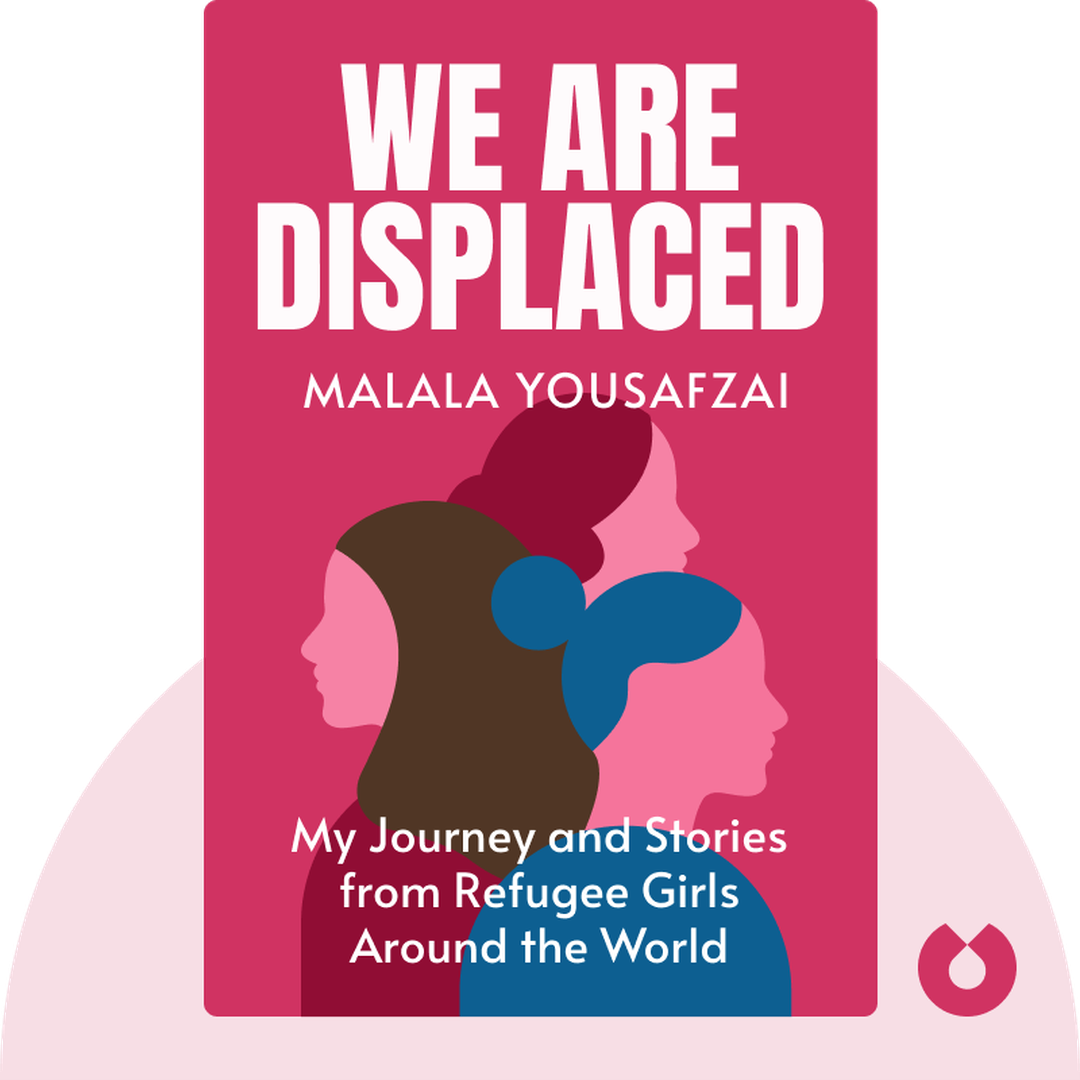
In We Are Displaced (2018), international activist Malala Yousafzai shares her story of becoming displaced from her homeland of Pakistan. She also shares the stories of some of the women and girls she has met while visiting refugee camps across the globe. With over 68.5 million people currently displaced from their homes worldwide, these stories are a vivid and important reminder of the individuality and humanity of each and every displaced person.
Who Should Listen to We Are Displaced?
- Anyone interested in the stories of refugees
- People inspired by the resilience of women and girls
- Those looking to dig deeper into the causes of displacement
Books Similar to We Are Displaced
Readers who enjoyed this also liked these titles.