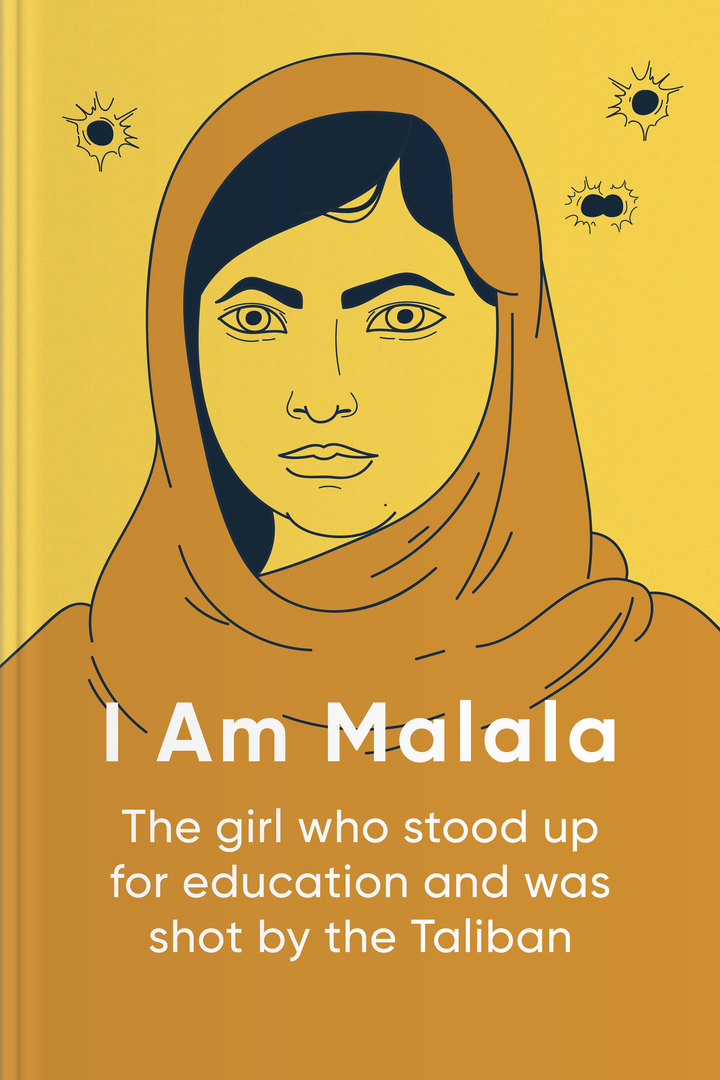
If You're Curious About These Questions...
You should listen to this audiobook
- Did you know that a young girl’s voice could become a global symbol of resistance against one of the world's most restrictive regimes?
- Have you ever wondered how a father’s unwavering belief in equality could empower a daughter to stand up when everyone else was forced into silence?
- What’s the secret to finding the courage to speak up for your rights even when your daily life and education are under constant threat?
Listen to I Am Malala — Cinematic Audio Edition
Key Takeaways from I Am Malala
- Discover how true courage doesn't always require loud rebellion, but can simply be the quiet, daily decision to keep learning and believing in a future others try to deny.
- Learn how Malala’s father defied deeply rooted cultural expectations by celebrating his daughter's birth and giving her a name synonymous with bravery and purpose.
- Understand why the first act of courage is often refusing to accept the limiting, small stories that society tries to impose on a child's potential.
- Find out how Malala's illiterate mother discovered the language for dreaming, proving that education does more than teach facts by opening doors inside the imagination.
- Explore why Ziauddin Yousafzai fought to build a school based on the radical belief that education is a fundamental human right for everyone, despite severe family and political resistance.
Learning Tools
Reinforce what you learned from I Am Malala
Mind Map
Quiz — Test Your Understanding
I Am Malala — Full Chapter Overview
- 1Recommendation
- 2World-changers can come from even the humblest beginnings.
- 3Malala’s father, an educator and activist, became a crucial role model in her life.
- 4An ordinary child, Malala became extraordinary by trying to ease the struggles around her.
- 5Radical ideas began spreading through Swat, threatening Malala’s education and way of life.
- 6Despite knowing the dangers, Malala felt driven to speak out publicly against the Taliban.
- 7Malala stayed focused and humble despite becoming an international figure.
- 8Malala’s life remained in danger even after the army pushed the Taliban out of Swat.
- 9Shot at point-blank range on her way home from school, Malala barely survived.
- 10The international community comes to Malala’s aid despite local political interference.
- 11Even facing bigger new challenges, Malala continues fighting for education rights.
- 12Final summary
I Am Malala Summary & Overview
This narration follows Malala Yousafzai’s early life in Pakistan’s Swat Valley, where cultural expectations often diminished girls and political turmoil reshaped everyday life. Against that backdrop, Malala’s parents—especially her father, an educator—held tightly to the belief that learning belongs to everyone.
As the Taliban’s influence spreads, schools close, fear grows, and ordinary routines become dangerous. Yet Malala continues to speak for girls’ education, discovering how powerful a voice can be even when it trembles. Her journey is both a personal story of family, faith, and resilience, and a wider reminder that education is a human right worth protecting.
Who Should Listen to I Am Malala?
- Listeners who want a gentle, clear overview of Malala’s story and why girls’ education became a central issue in Swat Valley.
- Educators, parents, and students looking for a supportive, human-centered narration about courage, learning, and standing up to fear.
- Anyone seeking inspiration to speak up against discrimination—without losing compassion for themselves or others.
Books Similar to I Am Malala
Readers who enjoyed this also liked these titles.