If You're Curious About These Questions...
You should listen to this audiobook
- Have you ever wondered why you suddenly want the exact same things as everyone else, from your career path to your lifestyle choices?
- Did you know that your deepest desires might not actually be yours at all, but rather a reflection of the people you admire most?
- What's the secret to breaking free from the cycle of comparison and finally choosing the goals that will lead to genuine fulfillment?
Listen to Wanting — Free Audiobook
Loading player...
Key Takeaways from Wanting
- Discover why your desires are rarely your own by exploring the theory of mimetic desire, which reveals how we subconsciously imitate what other people want.
- Understand how the subconscious drive to imitate others compels sameness and fuels intense, sometimes dangerous rivalries in our personal and professional lives.
- Learn how to take back control of your decision-making by identifying and naming the hidden models who influence you, especially the peers you least want to see succeed.
- Find out how businesses and PR experts manipulate mimetic desire to sell products by using trusted figures, like doctors, to subtly shape your consumer habits.
- Master the distinction between distant models in 'Celebristan' who inspire safely, and close peers in 'Freshmanistan' who trap you in toxic cycles of jealousy and competition.
Learning Tools
Reinforce what you learned from Wanting
Mind Map
Wanting
The Nature of Mimetic Desire+
The Two Worlds of Models+
Mimetic Crises & Conflict+
Escaping Mimetic Systems+
Transforming Desire in Leadership & Life+
Quiz — Test Your Understanding
Question 1 of 10
What is the core premise of René Girard's theory of mimetic desire?
Question 2 of 10
According to the author, what is a highly effective way to identify your mimetic models and diminish their power over you?
Question 3 of 10
Why do models in 'Celebristan' (like Julia Child or Jeff Bezos) NOT pose a psychological threat to us?
Question 4 of 10
What is a major danger of 'Freshmanistan,' as illustrated by the 1990s rivalry between East and West Coast rappers?
Question 5 of 10
How did Ferruccio Lamborghini successfully prevent his rivalry with Ferrari from spiraling out of control?
Question 6 of 10
According to Girard, what is the historical purpose of the 'scapegoating mechanism' (such as the Greek pharmakos)?
Question 7 of 10
Why did chef Sébastien Bras ask to have his restaurant removed from the Michelin guide?
Question 8 of 10
What distinguishes a 'transcendent leader' from an 'immanent leader'?
Question 9 of 10
Which of the following is an example of a 'thick desire'?
Question 10 of 10
How do major tech companies like Google, Facebook, Amazon, and Apple typically interact with our desires?
Wanting — Full Chapter Overview
- 1Recommendation
- 2Mimesis shapes everything we desire.
- 3Models are everywhere, and naming them reduces their power.
- 4Models influence us differently depending on whether they’re inside or outside our social world.
- 5Mimesis can become a positive cycle, as long as someone eventually ends it.
- 6Mimetic crises end only when a scapegoat is identified and punished.
- 7Mimetic systems tie us to artificial, unfulfilling goals.
- 8Business leaders need to consider how they shape people’s desires.
- 9Empathy interrupts mimetic crises and starts positive cycles of desire.
- 10We need to move away from engineering desire and toward transforming it.
- 11Final summary
Wanting Summary & Overview
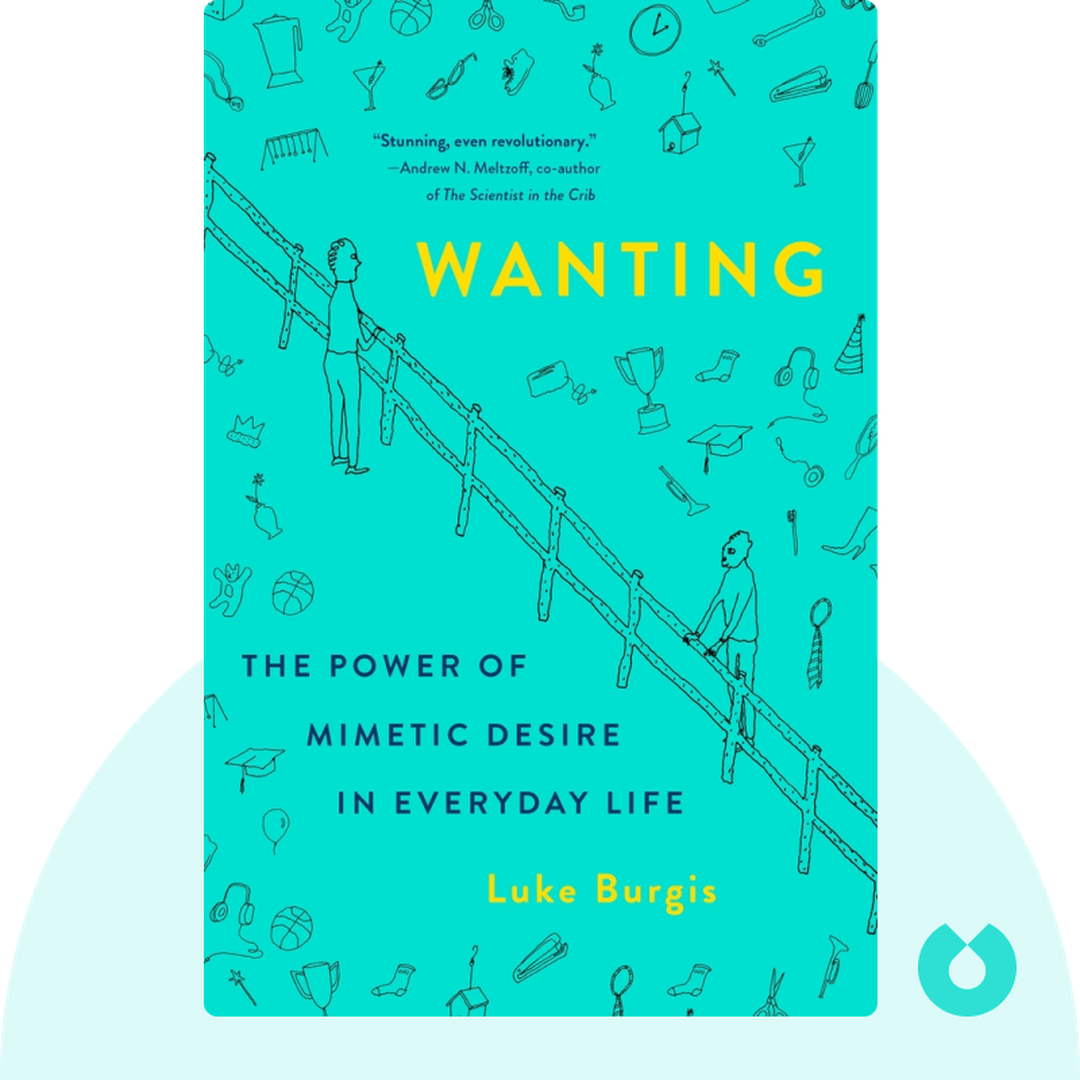
Wanting (2021) provides a riveting, philosophical answer to the question Why do we want the things we want? Drawing on theories originally developed by the celebrated polymath René Girard, it reveals an uncomfortable truth: that our desires are all ultimately a product of other people’s desires. The point isn’t to eliminate them, but rather to choose, carefully and consciously, which ones we should actually strive for.
Who Should Listen to Wanting?
- Lovers of philosophy, psychology, and literature
- Dedicated self-improvers
- Young entrepreneurs and business leaders
Books Similar to Wanting
Readers who enjoyed this also liked these titles.