If You're Curious About These Questions...
You should listen to this audiobook
- Have you ever wondered how a single composer’s work could simultaneously fuel the ideology of the Nazi party and inspire the world’s most radical social revolutionaries?
- Are you curious about the secret ways Richard Wagner’s grand operas reshaped not just music, but the very foundations of modern literature, art, and even film?
- Did you know that the most controversial figure in music history left behind a legacy so powerful it forced nearly every major thinker of the 20th century to take a side?
Listen to Wagnerism — Free Audiobook
Loading player...
Key Takeaways from Wagnerism
- Discover how Richard Wagner's revolutionary influence extended far beyond music to shape global literature, visual arts, cinema, and modern politics.
- Learn how modernist icons like T.S. Eliot, James Joyce, and Virginia Woolf adapted Wagner's musical 'leitmotif' technique to create groundbreaking literary masterpieces.
- Find out how Wagner's mythological heroes inspired the American cowboy archetype and ultimately shaped Clint Eastwood's iconic 'Man with No Name' in Spaghetti Westerns.
- Understand the complex and disturbing political legacy of Wagner's work, from sparking anti-Semitic riots and fueling German nationalism to becoming a cultural figurehead for the Nazi party.
- Explore the deeply subjective nature of Wagner's art to understand why his controversial music dramas attracted wildly diverse audiences, including anarchists, progressives, and Jewish, Black, and gay fans.
Learning Tools
Reinforce what you learned from Wagnerism
Mind Map
Wagnerism
Core Musical Legacy+
Literary & Artistic Influence+
Political Appropriation+
Unexpected & Diverse Audiences+
Cinematic Impact+
Post-WWII Legacy & Ambiguity+
Quiz — Test Your Understanding
Question 1 of 8
What is the overarching conclusion about Richard Wagner's influence as presented in the book?
Question 2 of 8
How did Wagner's influence surprisingly manifest in American pop culture, specifically the Spaghetti Western genre?
Question 3 of 8
Despite Wagner's well-documented anti-Semitism, which notable Jewish historical figure was significantly influenced by his opera Tannhäuser?
Question 4 of 8
How did the Bolsheviks in Russia view Richard Wagner's work?
Question 5 of 8
In his 1933 speech, what did the writer Thomas Mann argue regarding the Nazi appropriation of Wagner?
Question 6 of 8
What was the original intent behind Francis Ford Coppola's use of the 'Ride of the Valkyries' in the film Apocalypse Now?
Question 7 of 8
How did Wagner's grandson, Wieland, attempt to rehabilitate the Bayreuth Festival after World War II?
Question 8 of 8
How did modernist authors like Virginia Woolf, James Joyce, and Marcel Proust incorporate Wagner's influence into their writing?
Wagnerism — Full Chapter Overview
- 1Recommendation
- 2Richard Wagner’s visionary music dramas remain remarkably influential today.
- 3Wagner’s worldwide impact on literature was immense, diverse, and enduring.
- 4Wagner’s vast artistic impact in Austria and Germany intertwined deeply with nationalism.
- 5Despite Wagner’s prejudiced views, he had admirers among Jewish, Black, and gay communities.
- 6Amid war and revolution, both the right and the left appropriated Wagner alike.
- 7The Nazis’ use of Wagner relied on only a single interpretation of the composer’s ambiguous worldview.
- 8Wagner continues to inspire art and culture, while still resisting straightforward interpretation.
- 9Richard Wagner’s passionate, compelling music dramas truly mirror humanity, for better or worse.
Wagnerism Summary & Overview
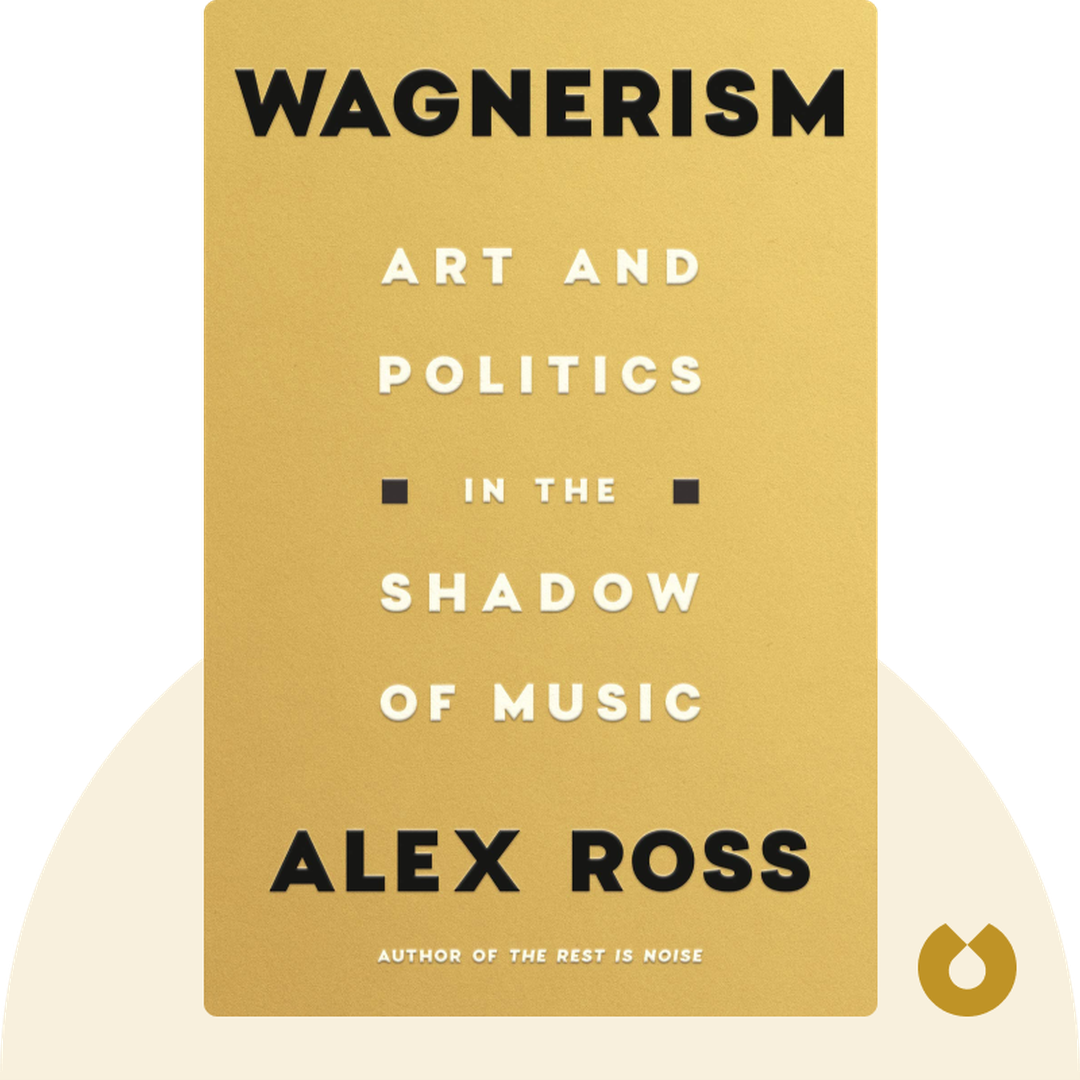
Wagnerism (2020) chronicles how the works of Richard Wagner have influenced thinkers in the years since his death. Exploring the multitude of ways in which people have interpreted his music, it looks beyond his artistic legacy to his political influence – most of all on the Nazi party.
Who Should Listen to Wagnerism?
- Classical music fans who want to broaden their knowledge
- Historians interested in the role of music and culture
- Politics enthusiasts who want to explore the history of ideas
Books Similar to Wagnerism
Readers who enjoyed this also liked these titles.