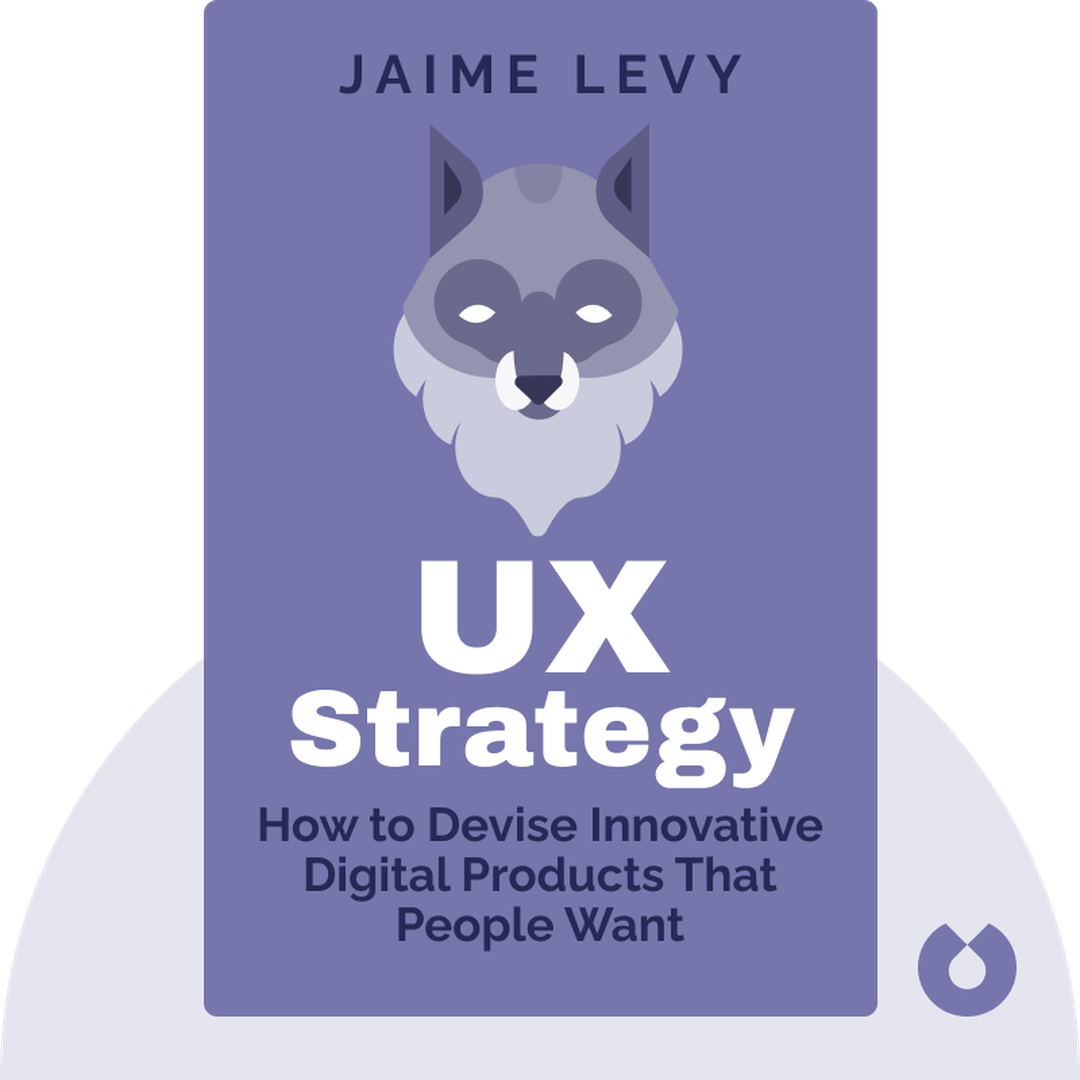
If You're Curious About These Questions...
You should listen to this audiobook
- What’s the secret to building a product that doesn’t just look beautiful, but actually captures massive market share?
- Have you ever wondered why some innovative start-ups fail despite having a great user interface, while others become global sensations?
- What if you could eliminate the guesswork and perfectly align your business strategy with user experience design before you even launch?
Listen to UX Strategy — Free Audiobook
Loading player...
Key Takeaways from UX Strategy
- Discover how to synchronize your UX design with your broader business strategy to ensure you are building a product users actually desire.
- Understand the four central elements of a successful UX strategy: business strategy, value innovation, validated user research, and state-of-the-art design.
- Learn to achieve value innovation by combining product differentiation with cost-leadership, allowing your business to dominate a competition-free blue ocean market.
- Find out how to mitigate business risks through validated user research by testing your ideas on real customers and iterating based on their feedback.
- Master the use of provisional personas to sketch out hypothetical customers, define your value proposition, and pinpoint exactly what motivates your target audience.
Learning Tools
Reinforce what you learned from UX Strategy
Mind Map
UX Strategy
Core Foundation+
Business Strategy & Value Innovation+
Validated User Research+
Competitive Analysis+
Key Experiences & Design+
Quiz — Test Your Understanding
Question 1 of 7
According to the text, what are the four central elements of a UX strategy?
Question 2 of 7
How does the book define 'value innovation'?
Question 3 of 7
Why is user testing considered a crucial part of modern business strategy?
Question 4 of 7
What is the primary purpose of creating a 'provisional persona'?
Question 5 of 7
When analyzing the competition, how does the text distinguish between direct and indirect competitors?
Question 6 of 7
How does the text suggest taking advantage of 'UX influencers' (companies that are neither direct nor indirect competitors)?
Question 7 of 7
What is the final step recommended for visualizing how a user interacts with your product's key experiences?
UX Strategy — Full Chapter Overview
- 1Recommendation
- 2Successful start-ups grow where strong business strategy meets UX design.
- 3A carefully crafted business strategy will move you far ahead of rivals.
- 4User research and powerful UX design complete your UX strategy.
- 5Testing concepts on both imagined and real users is vital.
- 6Study and understand rivals to sharpen your competitive edge.
- 7Pinpoint key experiences, leverage UX influences and storyboard your value innovation.
UX Strategy Summary & Overview
UX Strategy (2015) is your guide to integrating business strategy and user experience design. These blinks lay out a concrete path to develop a product and business strategy, as well as product experience that will captivate users, capture market share and catapult your start-up to success.
Who Should Listen to UX Strategy?
- Entrepreneurs and product managers
- UX, interaction and UI designers
- Anybody interested in closing the gap between business strategy and UX design
Books Similar to UX Strategy
Readers who enjoyed this also liked these titles.