If You're Curious About These Questions...
You should listen to this audiobook
- What if the secret to building a high-performing team wasn't giving more orders, but actually giving up control?
- Have you ever wondered how a captain turned the Navy's worst-performing submarine into its best by simply changing the way he spoke to his crew?
- Are you curious about how the 'leader-leader' model can transform even the most rigid organization into a powerhouse of productivity and initiative?
Listen to Turn the Ship Around — Cinematic Audio Edition
Loading player...
Key Takeaways from Turn the Ship Around
- Discover the transformative power of the 'leader-leader' approach, which distributes decision-making across all levels so team members can act with speed and ownership.
- Understand the three essential pillars of effective leadership—competence, control, and clarity—and how they work together to build a culture of trust and shared responsibility.
- Learn why the willingness to admit mistakes is a practical leadership strength that prioritizes continuous organizational progress over personal pride.
- Find out how empowering front-line workers to make critical decisions without waiting for top-down orders transformed the worst-performing submarine crew into the fleet's best.
- Recognize how fostering psychological safety and clear direction directly cures workplace disengagement, turning unmotivated employees into fulfilled and highly productive contributors.
Learning Tools
Reinforce what you learned from Turn the Ship Around
Mind Map
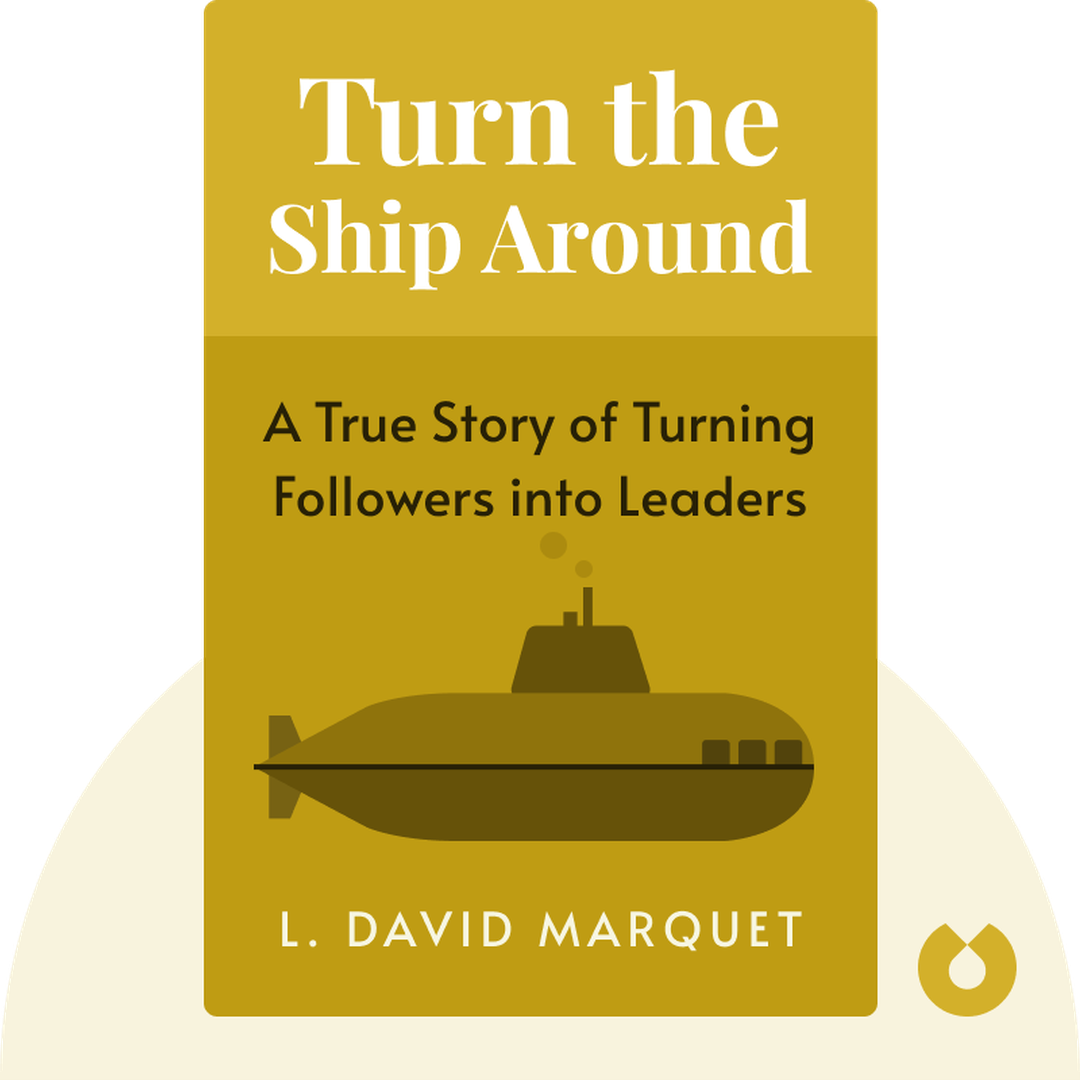
Turn the Ship Around
The Problem: Leader-Follower Model+
The Solution: Leader-Leader Model+
Pillar 1: Control (Empowerment)+
Pillar 2: Competence (Capability)+
Pillar 3: Clarity (Alignment)+
Actionable Advice+
Quiz — Test Your Understanding
Question 1 of 7
According to the text, why is the traditional 'leader-follower' approach ill-suited for most modern organizations?
Question 2 of 7
What is the primary difference in how decisions are made in a 'leader-leader' system compared to a 'leader-follower' system?
Question 3 of 7
What simple three-word phrase did the crew of the USS Santa Fe use to shift ownership of decisions to the employees?
Question 4 of 7
How did Captain Marquet solve the problem of errors caused by a lack of attention, such as a crewmember shutting off a circuit breaker too early?
Question 5 of 7
Why does the author recommend shifting from 'briefing' to 'certifying' when assigning tasks to a team?
Question 6 of 7
According to the book, what type of reward structure is most productive for building camaraderie and a strong work ethic?
Question 7 of 7
What actionable advice does the book offer regarding communication with your boss when working on a project?
Turn the Ship Around — Full Chapter Overview
- 1Recommendation
- 2The United States faces a leadership crisis, and this spells particularly bad news for business today.
- 3A leader-leader approach, with everyone pitching in, is the key to organizational success.
- 4To boost your employees’ productivity, empower them by granting them greater responsibility overall.
- 5When you grant employees additional responsibility, you must also ensure they can handle it adequately.
- 6Corporations must state their goals clearly, so a leader-leader strategy can truly succeed ultimately.
Turn the Ship Around Summary & Overview
Turn the Ship Around reveals the story of how one United States Navy captain managed to turn a dissatisfied submarine crew into a formidable and respected team. But how did he do it? By changing the way we think about leadership, this story will show you that inside, we all have the power to be leaders.
Who Should Listen to Turn the Ship Around?
- Anyone interested in leadership issues in the military
- Business leaders looking for ways to improve productivity
- Anyone wondering how to break rigid hierarchy in their organization
Books Similar to Turn the Ship Around
Readers who enjoyed this also liked these titles.