If You're Curious About These Questions...
You should listen to this audiobook
- Have you ever wondered why constantly seeking reassurance and approval from others actually leaves you feeling more hollow and exhausted?
- What if you could stop borrowing your beliefs and confidence from those around you and finally build a resilient sense of self from the inside out?
- Are you curious about how learning to let others be responsible for their own emotions can be the ultimate key to escaping the cycle of people-pleasing and burnout?
Listen to True to You — Free Audiobook
Loading player...
Key Takeaways from True to You
- Discover the psychological concept of 'differentiation of self' to successfully balance your unique individuality while maintaining deep emotional connections with others.
- Understand the dangers of 'overfunctioning' in relationships and see why stepping back is essential to give your partner the opportunity to step up.
- Learn how to shift from a relationship orientation to a self-focus orientation by asking how you can respond maturely to challenges instead of trying to control others.
- Break free from approval addiction by recognizing the evolutionary roots of social comparison and disconnecting your self-worth from superficial success metrics.
- Master the art of staying rooted in your core values during stressful situations so you can self-regulate and communicate honestly without conforming to external expectations.
Learning Tools
Reinforce what you learned from True to You
Mind Map
True to You
Differentiation of Self+
Relationship Dynamics+
Overcoming Approval Addiction+
Boundaries and Responsibilities+
Compassionate Self-Evaluation+
Quiz — Test Your Understanding
Question 1 of 6
What does 'differentiation of self' primarily involve according to Dr. Murray Bowen's theory?
Question 2 of 6
When addressing a partner's immaturity, what does a 'self-focus orientation' encourage you to do?
Question 3 of 6
What is the key difference between 'anxious attention' and 'thoughtful attention' when dealing with the need for approval?
Question 4 of 6
According to the book, what is a clear sign that your relationship boundaries have become blurred?
Question 5 of 6
Why does the author suggest eliminating the word 'enough' from your thinking during self-evaluation?
Question 6 of 6
What does 'mature dependence' look like in a relationship?
True to You — Full Chapter Overview
- 1Recommendation
- 2Discover your true self via differentiation
- 3Don't reshape yourself to alter others
- 4Liberate yourself from approval addiction
- 5Prioritize your own responsibilities to yourself
- 6Cultivate compassionate self-assessment
True to You Summary & Overview
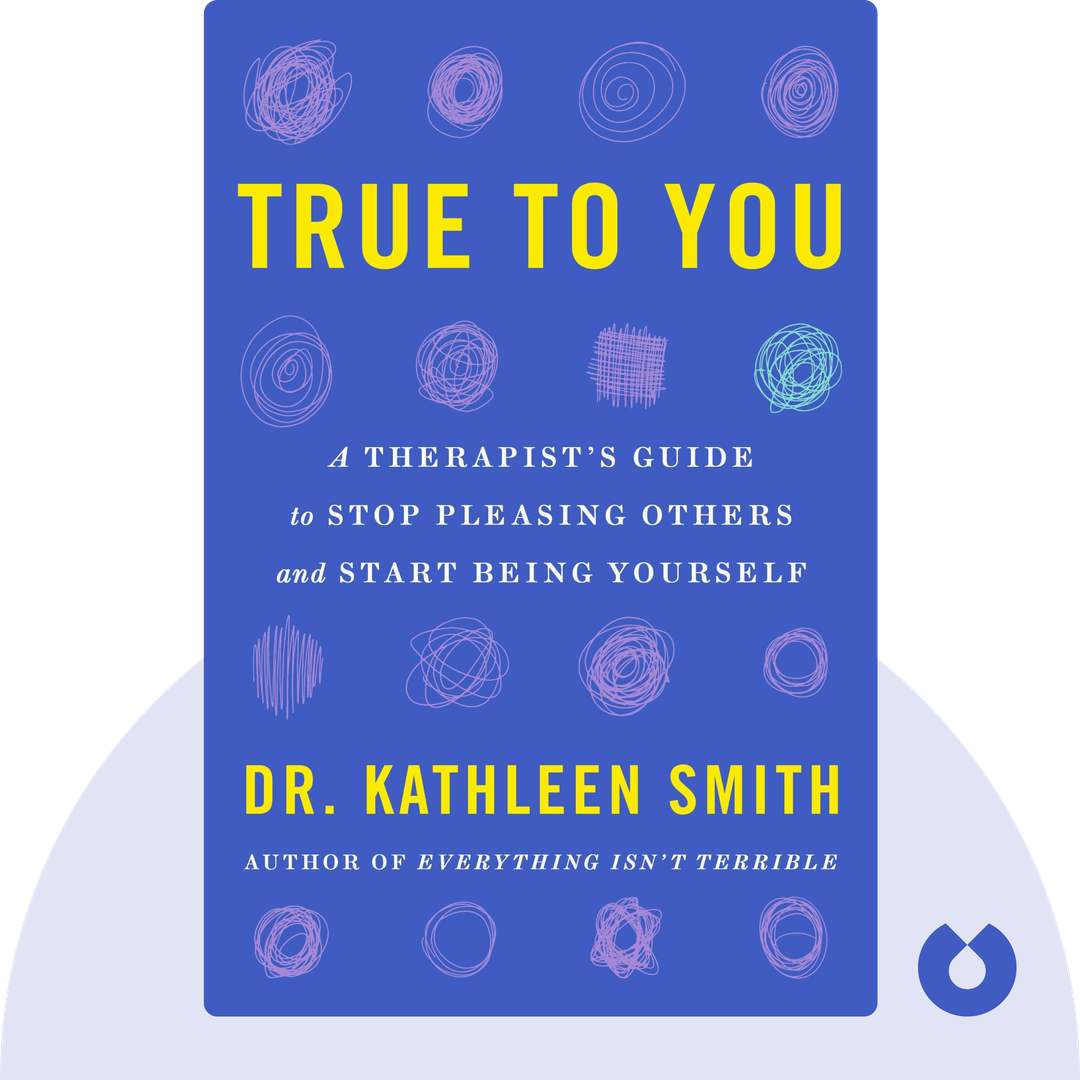
True to You (2024) delves into why humans often borrow reassurance, beliefs, and attention from others, leading to feelings of hollowness and burnout. Through practical examples and scientific insights, it offers solutions for building confidence and calmness from within, redefining personal success, and learning to let others be responsible for themselves, ultimately helping you develop a more authentic and resilient sense of self.
Who Should Listen to True to You?
- People-pleasers who continually put themselves last
- Partners who feel they’ve lost themselves in their relationships
- Anyone consumed by self-comparison and self-critique
Books Similar to True to You
Readers who enjoyed this also liked these titles.