If You're Curious About These Questions...
You should listen to this audiobook
- What's the secret to turning a struggling company into a billion-dollar success story?
- Are you curious about the creative and strategic decisions that led to Pixar's triumph over adversity?
- How did Steve Jobs and Lawrence Levy overcome the internal and external challenges that threatened to derail Pixar's rise to the top?
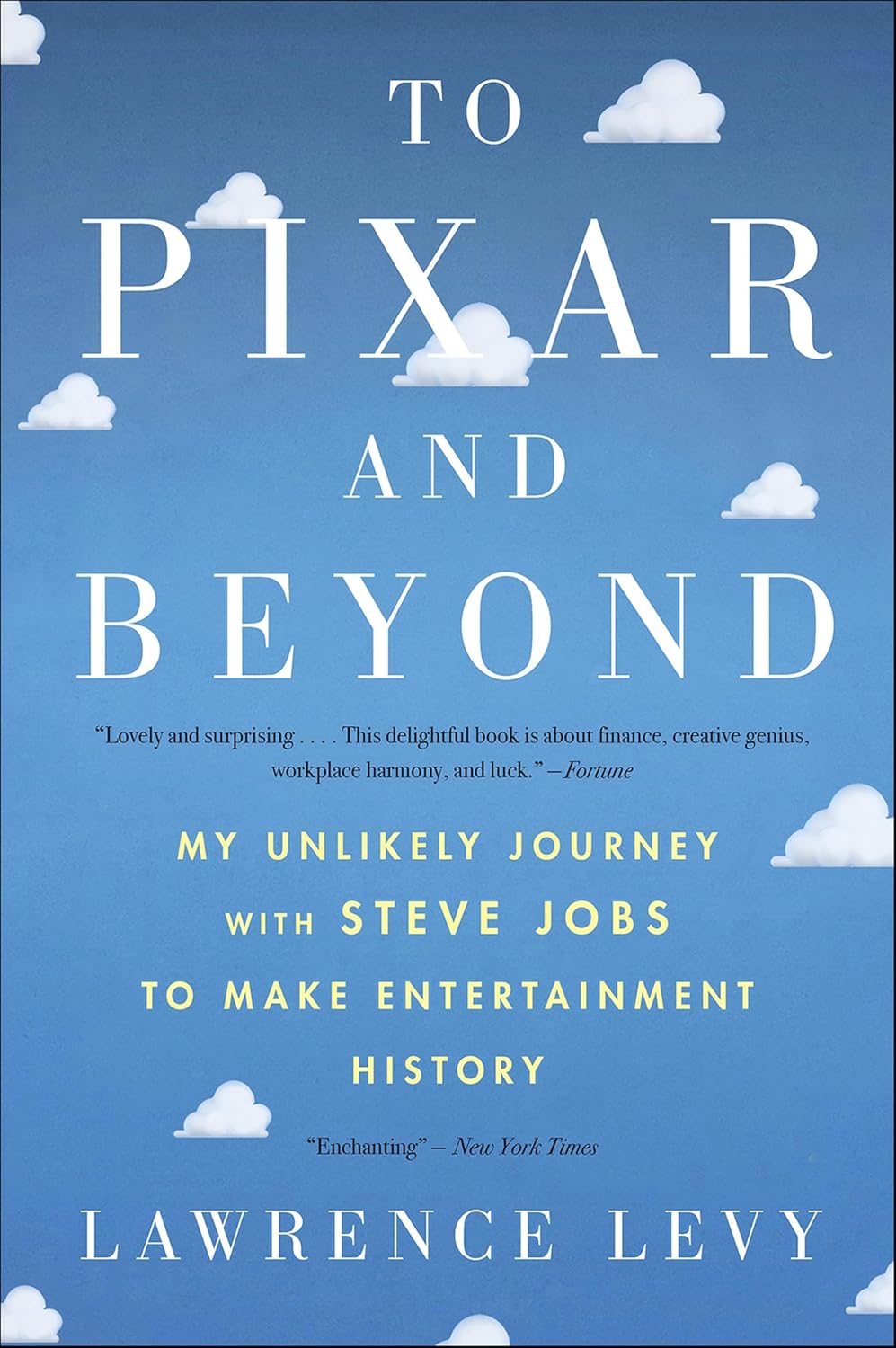
Listen to To Pixar and Beyond — Free Audiobook
Loading player...
Key Takeaways from To Pixar and Beyond
- Discover why Lawrence Levy risked his career to join a financially failing Pixar, drawn by its groundbreaking storytelling and inspiring creative environment.
- Learn how Levy navigated deep-seated employee distrust and leveraged a patented rendering technology to secure crucial short-term cash flow.
- Understand why Pixar's early business model of relying on software, expensive commercials, and a restrictive Disney contract was incapable of generating sustainable growth.
- Find out how analyzing Disney’s home video profits inspired the pivotal, high-risk strategy to transform Pixar into a dedicated animated film studio.
- Explore why navigating a highly challenging Initial Public Offering (IPO) became Pixar's only viable strategy to raise funds without a diversified safety net.
Learning Tools
Reinforce what you learned from To Pixar and Beyond
Mind Map
To Pixar and Beyond
Early Struggles & Joining+
Evaluating the Business+
The Pivot to Entertainment+
The Four-Pillar Strategy+
The IPO Journey+
Scaling & Creative Control+
Renegotiating with Disney+
Aftermath & Lessons Learned+
Quiz — Test Your Understanding
Question 1 of 7
Why did Lawrence Levy ultimately decide to join Pixar despite its bleak financial situation?
Question 2 of 7
What was the primary problem with Pixar's initial three-film agreement with Disney?
Question 3 of 7
Which of the following was NOT one of the four pillars of Pixar's business plan developed by Levy, Jobs, and Catmull?
Question 4 of 7
Why did top-tier investment banks like Goldman Sachs and Morgan Stanley decline to handle Pixar's IPO?
Question 5 of 7
When Pixar needed to scale up its film production, who was ultimately given the final say on creative decisions?
Question 6 of 7
What compromise convinced Disney CEO Michael Eisner to finally grant Pixar equal brand billing on their films?
Question 7 of 7
What Buddhist philosophy did Lawrence Levy use to describe the ultimate secret to Pixar's success?
To Pixar and Beyond — Full Chapter Overview
- 1Recommendation
- 2The chance to work in an inspiring setting enticed Lawrence Levy to Pixar.
- 3After Levy joined Pixar, not a single project seemed like a winner.
- 4The entertainment world offered Pixar its best shot at profit, yet was still risky.
- 5Pixar’s success depended on a four-pillar business strategy.
- 6Supported by a stellar roster of investment banks, Pixar’s IPO ultimately ended with a billion-dollar valuation.
- 7Making more hit films required investing in and trusting Pixar’s story team.
- 8Success enabled Pixar to dictate better terms in its renegotiated deal with Disney.
- 9Levy and Jobs learned profound lessons about life during their journey with Pixar.
To Pixar and Beyond Summary & Overview
To Pixar and Beyond (2016) tells the story of how Lawrence Levy and Steve Jobs turned an unknown and struggling computer imaging company – Pixar – into an animation studio worth billions of dollars. Along the way, the company faced numerous internal and external challenges, tackling each with creative and strategic decisions that ultimately led to its success.
Who Should Listen to To Pixar and Beyond?
- Leaders of organizations or start-ups
- Animation fans inspired by Pixar’s work
- Entertainment buffs interested in the business side of things
Books Similar to To Pixar and Beyond
Readers who enjoyed this also liked these titles.