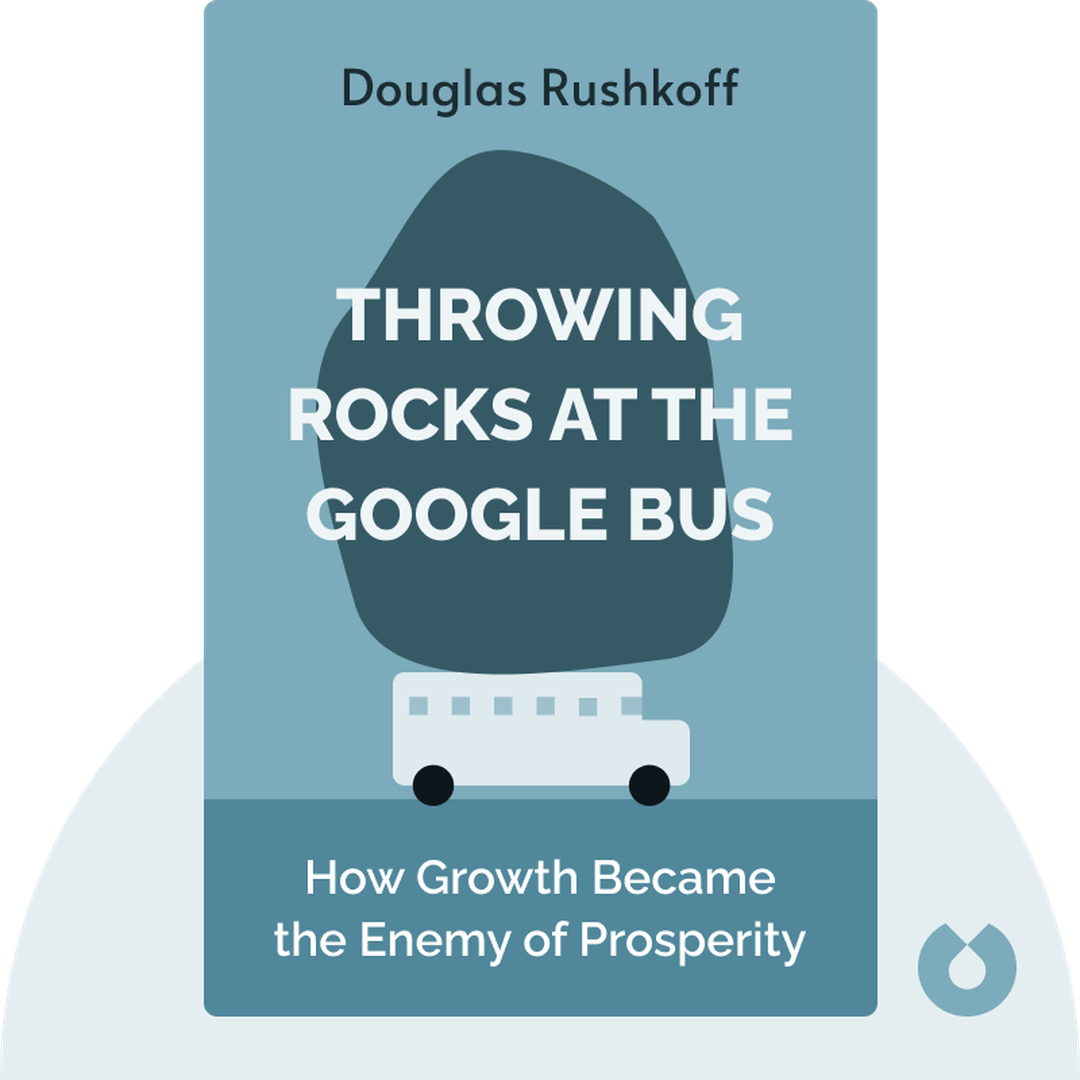
Throwing Rocks at the Google Bus
Start ListeningDownload Try free on iPhoneScan to start in 5 seconds
Categories:
If You're Curious About These Questions...
You should listen to this audiobook
- Did you know that our modern financial system was actually designed to stop money from circulating in local communities?
- Have you ever wondered why the digital revolution has made it harder, not easier, for the average entrepreneur to thrive?
- Are you curious about how we can redesign the economy so that automation benefits workers instead of just replacing them?
Listen to Throwing Rocks at the Google Bus — Free Audiobook
Loading player...
Key Takeaways from Throwing Rocks at the Google Bus
- Discover why the digital economy is actually widening the wealth gap by creating growth exclusively for those who already have money.
- Learn how the historical shift from open markets to aristocratic monopolies established the top-down economic system that exploits modern workers.
- Understand how automated bots and manipulated algorithms in the digital marketplace remove human choice and heavily favor giant corporations.
- Find out why crowd-sharing platforms like Airbnb and Uber are actually harming real businesses by bypassing regulations and devaluing human skills.
- Explore the origins of currency to see how money transformed from a simple tool for expediting peer-to-peer trade into a mechanism for elites to hoard wealth.
Learning Tools
Reinforce what you learned from Throwing Rocks at the Google Bus
Mind Map
Throwing Rocks at the Google Bus
The Digital Economy's Downside+
Historical Hijacking of Markets+
Illusion of Digital Marketplaces+
Threat of Crowd-Sharing+
Rethinking Work+
Solutions: Local Currencies+
Quiz — Test Your Understanding
Question 1 of 7
What did the 'Google buses' symbolize in the context of the San Francisco tech boom?
Question 2 of 7
How did the aristocratic class historically respond to the rising wealth of the merchant class and open markets?
Question 3 of 7
According to the text, why did the digital music market fail to empower smaller artists, contrary to early predictions?
Question 4 of 7
Why are crowd-sharing platforms like Airbnb able to offer cheaper rates than traditional businesses like hotels?
Question 5 of 7
How did the ruling class historically change the function of money to maintain their economic advantage?
Question 6 of 7
What was the outcome of the state of Utah changing its public employees' schedules to a four-day, ten-hour work week?
Question 7 of 7
How do local currencies, such as Berkshares in Massachusetts, benefit a community?
Throwing Rocks at the Google Bus — Full Chapter Overview
- 1Recommendation
- 2The relentless pursuit of growth has pushed elites to exploit the working class since medieval times.
- 3The online marketplace strips human choice, instead letting bots decide our tastes and preferences.
- 4Crowd-sharing platforms are about selling, not sharing, and they’re harming real businesses.
- 5Money, once a tool to speed trade, became a way for elites to amass even more wealth.
- 6We don’t need to work more than 40 hours a week! Flexible schedules make workers happier.
- 7Returning to local currencies within communities would make money a means again, not merely a simple goal.
Throwing Rocks at the Google Bus Summary & Overview
Throwing Rocks at the Google Bus (2013) explores society’s unhealthy relationship with money, as it transformed from a means to facilitate trade to a goal in itself. The rise of digital markets has done little to improve the situation. These blinks explore the history of money and offer practical solutions to help local communities make money work again for everyone.
Who Should Listen to Throwing Rocks at the Google Bus?
- Workers concerned about losing a job to a machine
- Students exploring sociology, history, economics or politics
- Entrepreneurs
Books Similar to Throwing Rocks at the Google Bus
Readers who enjoyed this also liked these titles.