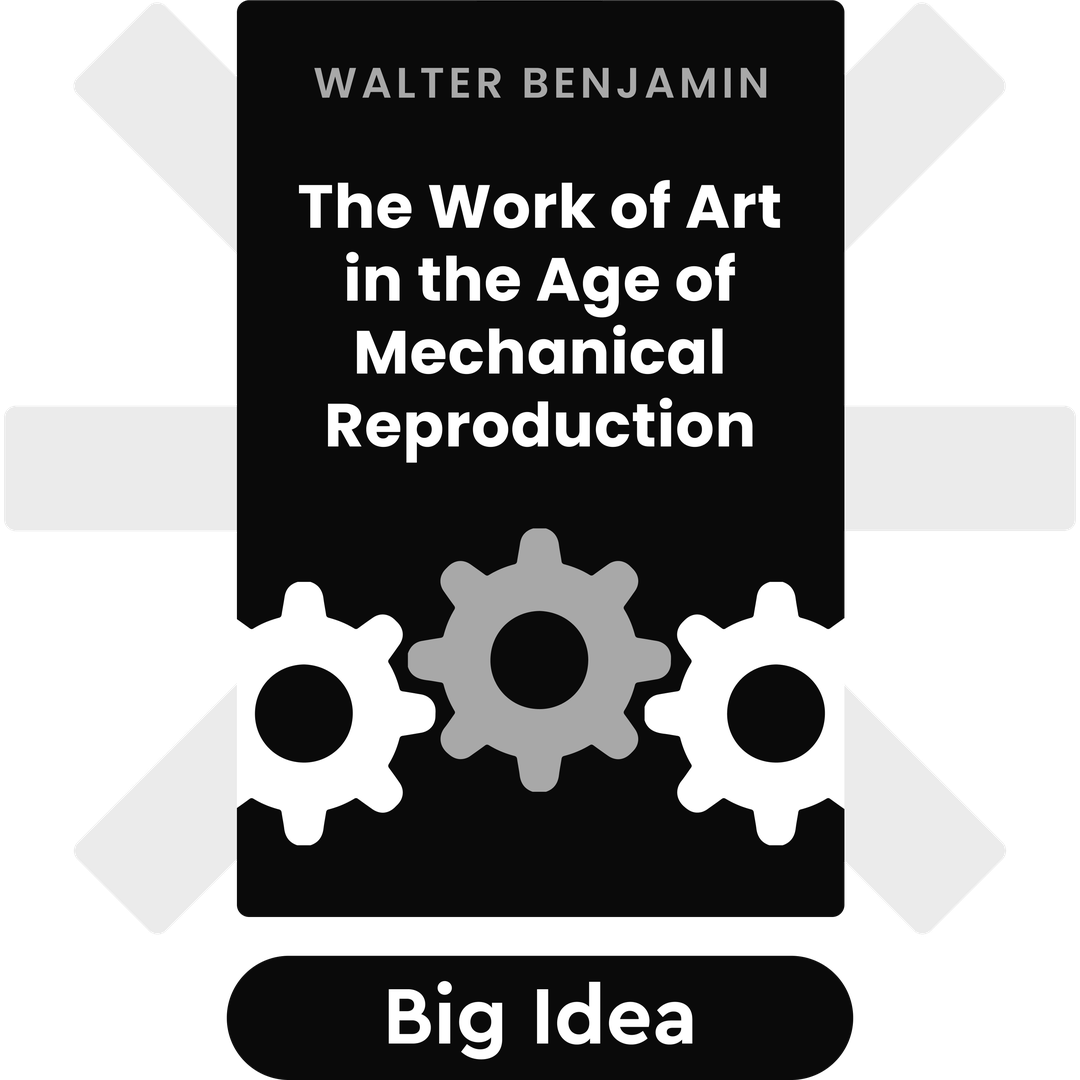
The Work of Art in the Age of Mechanical Reproduction
Start ListeningDownload Try free on iPhoneScan to start in 5 seconds
Categories:
If You're Curious About These Questions...
You should listen to this audiobook
- Have you ever wondered why standing in front of an original masterpiece feels fundamentally different than looking at a perfect digital copy?
- Did you know that the mass reproduction of art through film and photography did more than just make art accessible—it actually stripped away a secret quality known as the 'aura'?
- Are you curious about how the shift from unique paintings to mass-produced media forever changed the way art influences society and politics?
Listen to The Work of Art in the Age of Mechanical Reproduction — Cinematic Audio Edition
Loading player...
Key Takeaways from The Work of Art in the Age of Mechanical Reproduction
- Understand the concept of the "aura" and discover why an artwork's unique authenticity and charm are lost when it is mechanically reproduced.
- Learn how mass reproduction creates a paradox by making art more democratized and accessible to the public while simultaneously devaluing its original profoundness.
- Explore how Benjamin's theories apply to modern digital media, revealing why the constant replication of our daily experiences can make them feel less meaningful and unique.
- Discover how political movements, such as historical fascism, use mass media and the aestheticization of politics as an ideological weapon to manipulate public opinion.
- Find out why the true power of art lies not in passive observation, but in its proletarianization to stimulate critical thinking, resist propaganda, and inspire active societal change.
Learning Tools
Reinforce what you learned from The Work of Art in the Age of Mechanical Reproduction
Mind Map
The Work of Art in the Age of Mechanical Reproduction
The 'Aura' of Art+
Mechanical Reproduction+
Modern Societal Implications+
Political Dimensions+
Quiz — Test Your Understanding
Question 1 of 4
What does Walter Benjamin mean by the 'aura' of an artwork?
Question 2 of 4
According to the text, what is the paradoxical effect of reproduction technologies like photography and film on art?
Question 3 of 4
How did fascism utilize the new technologies of mass media and film, according to Benjamin's analysis?
Question 4 of 4
What does Benjamin propose as a countermeasure to the fascist manipulation of aesthetics?
The Work of Art in the Age of Mechanical Reproduction — Full Chapter Overview
- 1Recommendation
- 2Art Enters the Machine Age
- 3From Woodcut to Film
- 4The Vanishing Aura
- 5From Ritual to Politics
- 6The Camera Tests the Actor
- 7The Public Becomes an Expert
- 8The Surgeon, the Painter, and the Cameraman
- 9Shock, Distraction, and Dada
- 10The Political Danger of Aesthetic Spectacle
- 11Why Benjamin Still Matters
The Work of Art in the Age of Mechanical Reproduction Summary & Overview
The Work of Art in the Age of Mechanical Reproduction (1935) is a pioneering examination of how mechanical reproduction – particularly via photography and film – transformed the nature, value, and perception of art. It explores the concept of the "aura" of a work of art and how this aura diminishes in a reproduced work.
Who Should Listen to The Work of Art in the Age of Mechanical Reproduction?
- Art history students
- Modern artists and critics
- Scholars interested in media theory
Books Similar to The Work of Art in the Age of Mechanical Reproduction
Readers who enjoyed this also liked these titles.