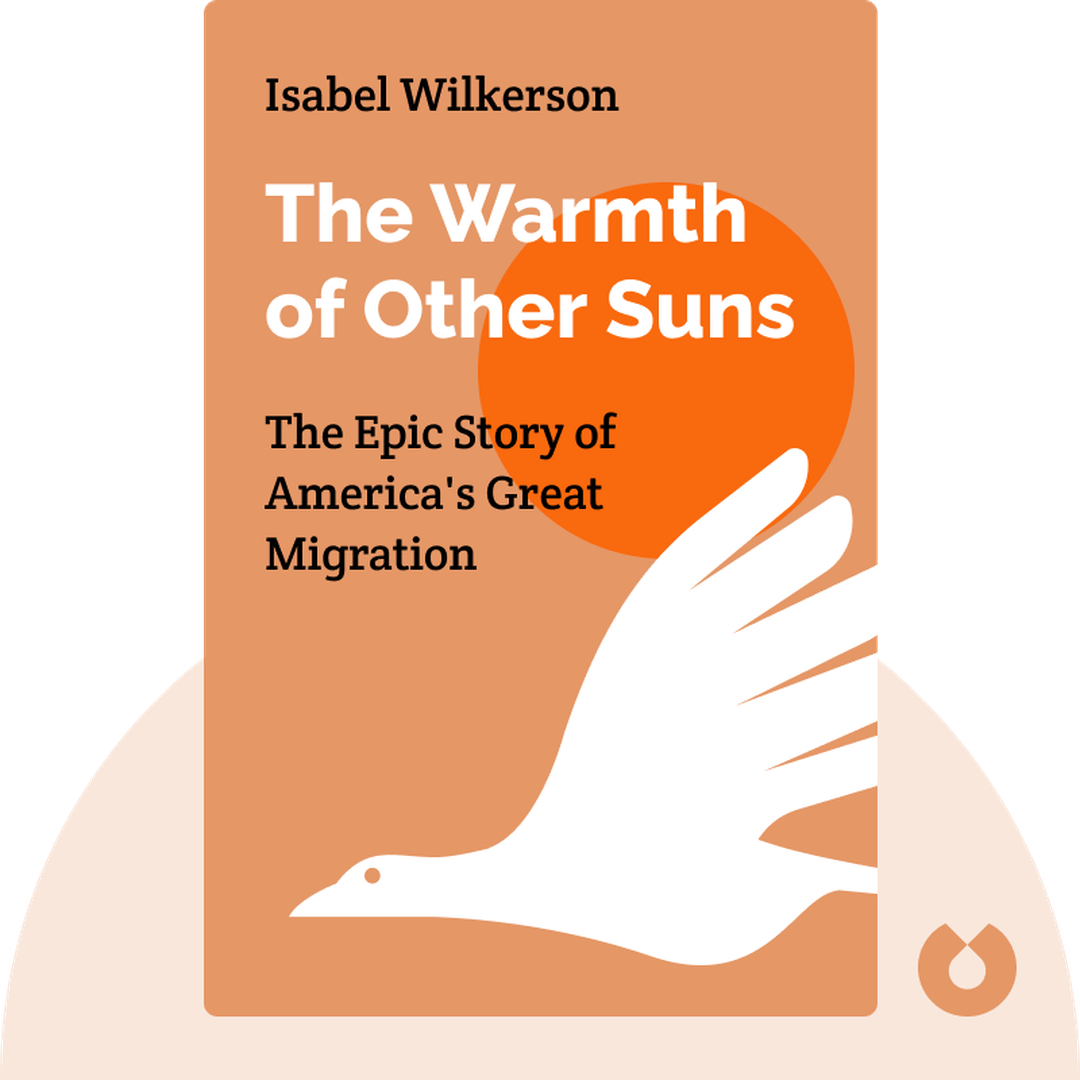
The Warmth of Other Suns
Start ListeningDownload Try free on iPhoneScan to start in 5 seconds
Categories:
If You're Curious About These Questions...
You should listen to this audiobook
- Did you know that the largest internal migration in American history wasn’t caused by war or famine, but by six million people seeking a freedom they were denied in their own backyards?
- Have you ever wondered how the individual choices of three ordinary people could help explain the massive demographic shift that redefined the culture of Northern US cities?
- Are you curious about what it truly took for families to escape the Jim Crow South and what they discovered when they finally reached the 'warmth of other suns'?
Listen to The Warmth of Other Suns — Cinematic Audio Edition
Loading player...
Key Takeaways from The Warmth of Other Suns
- Discover the immense scale of the Great Migration, a massive demographic shift where 6 million Black Americans left the South between 1915 and 1970 to seek a better life.
- Understand why the abolition of slavery didn't guarantee freedom, as oppressive Jim Crow laws, exploitative sharecropping, and violent lynchings forced a mass exodus.
- Learn how labor shortages in Northern metropolises during World War I and II created a powerful pull that accelerated this unorganized but historic mass movement.
- Explore the deeply personal motivations behind the migration through the story of Ida Mae Gladney, who fled Mississippi to escape crushing poverty and brutal mob violence.
- Find out how systemic racism thwarted personal dreams and forced individuals like George Starling to flee their home states to avoid violent persecution.
Learning Tools
Reinforce what you learned from The Warmth of Other Suns
Mind Map
The Warmth of Other Suns
The Great Migration (1915-1970)+
Ida Mae Gladney+
George Starling+
Robert Pershing Foster+
Harsh Realities of the North+
Legacy and Impact+
Quiz — Test Your Understanding
Question 1 of 8
According to the text, what was the defining demographic shift of the Great Migration?
Question 2 of 8
What was the dominant push factor that drove the mass exodus of Black people from the South?
Question 3 of 8
What was the final catalyst that prompted Ida Mae and her husband George to leave Mississippi for the North?
Question 4 of 8
Why did George Starling flee Florida for New York?
Question 5 of 8
Despite his success as a military surgeon overseas, why did Robert Pershing Foster decide to leave Louisiana for Los Angeles?
Question 6 of 8
How did the reality of Northern cities compare to the dreams of the Black migrants who arrived there?
Question 7 of 8
What profession did George Starling take up in New York that allowed him to personally witness the ongoing Great Migration?
Question 8 of 8
According to the text, how did most Black migrants view their decision to leave the South despite the hardships they faced in the North?
The Warmth of Other Suns — Full Chapter Overview
- 1Recommendation
- 2The Great Migration had varied causes, sources, and destinations.
- 3Ida Mae and her family left their Mississippi farm for safety and better pay.
- 4George Starling left Florida to escape reprisals for labor organizing.
- 5Pershing Foster left Louisiana to further his career, free of the Jim Crow limits.
- 6In Chicago, Ida Mae became part of the emerging urban Black working class.
- 7As a New York train attendant, George witnessed breadth of the Great Migration.
- 8In L.A., Robert built a reputation as a renowned and widely respected doctor there.
- 9For many Black Southerners, the North was not the carefree land they imagined.
- 10For many Black Southerners, leaving the South expressed their sense of freedom.
The Warmth of Other Suns Summary & Overview
The Warmth of Other Suns (2010) tells the story of the Great Migration – the biggest inner-border mass migration in US history. From 1915 to 1970, millions of Black Americans left the Jim Crow South in search of a better life in Northern cities. Focusing on the lives of three of those migrants, these blinks paint a vivid picture of the fears, hopes, and dreams that shaped the movement.
Who Should Listen to The Warmth of Other Suns?
- Curious minds who want to learn about an underexplored chapter of US history
- Fans of biographical and eyewitness accounts of the past
- Anyone interested in the social and demographic forces that shaped America
Books Similar to The Warmth of Other Suns
Readers who enjoyed this also liked these titles.