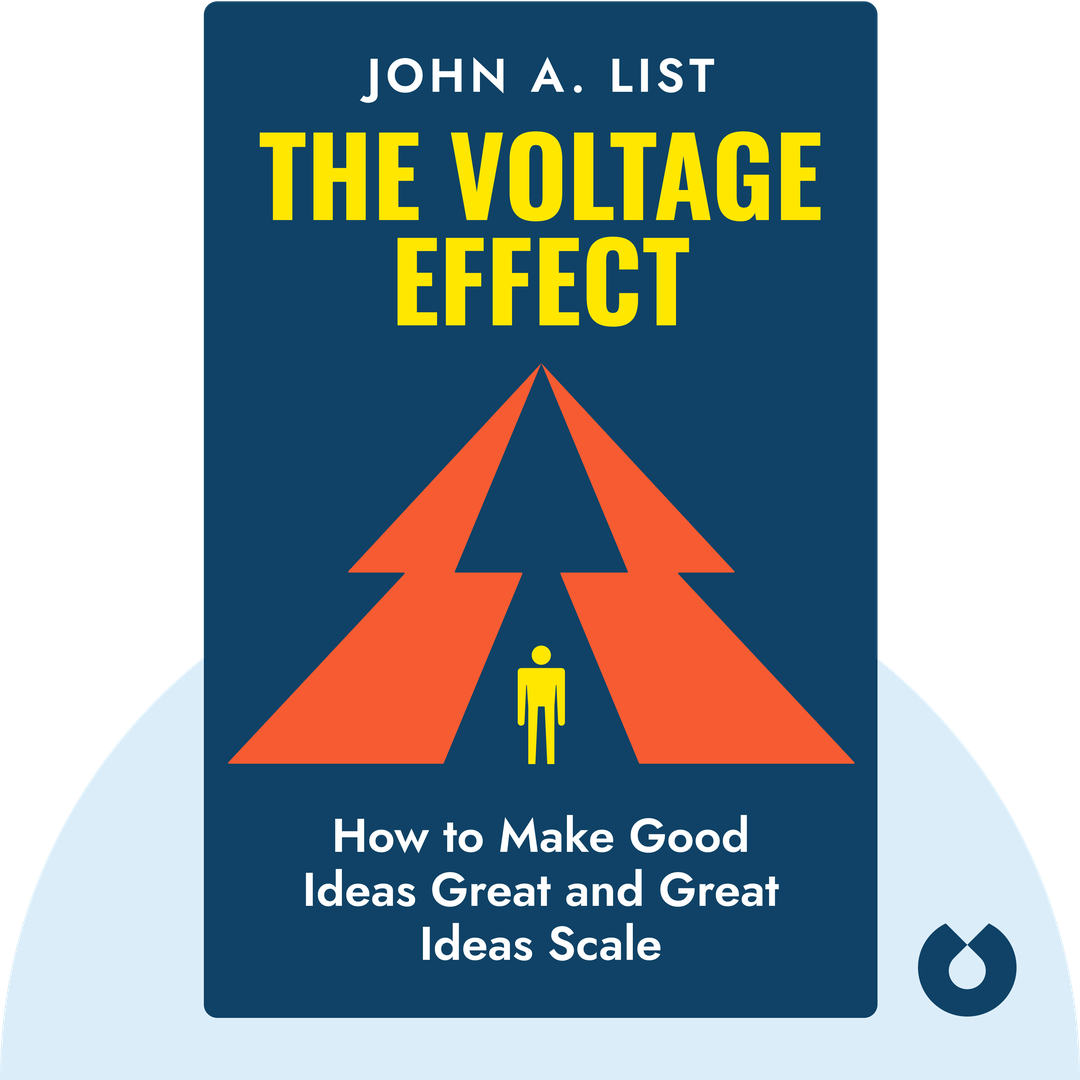
If You're Curious About These Questions...
You should listen to this audiobook
- Have you ever wondered why a brilliant pilot program that works perfectly in one location often fails miserably when rolled out nationwide?
- What if you could identify the specific "voltage" signals that determine whether your business idea will achieve exponential growth or fizzle out?
- Did you know that the very talent that makes a startup successful can sometimes be the biggest obstacle to its ability to scale?
Listen to The Voltage Effect — Free Audiobook
Loading player...
Key Takeaways from The Voltage Effect
- Understand the concept of a 'voltage drop' so you can prevent your innovative ideas from losing profitability as they expand beyond a small scale.
- Discover why deeply understanding your target audience's regional needs is critical, and how standardizing too quickly can derail your growth.
- Learn how to avoid the scaling cost trap by ensuring your business achieves true economies of scale instead of becoming more expensive as it grows.
- Master the use of behavioral incentives like the 'clawback approach,' which offers rewards upfront to boost productivity by leveraging the human instinct to avoid loss.
- Find out how to apply marginal thinking to your business data so you can accurately assess value, ignore sunk costs, and quickly pivot from mistakes.
Learning Tools
Reinforce what you learned from The Voltage Effect
Mind Map
The Voltage Effect
Core Concept of Scalability+
The Three-Part Foundation+
Secret 1: Well-Planned Incentives+
Secret 2: Marginal Thinking+
Secret 3: Quitting to Win+
Secret 4: Scaling Company Culture+
Quiz — Test Your Understanding
Question 1 of 6
What does the term 'voltage drop' refer to in the context of scaling a business?
Question 2 of 6
Why did the health-tech company Arivale fail to scale successfully despite raising $50 million in capital?
Question 3 of 6
How does the 'clawback' approach to employee incentives work?
Question 4 of 6
According to the concept of 'thinking on the margins,' how should a business leader handle sunk costs?
Question 5 of 6
The book argues that knowing when to quit an unprofitable idea directly aligns with which economic principle?
Question 6 of 6
What does the book suggest is a critical component of successfully scaling a company's culture?
The Voltage Effect — Full Chapter Overview
- 1Recommendation
- 2The three-part basis of scalability
- 3Scale with well-planned incentives
- 4Always think at the margins
- 5Sometimes you have to quit to win
- 6Scaling people power is equally as important
The Voltage Effect Summary & Overview
The Voltage Effect (2023) will show you help how to thrive in the rapidly changing business landscape through the hidden power behind scaling. Unlock the four secrets that are your key to scalability success.
Who Should Listen to The Voltage Effect?
- Ambitious entrepreneurs seeking exponential growth
- Seasoned business leaders navigating scaling challenges
- Curious minds exploring organizational dynamics
Books Similar to The Voltage Effect
Readers who enjoyed this also liked these titles.