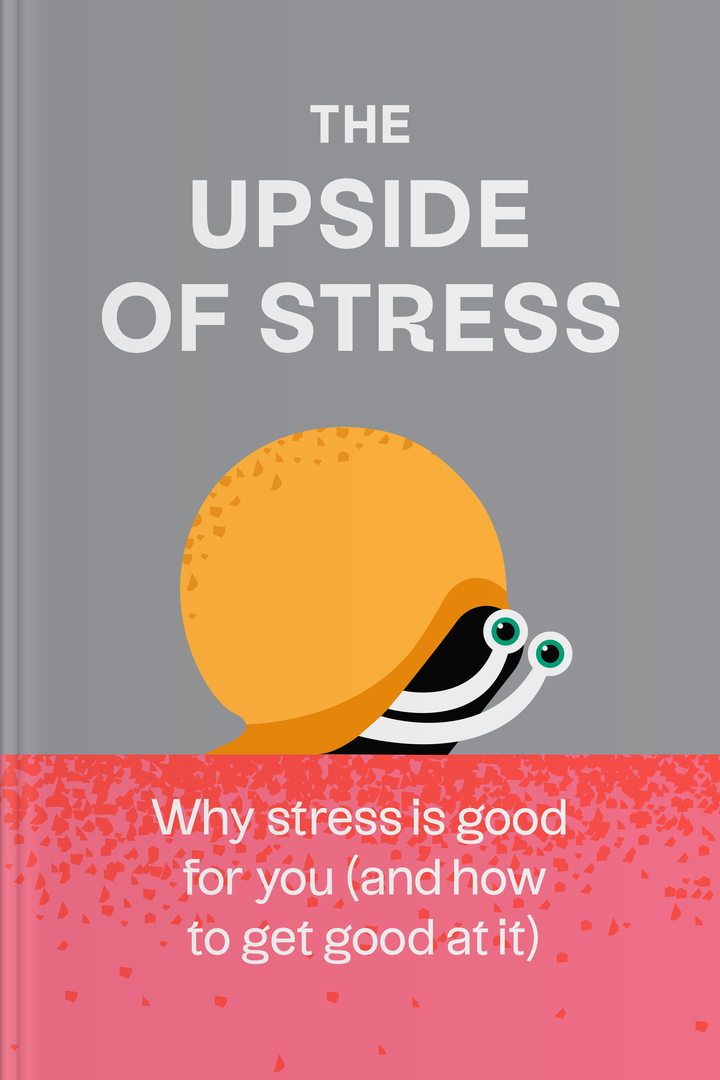
If You're Curious About These Questions...
You should listen to this audiobook
- Did you know that your body’s physical response to stress can actually protect your heart and boost your performance—if you know how to think about it?
- What if the secret to overcoming overwhelm wasn't about avoiding pressure, but about unlocking a biological 'courage' response that most of us ignore?
- Have you ever wondered why some people emerge from difficult times stronger than before, and how you can use your own stress to fuel personal growth?
Listen to The Upside of Stress — Free Audiobook
Key Takeaways from The Upside of Stress
- Discover why stress isn't a toxic enemy to be avoided, but rather a vital surge of energy and alertness that activates when something deeply matters to you.
- Understand how your perception of hardship shapes your reality, transforming stress from an isolating burden into a powerful ally that builds character and courage.
- Learn how your mindset biologically alters your body's chemistry by balancing stress-induced cortisol with the recovery hormone DHEA to promote healing and resilience.
- Recognize that experiencing stress is fundamentally a sign of living an engaged life, pointing directly to your underlying values, goals, and passions.
- Find out how adopting a long-term growth mindset toward challenges can physically alter your biology, boosting your daily contentment and overall longevity.
Learning Tools
Reinforce what you learned from The Upside of Stress
Mind Map
Quiz — Test Your Understanding
The Upside of Stress — Full Chapter Overview
- 1Recommendation
- 2Meeting Stress as a Complicated Ally
- 3The Mindset That Shapes the Body’s Chemistry
- 4Expectations That Quietly Shape Choices
- 5Beyond Fight or Flight: The Body’s Wider Toolkit
- 6How Stress Can Sharpen, Strengthen, and Connect
- 7Recovery, Learning, and the Strength That Comes After
- 8Turning Stress Into Guidance, Not a Verdict
The Upside of Stress Summary & Overview
This warm, listener-friendly narration invites a gentler relationship with stress. Instead of treating stress as a purely harmful force, it explores research-backed ideas suggesting that stress can sometimes support growth, performance, recovery, and even connection—especially when it’s met with a healthier mindset and supportive actions.
Across seven chapters, the script reframes stress responses, explains the biology behind different stress hormones, and offers practical ways to face difficulty without shame or avoidance. The aim isn’t to glorify pressure or deny pain—it’s to help listeners feel less afraid of their own stress, and more capable of working with it wisely.
Who Should Listen to The Upside of Stress?
- People who feel overwhelmed by stress and want a calmer, more empowering way to relate to it
- Listeners who struggle with avoidance habits—distraction, numbing, or giving up on meaningful goals—and want gentler alternatives
- Anyone curious about the science of stress, mindset, and resilience, and how connection can be part of recovery
Books Similar to The Upside of Stress
Readers who enjoyed this also liked these titles.