If You're Curious About These Questions...
You should listen to this audiobook
- Have you ever wondered why some entrepreneurs achieve massive success despite having less experience or capital than their competitors?
- Did you know that you already possess a unique "unfair advantage" that could be the single most important factor in your startup’s growth?
- What if the secret to building a multi-million dollar business isn't just about how hard you work, but how you leverage the hidden assets you already have?
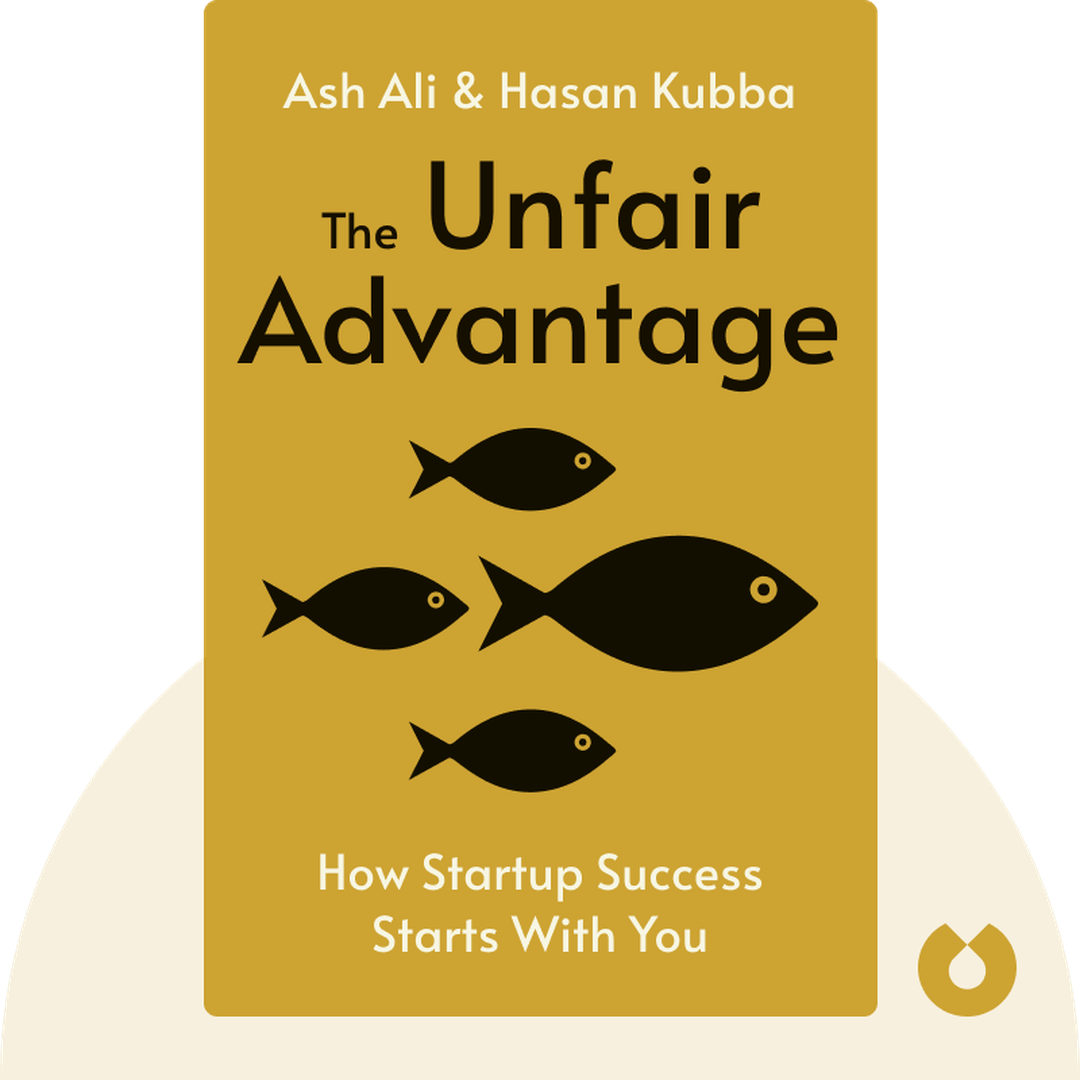
Listen to The Unfair Advantage — Cinematic Audio Edition
Loading player...
Key Takeaways from The Unfair Advantage
- Learn why hard work and a great concept alone won't guarantee startup success, and discover how identifying your unique 'unfair advantage' can push you ahead.
- Understand that advantages go beyond obvious wealth or connections, and find out how to leverage your unique life circumstances and hidden talents to build a thriving business.
- Discover the critical role a financial runway plays in allowing founders to take risks, and learn alternative strategies like low-capital side hustles if you lack initial funding.
- Realize that street smarts and social savvy are just as crucial as book smarts, ensuring you can capitalize on your innovations rather than being exploited like Nikola Tesla.
- Master the art of creative intelligence by widening your knowledge base, allowing you to connect seemingly unrelated fields to solve problems and generate breakthrough ideas.
Learning Tools
Reinforce what you learned from The Unfair Advantage
Mind Map
The Unfair Advantage
Core Premise+
Money (Financial)+
Intelligence & Insight+
Location & Timing+
Education & Expertise+
Status & Network+
Actionable Advice+
Quiz — Test Your Understanding
Question 1 of 8
According to the book, why is relying solely on a great idea and hard work insufficient for start-up success?
Question 2 of 8
Why is having a significant amount of money considered a major 'unfair advantage' for early-stage start-up founders?
Question 3 of 8
What does the story of Nikola Tesla and Thomas Edison illustrate about intelligence in business?
Question 4 of 8
How did Will Shu, founder of Deliveroo, gain the necessary 'insight' to make his start-up successful?
Question 5 of 8
What did start-up incubator founder Bill Gross discover was the most important factor in a start-up's success?
Question 6 of 8
According to the text, what is a primary business advantage of attending an elite university like Stanford or Harvard, aside from the actual education?
Question 7 of 8
What did a 2016 study by the Social Mobility Commission in England reveal about the power of status in investment banking?
Question 8 of 8
What actionable advice does the book offer for a founder who lacks certain unfair advantages?
The Unfair Advantage — Full Chapter Overview
- 1Recommendation
- 2No matter who you are, your unique circumstances can help you succeed.
- 3Money isn’t everything, yet it certainly helps.
- 4Intelligence is more than IQ and simple book smarts.
- 5Identifying the right problem to solve is crucial, and you may be perfectly placed to tackle it.
- 6Location and timing are critical.
- 7A degree isn’t the only useful benefit you can gain from learning; it can also develop expertise and valuable connections too.
- 8Who you are and who you know says plenty.
The Unfair Advantage Summary & Overview
The Unfair Advantage (2020) demonstrates how we all have something that can catapult us to success. Drawing on their extensive experience in the start-up world, co-authors Ash Ali and Hasan Kubba break down various personal advantages and how they can be leveraged for the benefit of your business. Wherever you are on your start-up journey, The Unfair Advantage will help you identify what gives you the upper hand and how you can immediately start making it work for you.
Who Should Listen to The Unfair Advantage?
- Aspiring founders who want to build their start-ups on solid groundwork
- Early-stage entrepreneurs grappling with challenges, from finding that big idea to funding their start-up
- Anyone looking to glean the secrets to a successful start-up
Books Similar to The Unfair Advantage
Readers who enjoyed this also liked these titles.