If You're Curious About These Questions...
You should listen to this audiobook
- Did you know that the groundbreaking discoveries of modern physics often mirror the spiritual insights found in ancient Eastern traditions?
- Have you ever wondered if the subatomic world behaves less like a machine and more like the 'cosmic dance' described by Hindu and Buddhist mystics?
- Are you curious about how the seemingly opposite worlds of hard science and spiritual enlightenment are actually two sides of the same universal coin?
Listen to The Tao of Physics — Cinematic Audio Edition
Loading player...
Key Takeaways from The Tao of Physics
- Discover how modern quantum physics and ancient Eastern philosophies, such as Hinduism and Buddhism, share striking similarities regarding the fundamental interconnectedness of the universe.
- Understand the key difference between Western scientific dualism and the Eastern concept of universal oneness, and learn how both physicists and mystics rely on deep observation to understand reality.
- Learn how Einstein's theory of relativity and quantum mechanics dismantled classical Newtonian physics by proving that space and time are interconnected and that the observer actively alters subatomic behavior.
- Explore the fascinating parallels between the mind-bending paradoxes of quantum physics and the thought-stopping koans of Zen Buddhism used to elevate human consciousness.
- Grasp the shared core tenets of Eastern spiritual traditions, such as the concept of Brahman and the state of Nirvana, which reveal the physical world as a dynamic, ever-changing flow of energy.
Learning Tools
Reinforce what you learned from The Tao of Physics
Mind Map
The Tao of Physics
Bridging Two Worlds+
Eastern Mystical Traditions+
The Shift in Physics+
Parallel 1: Interconnected Unity+
Parallel 2: Space-Time Integration+
Parallel 3: A Dynamic Universe+
Parallel 4: Matter, Space, and The Void+
Quiz — Test Your Understanding
Question 1 of 8
According to the text, what is the primary difference in how physicists and Eastern mystics utilize observation?
Question 2 of 8
How does quantum theory fundamentally challenge the classical physics view formulated by Isaac Newton?
Question 3 of 8
What is the primary purpose of Zen koans, such as 'what is the sound of one hand clapping?'
Question 4 of 8
Which three concepts from Hinduism, Buddhism, and Taoism respectively represent the 'ultimate reality' or essence of the universe?
Question 5 of 8
How does modern atomic physics parallel the Taoist concept of yin and yang?
Question 6 of 8
How does Einstein's theory of relativity connect to the teachings of the Avatamsaka school of Buddhism?
Question 7 of 8
According to quantum physics, what happens when subatomic particles are confined to a small section of space?
Question 8 of 8
In what way is the 'quantum field' of modern physics similar to the Eastern concept of the 'void' (such as Sunyata)?
The Tao of Physics — Full Chapter Overview
- 1Recommendation
- 2Western science and Eastern mysticism may have clear differences, but they also share striking similarities.
- 3Physics has transformed over time to reach a conclusion long held by Eastern mystics.
- 4Hinduism and Buddhism share many key features, from the oneness of life to spiritual enlightenment.
- 5In old Chinese thought, notions of unity, as well as of continuous flow and change, also predominate.
- 6Eastern mysticism and modern physics both believe that the universe is bound by a basic unity.
- 7Einstein’s theory of relativity unifies space and time, further connecting physics to Eastern mysticism.
- 8According to physicists and mystics alike, the universe is a dynamic, constantly transforming place.
- 9Modern physics unifies matter and space, in yet another parallel to Eastern mysticism.
The Tao of Physics Summary & Overview
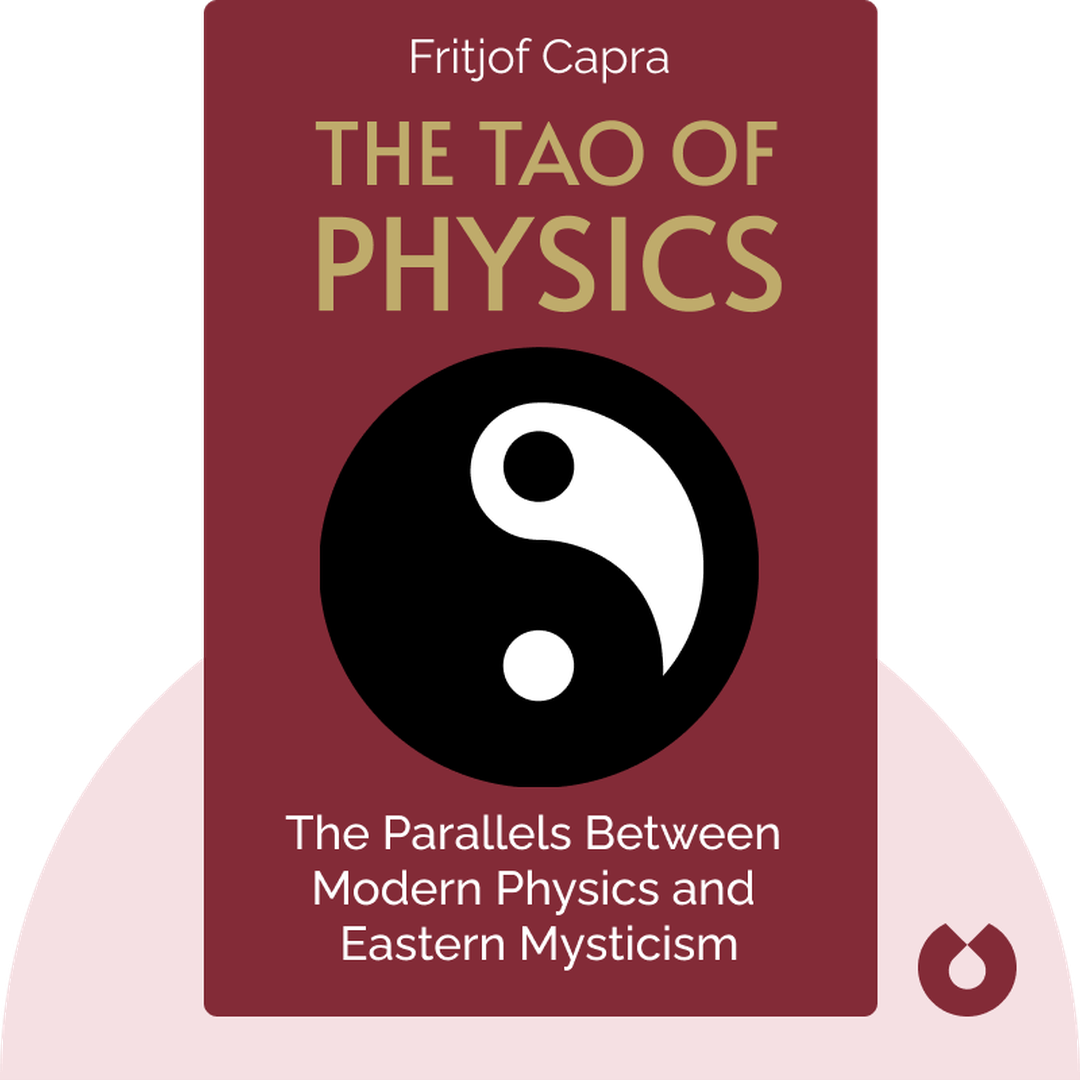
The Tao of Physics (1975) explores the relationship between the hard science of modern physics and the spiritual enlightenment of Eastern mysticism. These blinks lay out striking parallels between relativity theory and quantum theory on the one hand and Hinduism, Buddhism and Taoism on the other.
Who Should Listen to The Tao of Physics?
- Those with an inclination toward rational thought
- Practitioners of Eastern mysticism and anyone with a spiritual side
- Students of philosophy, science and religion
Books Similar to The Tao of Physics
Readers who enjoyed this also liked these titles.