If You're Curious About These Questions...
You should listen to this audiobook
- Have you ever wondered if there are certain lines that, once crossed, make forgiveness impossible—even when it's a dying person’s final wish?
- What if you held the power to grant peace to your greatest enemy; would you offer them mercy, or is silence the only just response?
- Are you curious why world-renowned figures like the Dalai Lama and Holocaust survivors are still divided on the ultimate secret to healing our history of violence?
Listen to The Sunflower — Cinematic Audio Edition
Loading player...
Key Takeaways from The Sunflower
- Grasp the profound complexities of forgiveness through Simon Wiesenthal’s harrowing real-life dilemma of being asked to absolve a dying Nazi soldier.
- Understand why murder is considered unforgivable in the Jewish tradition, which dictates that only the actual victim can grant absolution to their transgressor.
- Learn how silence can serve as a deeply complex response, offering basic human empathy without unburdening a wrongdoer from the moral weight of their atrocities.
- Recognize the insidious nature of dehumanization, demonstrated by a perpetrator seeking out 'any Jew' to confess to rather than acknowledging his listener as an individual human being.
- Discover why leaders like the Dalai Lama advocate for forgiveness not to condone crimes, but to transform grief and resentment into compassion that ultimately sets the forgiver free.
Learning Tools
Reinforce what you learned from The Sunflower
Mind Map
The Sunflower
The Core Dilemma+
Arguments Against Forgiveness+
Arguments In Favor of Forgiveness+
The Complexity of Forgiveness+
Quiz — Test Your Understanding
Question 1 of 7
What is the central dilemma Simon Wiesenthal faces while imprisoned in the concentration camp?
Question 2 of 7
How did Wiesenthal immediately respond to Karl Seidl's plea for forgiveness at his deathbed?
Question 3 of 7
After the war, Wiesenthal visited Karl Seidl's mother. What decision did he make during this visit?
Question 4 of 7
According to the text, why is the act of murder considered unforgivable in the Jewish tradition?
Question 5 of 7
What point did writer Primo Levi make regarding Seidl's request to speak to 'a Jew, any Jew'?
Question 6 of 7
What is a primary argument in favor of forgiveness presented in the text, supported by figures like the Dalai Lama and José Hobday?
Question 7 of 7
What is the ultimate conclusion the book reaches regarding the complex question of forgiveness?
The Sunflower — Full Chapter Overview
- 1Recommendation
- 2Certain choices and experiences remain with us for life, always.
- 3Justice and forgiveness are seldom simple.
- 4Cases against forgiveness stress faith traditions and our personal choices too.
- 5Arguments supporting forgiveness highlight healing qualities and the varying degrees of responsibility for all involved.
- 6Forgiveness may lack a final answer, yet it remains crucial to continue posing questions about it regularly.
The Sunflower Summary & Overview
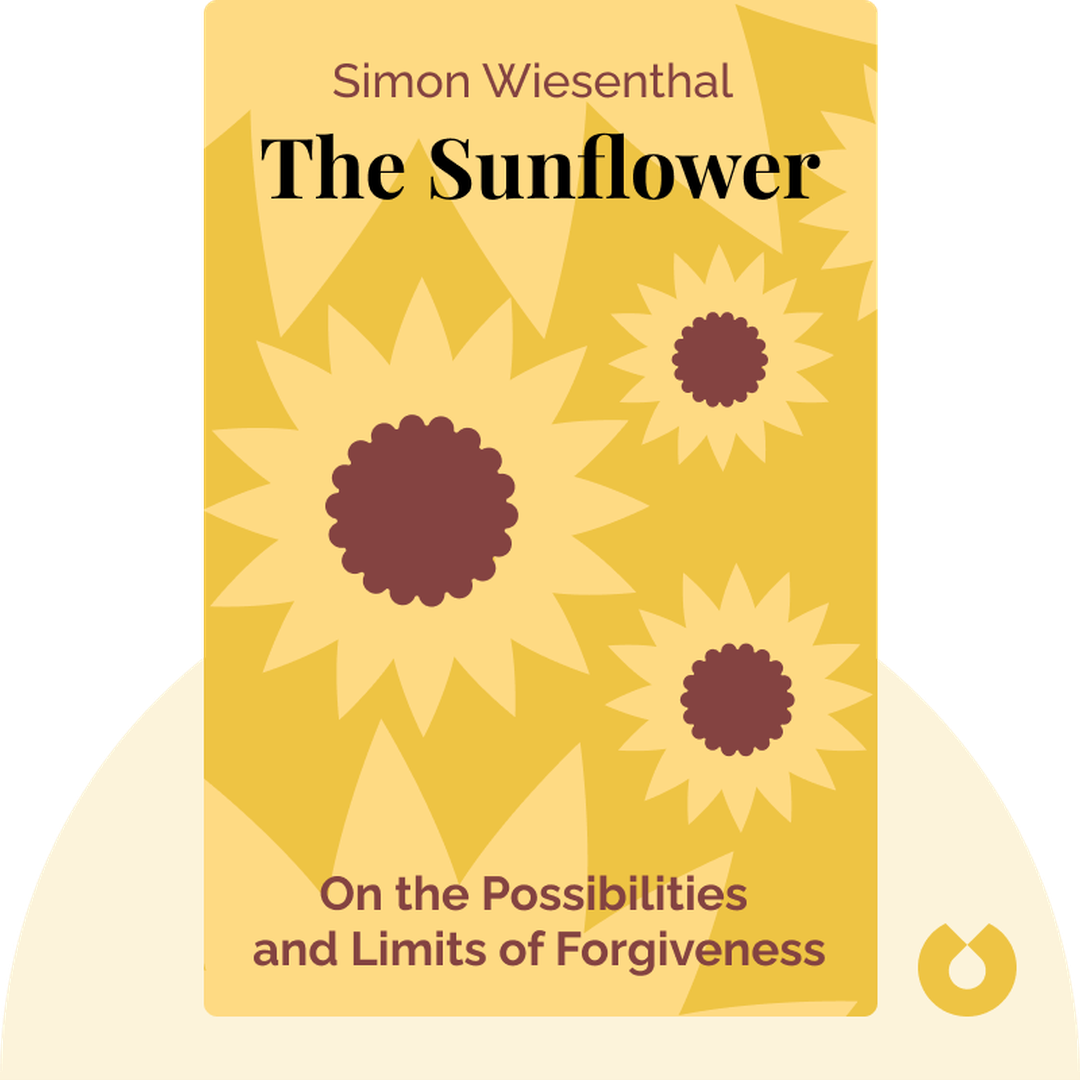
The Sunflower (1969) is an important exploration of forgiveness – both its possibilities and its limitations. We join the author as he attempts to find an answer to an extremely complex question: Can a Jewish concentration camp prisoner forgive a Nazi soldier on his deathbed? There is a range of opinions – from people like Primo Levi and the Dalai Lama – but is there a right answer?
Who Should Listen to The Sunflower?
- Humanitarians seeking to understand humanity’s potential for good and evil
- Skeptics who may not believe in the power of forgiveness
- Pacifists wondering how to end our history of violence
Books Similar to The Sunflower
Readers who enjoyed this also liked these titles.