If You're Curious About These Questions...
You should listen to this audiobook
- Have you ever wondered why reaching the top of the career ladder often leaves high-achievers feeling more trapped than fulfilled?
- Did you know that the very skills that brought you success might be the hidden barriers preventing you from finding true professional freedom?
- What if you could dismantle the 'predictable' path of your career and unlock the hidden opportunities of the modern world of work?
Listen to The Success Trap — Free Audiobook
Loading player...
Key Takeaways from The Success Trap
- Understand why conventional success, such as high salaries and endless promotions, can become a trap that creates lifestyle dependency and distances you from your true priorities.
- Discover the high achiever paradox and learn why successful professionals are uniquely vulnerable to goal addiction, imposter syndrome, and burnout.
- Learn how to break free from goal addiction by cultivating a state of creative flow, allowing you to find joy and spontaneity in the process of your work rather than just chasing targets.
- Master the practice of slowing down to speed up to help you step back from overwhelming to-do lists and shift your focus from time management to choice management.
- Identify and resolve the mental friction caused by conflicting thoughts so you can develop the self-awareness needed to make authentic, fulfilling decisions about your career.
Learning Tools
Reinforce what you learned from The Success Trap
Mind Map
The Success Trap
The Nature of the Trap+
The High Achiever Paradox+
Mindset Shift for Escape+
Dismantling Limiting Beliefs+
Embracing Uncertainty+
The Entrepreneurial Mindset+
Actionable Advice+
Quiz — Test Your Understanding
Question 1 of 7
According to the text, what role does the modern 'VUCA' (volatile, uncertain, complex, and ambiguous) world play in the success trap?
Question 2 of 7
What is the 'high achiever paradox' described in the book?
Question 3 of 7
What state of mind does the author suggest is the opposite of 'goal addiction'?
Question 4 of 7
In the author's five-question technique for breaking limiting beliefs, what surprising realization did the stressed lawyer have?
Question 5 of 7
How does the author recommend individuals handle the uncertainty of the modern employment market?
Question 6 of 7
According to the book's definition, what makes someone an 'intrapreneur'?
Question 7 of 7
What is the distinction between a 'zone of excellence' and a 'zone of genius'?
The Success Trap — Full Chapter Overview
- 1Recommendation
- 2In today’s complex world of work, it’s far too easy to slip into the success trap now.
- 3High achievers may seem to have it easy, but success brings its own problems.
- 4Escaping the success trap demands a mindset shift.
- 5Breaking free of your limiting beliefs lets you truly reconnect with yourself.
- 6Turn uncertainty into opportunity and make the most of the challenges you encounter.
- 7Even if you’re not a traditional entrepreneur, you can still gain from an entrepreneurial mindset.
The Success Trap Summary & Overview
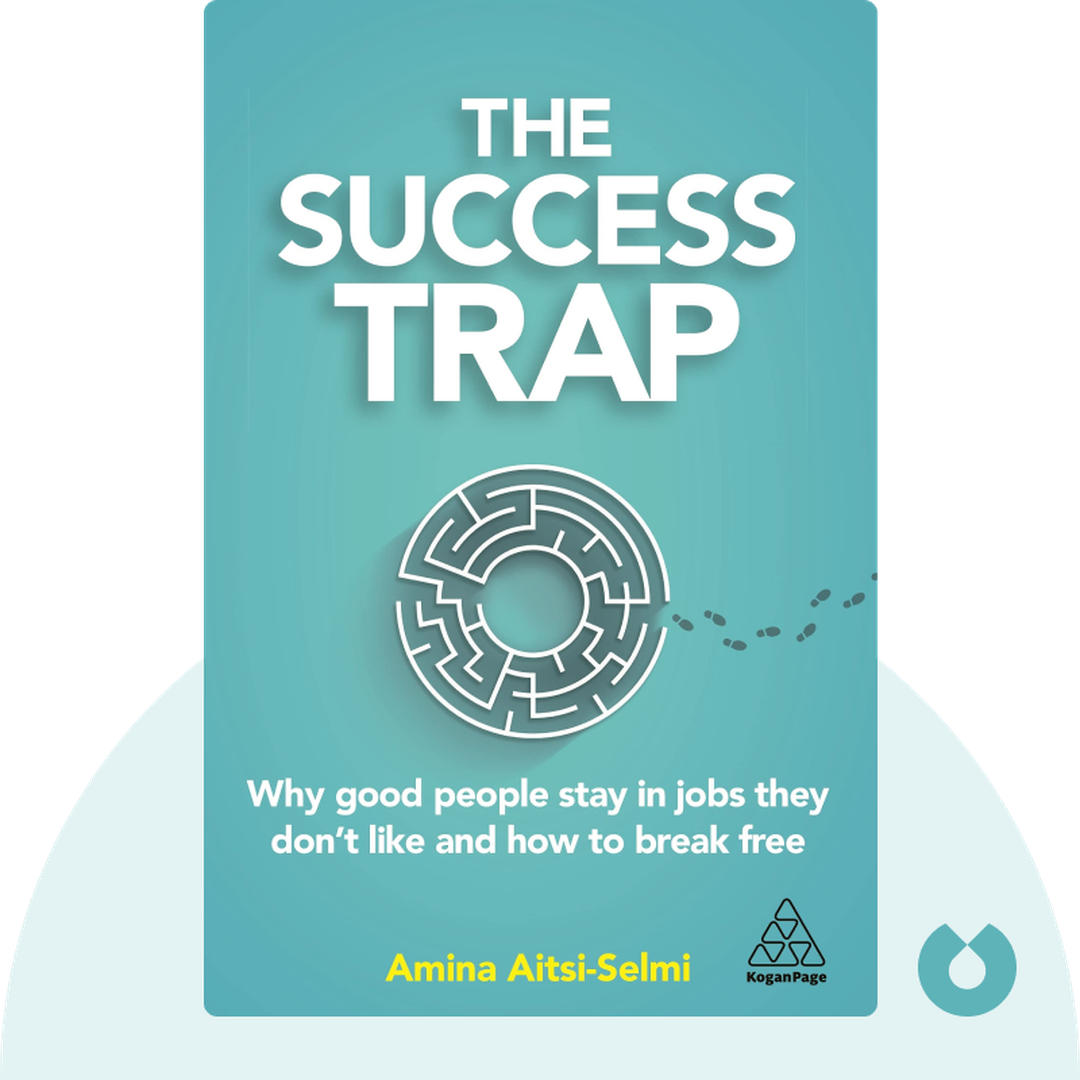
The Success Trap (2020) explains why so many talented, high-achieving people feel stuck in their jobs, despite their success. It also explains how to break out of this trap and embrace the many opportunities that the modern world of work has to offer.
Who Should Listen to The Success Trap?
- Successful people who still feel unfulfilled
- Professionals heading down a path they’re not sure about
- Freethinkers stuck in predictable jobs
Books Similar to The Success Trap
Readers who enjoyed this also liked these titles.