If You're Curious About These Questions...
You should listen to this audiobook
- Have you ever wondered why the world’s most famous 'raw' dish actually began as a clever method for preserving fish?
- What’s the secret behind the hidden rituals and years of rigorous training that go into crafting a single piece of perfect nigiri?
- Are you curious about which common sushi ingredients are traditional Japanese staples and which ones were invented to satisfy Western palates?
Listen to The Story of Sushi — Free Audiobook
Loading player...
Key Takeaways from The Story of Sushi
- Discover the true meaning of the word 'sushi,' which actually refers to the specially seasoned, round-grained rice rather than the raw fish itself.
- Learn how to eat sushi like a true connoisseur by avoiding common faux pas, such as dunking the rice in soy sauce or treating pickled ginger as an appetizer instead of a palate cleanser.
- Understand the meticulous handcrafting techniques chefs use to inject air into the rice and naturally warm the fish, creating perfectly balanced nigiri served at body temperature.
- Explore the profound cultural significance of sushi in Japan, where it is revered not just as a delicious meal, but as a restorative source of strength, health, and lifelong well-being.
- Find out why shrimp is a surprisingly recent post-WWII addition to sushi menus, and uncover the unique biological and ethical concerns behind preparing this popular crustacean.
Learning Tools
Reinforce what you learned from The Story of Sushi
Mind Map
The Story of Sushi
Health & Culture+
History & Etiquette+
The Art of Nigiri+
Ingredients+
Rituals & Showmanship+
Quiz — Test Your Understanding
Question 1 of 8
What did the word 'sushi' originally refer to, and how was it used in ancient times?
Question 2 of 8
According to the text, which of the following is considered a sushi faux pas?
Question 3 of 8
What is a key characteristic of the perfect nigiri, as confirmed by MRI scans?
Question 4 of 8
What are some of the ethical and environmental concerns associated with serving shrimp as sushi?
Question 5 of 8
Why do sushi masters generally prefer wild yellowtail over farmed yellowtail?
Question 6 of 8
How are salmon eggs traditionally prepared for sushi?
Question 7 of 8
How does sushi master Toshi Sugiura approach the preparation of sushi?
Question 8 of 8
According to the book's final actionable advice, what is the traditional and recommended way to eat sushi?
The Story of Sushi — Full Chapter Overview
- 1Recommendation
- 2In Japan, sushi is seen as a source of health and vitality, a view now shared globally as well.
- 3Many people misunderstand what 'sushi' means and the proper way to eat it.
- 4Sushi masters use precise techniques to skillfully craft light, airy nigiri pieces.
- 5Shrimp is a relatively new addition to sushi menus, yet concerns linger about using these curious creatures.
- 6People use varied terms for a fish’s maturity, but all agree wild fish really do make the best sushi.
- 7Salmon eggs are a relatively new addition to sushi, and they require a lengthy, complex preparation process indeed.
- 8Preparing sushi relies on rituals and techniques akin to the showmanship of kung fu.
The Story of Sushi Summary & Overview
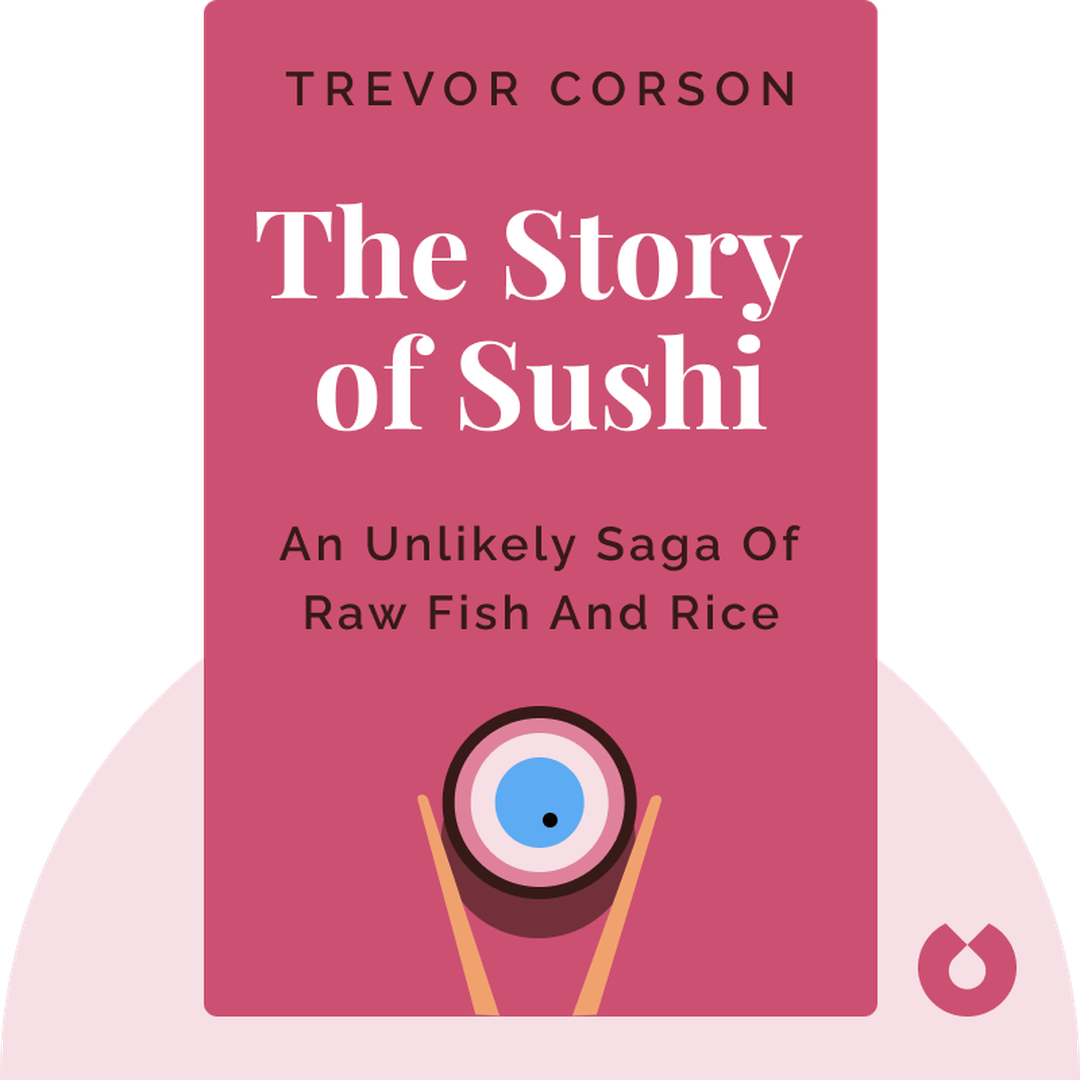
The Story of Sushi (2007) takes a closer look at the classic Japanese dish that has taken the Western world by storm. Discover the secrets behind both the traditional and more modern ingredients of sushi – and find out what kind of rituals and techniques are used to make the perfect nigiri.
Who Should Listen to The Story of Sushi?
- Sushi skeptics wondering what’s so great about tiny portions of rice and fish
- Foodies who want to know what makes the best sushi
- Chefs and restaurateurs wishing to add sushi to their menu
Books Similar to The Story of Sushi
Readers who enjoyed this also liked these titles.