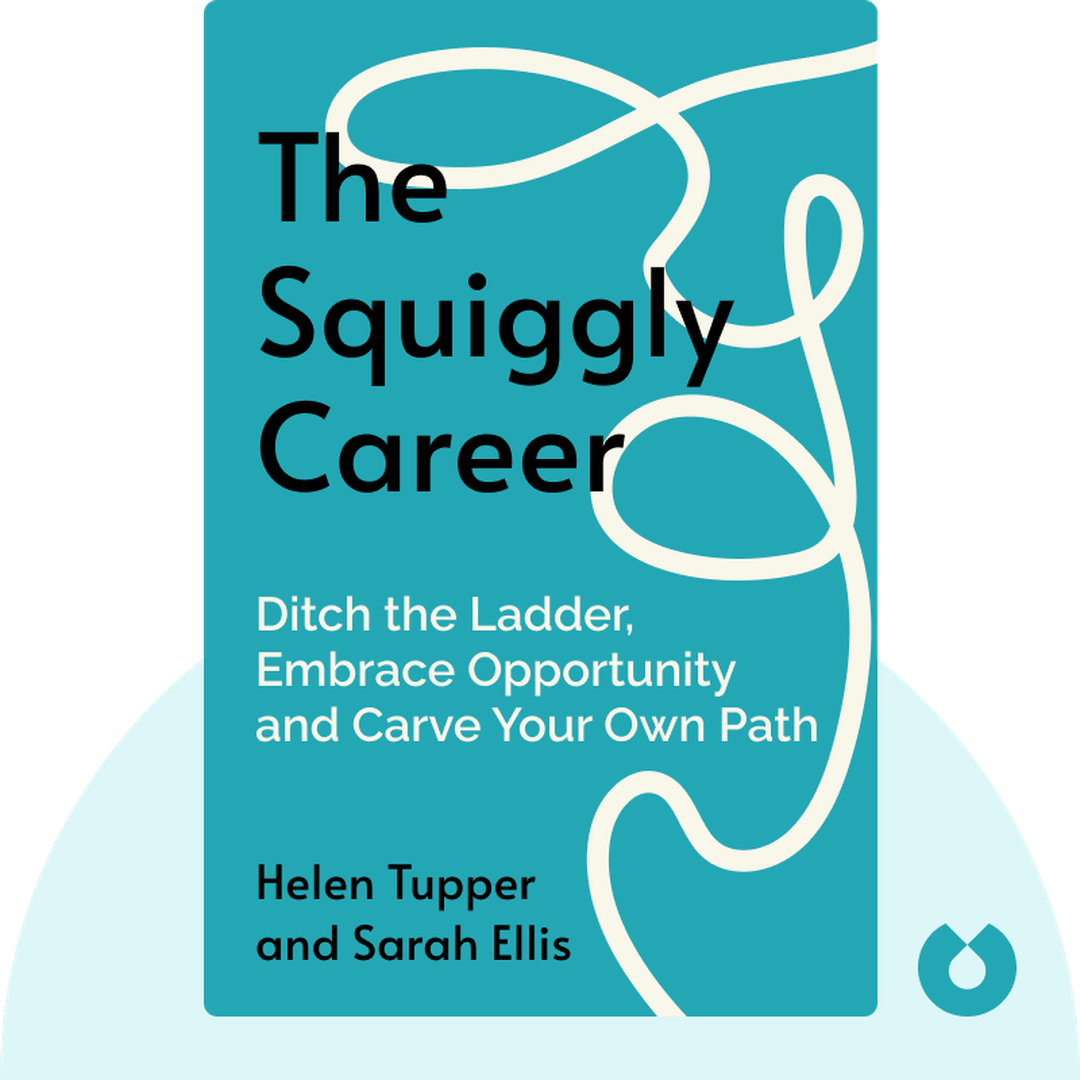
If You're Curious About These Questions...
You should listen to this audiobook
- Did you know that the traditional career ladder is dead, and that learning to navigate a 'squiggly' path could be the secret to long-term professional success?
- What if the most effective way to grow your network wasn't by asking for favors, but by focusing on how you can help others first?
- Are you curious about how identifying your core values can help you regain control over your career and turn every transition into a new opportunity?
Listen to The Squiggly Career — Free Audiobook
Loading player...
Key Takeaways from The Squiggly Career
- Understand why the traditional corporate ladder has been replaced by the 'squiggly' career, and learn to navigate this volatile, uncertain, complex, and ambiguous work environment.
- Discover how to transform your everyday skills into 'superstrengths' through a targeted four-step process that maximizes your natural talents and personal happiness.
- Learn how to identify and prioritize your core values to create a personal career GPS that guides your decisions and brings authenticity to your work.
- Master techniques to overcome your 'confidence gremlins' by challenging negative assumptions and tracking your daily successes to build lasting self-belief.
- Find out how to build a powerful professional network without awkward small talk by focusing on mutual assistance and clearly communicating your interests to others.
Learning Tools
Reinforce what you learned from The Squiggly Career
Mind Map
The Squiggly Career
The Shift to Squiggly Careers+
Self-Discovery & Foundation+
Building Career Resilience+
Connections & Growth+
Navigating Job Transitions+
Quiz — Test Your Understanding
Question 1 of 10
Why is job-hopping increasingly viewed as a positive trait by hiring managers in the modern professional world?
Question 2 of 10
How do the authors recommend allocating your time between your strengths and your weaknesses?
Question 3 of 10
What is the authors' perspective on personal weaknesses?
Question 4 of 10
During which phase of value cultivation do individuals primarily iron out the friction between their past beliefs and what they currently think is right?
Question 5 of 10
In a 'support solar system,' what is the specific role of the person who 'asks the hard questions'?
Question 6 of 10
According to the book, what is the most effective approach to building a professional network?
Question 7 of 10
When exploring future career possibilities, how do the authors define a 'pivot possibility'?
Question 8 of 10
What specific technique do the authors recommend for giving constructive feedback to colleagues?
Question 9 of 10
The authors argue that 'grit' is a better gauge of success than natural talent. Which of the following is NOT one of the four main ways mentioned to cultivate grit?
Question 10 of 10
According to the study by Kahneman and Deaton mentioned in the text, at approximately what point does salary stop influencing a person's level of well-being?
The Squiggly Career — Full Chapter Overview
- 1Recommendation
- 2Compared with previous generations, we have more freedom to shape how our careers unfold today.
- 3Identify your strengths, and devote your energy to developing what you already excel at.
- 4Acknowledge and weave your values into your everyday work.
- 5Confidence can be developed, and strengthened, through practice.
- 6Networking is an exchange of help, and offering support to others can build valuable, lasting relationships.
- 7Focus on exploring future possibilities instead of strictly following linear plans.
- 8Curiosity, feedback, and grit are increasingly valued workplace skills.
- 9Objectively reviewing your job options will help guide you toward the best path.
The Squiggly Career Summary & Overview
The Squiggly Career (2020) covers research and tips on how to best navigate a career full of frequent transitions and modern-day challenges. If we learn to identify our own strengths, values, goals, and motivations, we can apply them more often at work – and notice when they’re being neglected. The authors reveal how to network by helping others, the merits of starting a side project, and how to make the most of the newfound control we have over our careers.
Who Should Listen to The Squiggly Career?
- Job-hoppers looking for direction
- College grads wondering what the next step is
- Anyone seeking insight into the new job market
Books Similar to The Squiggly Career
Readers who enjoyed this also liked these titles.