If You're Curious About These Questions...
You should listen to this audiobook
- Have you ever wondered why even the smartest people often struggle to write clearly, and what 'curse' might be sabotaging your own prose without you realizing it?
- What if you could replace confusing, outdated grammar rules with simple linguistic tricks that make your writing feel natural, elegant, and easy to read?
- Are you curious about the secret to the 'classic style' of writing that treats your words as a window into the world rather than a puzzle for the reader to solve?
Listen to The Sense of Style — Cinematic Audio Edition
Loading player...
Key Takeaways from The Sense of Style
- Learn how to develop a compelling writing style by studying strong prose across various genres, rather than simply memorizing grammar rulebooks.
- Discover how to make abstract or conceptual ideas instantly understandable by anchoring your reader's imagination with vivid imagery and everyday analogies.
- Master the 'classic style' of writing to present complex topics simply, clearly, and confidently while treating your reader as an intellectual equal.
- Understand the 'curse of knowledge' and learn how to prevent alienating your audience by eliminating unnecessary jargon and obscure technical terms.
- Grasp the underlying code of English syntax to easily identify structural errors, ensuring your sentences clearly communicate exactly who did what to whom.
Learning Tools
Reinforce what you learned from The Sense of Style
Mind Map
The Sense of Style
Cultivating Style+
The Classic Style+
The Curse of Knowledge+
Syntax & Punctuation+
Strategic Passive Voice+
Text Coherence+
Debunking Grammar Myths+
Word Choice & Malaprops+
Final Polish+
Quiz — Test Your Understanding
Question 1 of 8
According to the text, how do most accomplished writers primarily develop their sense of style?
Question 2 of 8
What is a defining characteristic of the 'classic style' of writing?
Question 3 of 8
What does the 'curse of knowledge' refer to in the context of writing?
Question 4 of 8
Why might a good writer choose to use the passive voice, despite common advice to avoid it?
Question 5 of 8
How does the text suggest writers create 'arcs of coherence' in their work?
Question 6 of 8
According to the book, why is the rule against 'split infinitives' (e.g., 'to boldly go') considered a false rule?
Question 7 of 8
What is a 'malaprop' in writing?
Question 8 of 8
What actionable advice does the text offer to help writers spot stilted or clumsy writing before publishing?
The Sense of Style — Full Chapter Overview
- 1Recommendation
- 2Writers often gain their sense of style by reading well-written work.
- 3Turn to classic style to cultivate clear, concise prose and clarity.
- 4The knowledge curse often produces confusing, poorly written prose.
- 5A strong grasp of syntax and grammar will enhance your writing.
- 6Used judiciously, the passive voice can greatly strengthen your writing.
- 7Writing coherently means defining your topic and connecting your ideas and arguments clearly.
- 8When discussing grammar, purists are not necessarily always correct.
- 9Misused words can prevent your writing from being taken seriously.
The Sense of Style Summary & Overview
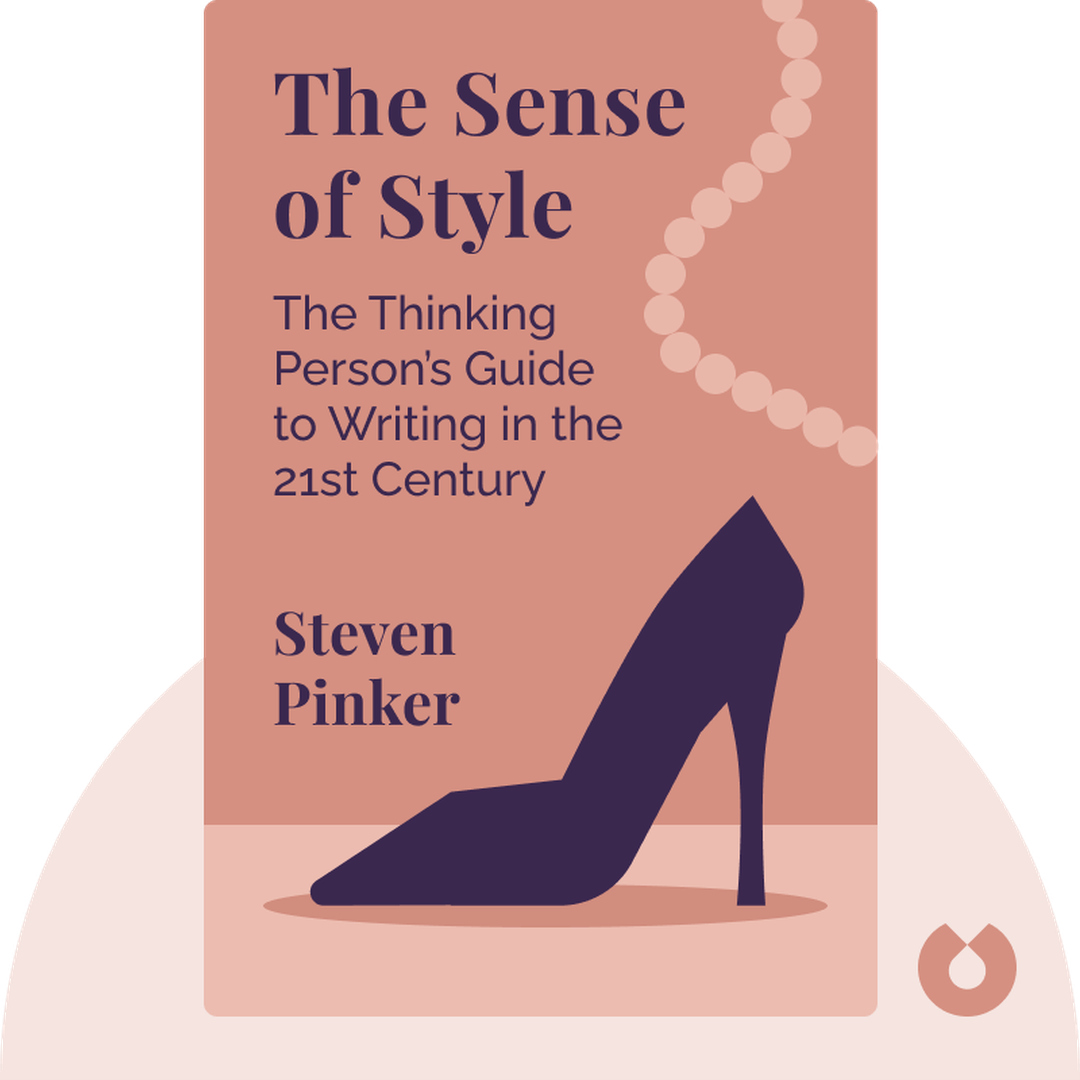
The Sense of Style (2014) offers a refreshing and relevant guide to writing potent, readable texts of all kinds. Instead of extolling the same confusing and sometimes counter-intuitive rules found in traditional style guides, The Sense of Style offers simple tricks and heuristics guaranteed to improve your writing.
Who Should Listen to The Sense of Style?
- Lovers of the English language
- Professional or amateur writers
- People interested in linguistics
Books Similar to The Sense of Style
Readers who enjoyed this also liked these titles.