If You're Curious About These Questions...
You should listen to this audiobook
- Did you know that the same framework used to build world-class software is now being used to revolutionize everything from home renovations to military operations?
- What’s the secret to dramatically increasing your team's velocity while ensuring every project delivers the exact impact your business needs?
- Have you ever wondered how small, agile teams manage to consistently outperform massive corporations with significantly more resources?
Listen to The Scrum Fieldbook — Free Audiobook
Loading player...
Key Takeaways from The Scrum Fieldbook
- Discover how the Scrum framework helps organizations keep pace with rapidly changing markets by breaking monumental tasks into smaller, adaptable modules.
- Understand the three essential roles of a Scrum Team—Product Owner, Team Members, and Scrum Master—and how they collaborate to remove obstacles and prioritize work.
- Learn how to organize complex projects into short, focused Sprints that utilize daily stand-ups and retrospective reviews to continuously adapt to new challenges.
- Find out why traditional, slow decision-making can increase project failure rates by 40 percent and how excessive deliberation waters down great ideas.
- Master the art of speeding up innovation by empowering your teams to act independently, ensuring that the people closest to a problem are the ones making the decisions to solve it.
Learning Tools
Reinforce what you learned from The Scrum Fieldbook
Mind Map
The Scrum Fieldbook
Core Philosophy+
The Scrum Framework+
Accelerating Innovation+
Proven Strategies+
Organizational Adoption+
Common Pitfalls+
Quiz — Test Your Understanding
Question 1 of 9
How did the Swedish engineering firm Saab successfully design the complex Gripen 39C fighter jet using Scrum?
Question 2 of 9
In the Scrum framework, what is the primary responsibility of the Scrum Master?
Question 3 of 9
Why does the Scrum framework advocate for giving teams independent control over their decision-making process?
Question 4 of 9
What is the crucial difference between "output" and "outcome" in the context of Scrum?
Question 5 of 9
What does the story about the NPR radio show's outdated interview rule illustrate about adopting Scrum?
Question 6 of 9
What is the Scrum technique known as "Swarming"?
Question 7 of 9
What is a common mistake companies make when they take an "à la carte" approach to implementing Scrum?
Question 8 of 9
When adopting Scrum across an entire organization, what is the purpose of an Executive Action Team?
Question 9 of 9
How does the concept of "kaizen" apply to the Scrum framework?
The Scrum Fieldbook — Full Chapter Overview
- 1Recommendation
- 2Scrum is fundamentally about responding to rapidly changing conditions.
- 3Scrum structures your complex projects into short, simple sprints.
- 4Scrum accelerates innovation by empowering your team to act independently.
- 5Scrum is about valuing outcomes above output.
- 6Adopting Scrum means rethinking and discarding outdated structures.
- 7Get the very most from Scrum by following proven strategies.
- 8Avoid Scrum errors by carefully implementing every facet of the framework.
- 9To fully adopt Scrum, the whole organization must work together.
The Scrum Fieldbook Summary & Overview
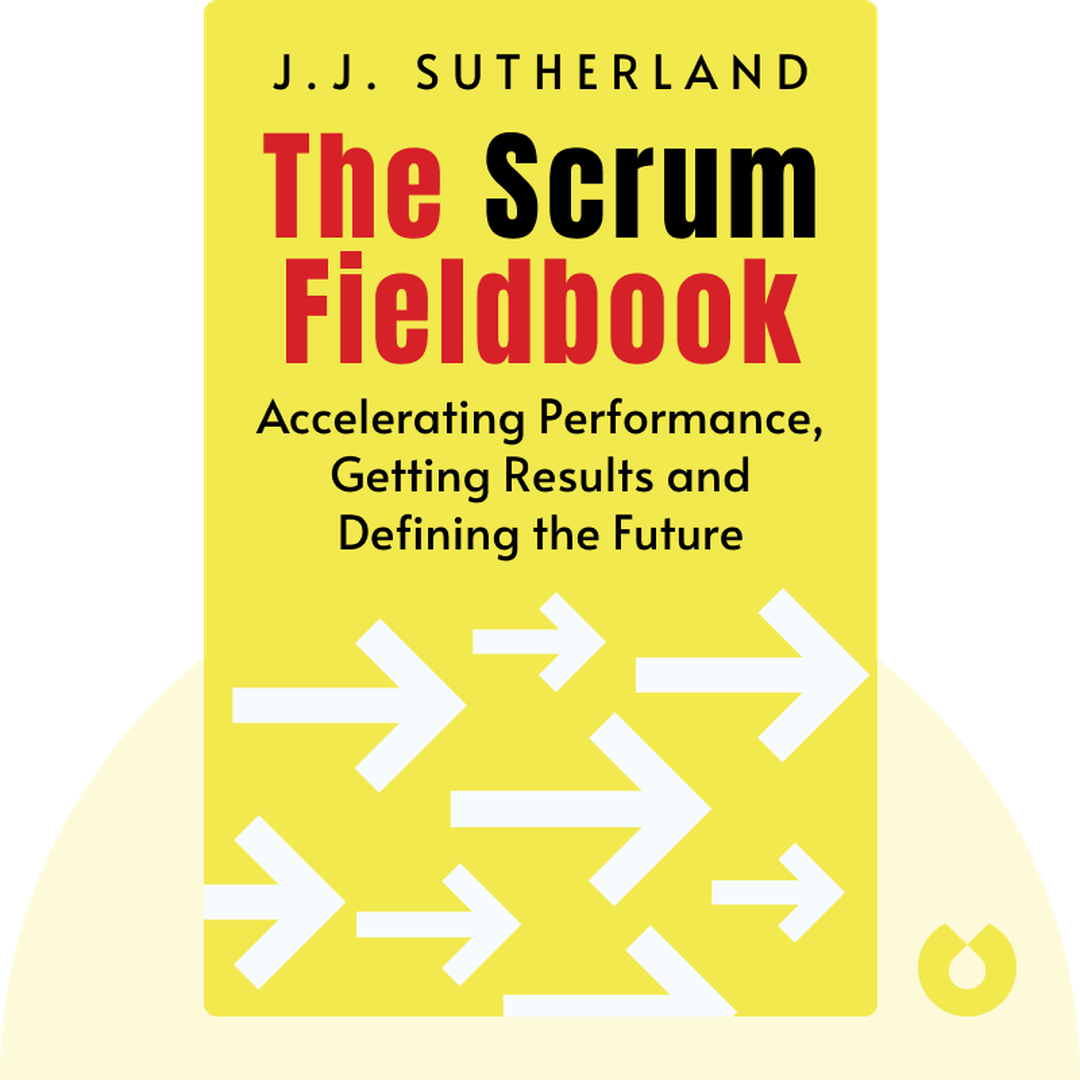
The Scrum Fieldbook (2019) is a practical, hands-on guide to the scrum organizational framework within the Agile mindset. This concise manual recaps how scrum works to increase work velocity and to ensure any team delivers the right impact for the business. It also explains how to implement Scrum in any organization across all industries from software to home renovation and even to the military.
Who Should Listen to The Scrum Fieldbook?
- Small companies looking for big results
- Managers aiming to streamline their team
- Anyone interested in cutting-edge organizational techniques
Books Similar to The Scrum Fieldbook
Readers who enjoyed this also liked these titles.