If You're Curious About These Questions...
You should listen to this audiobook
- What’s the secret to helping a legacy organization move with the speed and innovation of a disruptive start-up?
- Have you ever wondered why traditional top-down leadership is failing to keep up with the demands of today's digital customers?
- Are you curious about how a simple shift in your management mindset could unlock unprecedented levels of team productivity and agility?
Listen to The Agile Leader — Free Audiobook
Loading player...
Key Takeaways from The Agile Leader
- Understand how to navigate a volatile, uncertain, complex, and ambiguous (VUCA) world by mastering both market disruption and deep customer connection.
- Learn how to rapidly improve executive digital literacy through reverse mentoring, where tech-savvy junior employees guide senior leaders.
- Discover why framing honest feedback positively triggers dopamine, making your team feel good and highly receptive to acting on new insights.
- Find out how eliminating bloated bureaucracy accelerates your business by empowering employees to make their own fast decisions.
- Master the balance of agile decision-making by ensuring every team member has absolute clarity on their role, purpose, and the organization's strategic vision.
Learning Tools
Reinforce what you learned from The Agile Leader
Mind Map
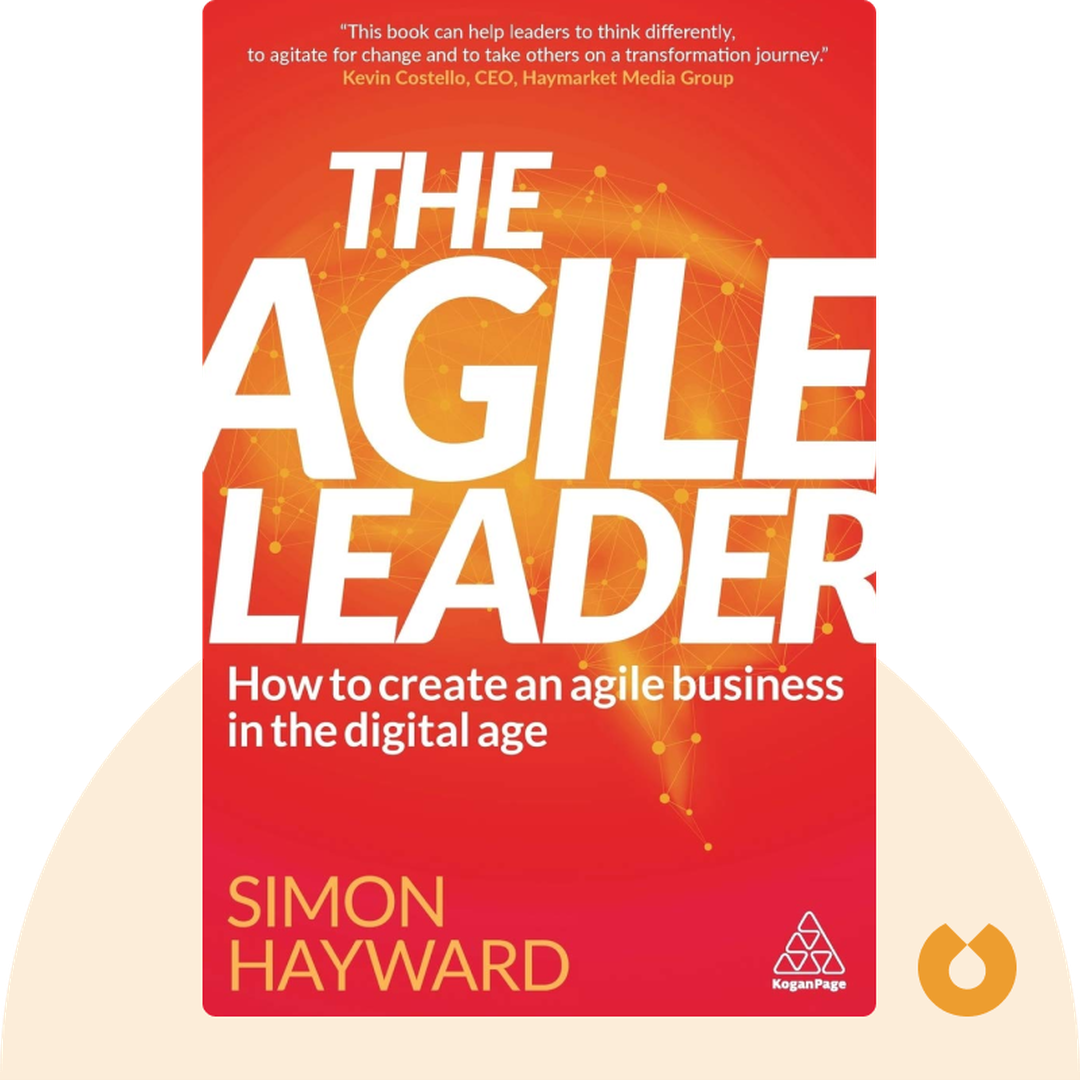
The Agile Leader
Navigating the VUCA World+
Continuous Learning+
Clarity & Customer Focus+
Ruthless Prioritization+
Building Agile Teams+
Systems of Thinking+
Driving Cultural Change+
Quiz — Test Your Understanding
Question 1 of 10
What two key elements must agile leaders foster to thrive in a volatile, uncertain, complex, and ambiguous (VUCA) world?
Question 2 of 10
According to the book, why is it important to frame honest feedback positively?
Question 3 of 10
How does the author suggest senior leaders can best improve their digital literacy?
Question 4 of 10
What is the danger of eliminating bureaucracy and empowering employees to make their own decisions without providing a clear strategic vision?
Question 5 of 10
What does the example of Mark Zuckerberg's 2011 strategy for Facebook illustrate?
Question 6 of 10
To prevent micromanagement and foster team agility, what rule should senior managers follow?
Question 7 of 10
According to the text, what is the ideal size for an agile team?
Question 8 of 10
What is a common pitfall for leaders regarding Daniel Kahneman's 'System One' thinking?
Question 9 of 10
Why do senior managers in traditional companies often find the switch to agile working uncomfortable?
Question 10 of 10
What actionable advice is given to help a business react more quickly to competition and changing markets?
The Agile Leader — Full Chapter Overview
- 1Recommendation
- 2Agile leaders must cultivate a spirit of disruption and strong connection.
- 3Agile leaders are keen to learn from the people around them.
- 4Agile companies place clarity, and customers, at the center of all they do.
- 5Agility demands clear business goals and a ruthless focus on priorities.
- 6A great team is greater than a collection of talented individuals.
- 7To make wise decisions, you need to employ the right system of thinking.
- 8You need to equip your staff with the skills, and the will, to embrace agility.
The Agile Leader Summary & Overview
The Agile Leader (2018) explores how leaders can steer traditional organizations in the fast-paced digital world. These blinks show that agile working can help corporate teams to compete with start-ups, and to keep up with ever-changing customer expectations.
Who Should Listen to The Agile Leader?
- Managers hoping to boost their team’s productivity
- Entrepreneurs looking for a fresh perspective
- Management consultants seeking new insights
Books Similar to The Agile Leader
Readers who enjoyed this also liked these titles.