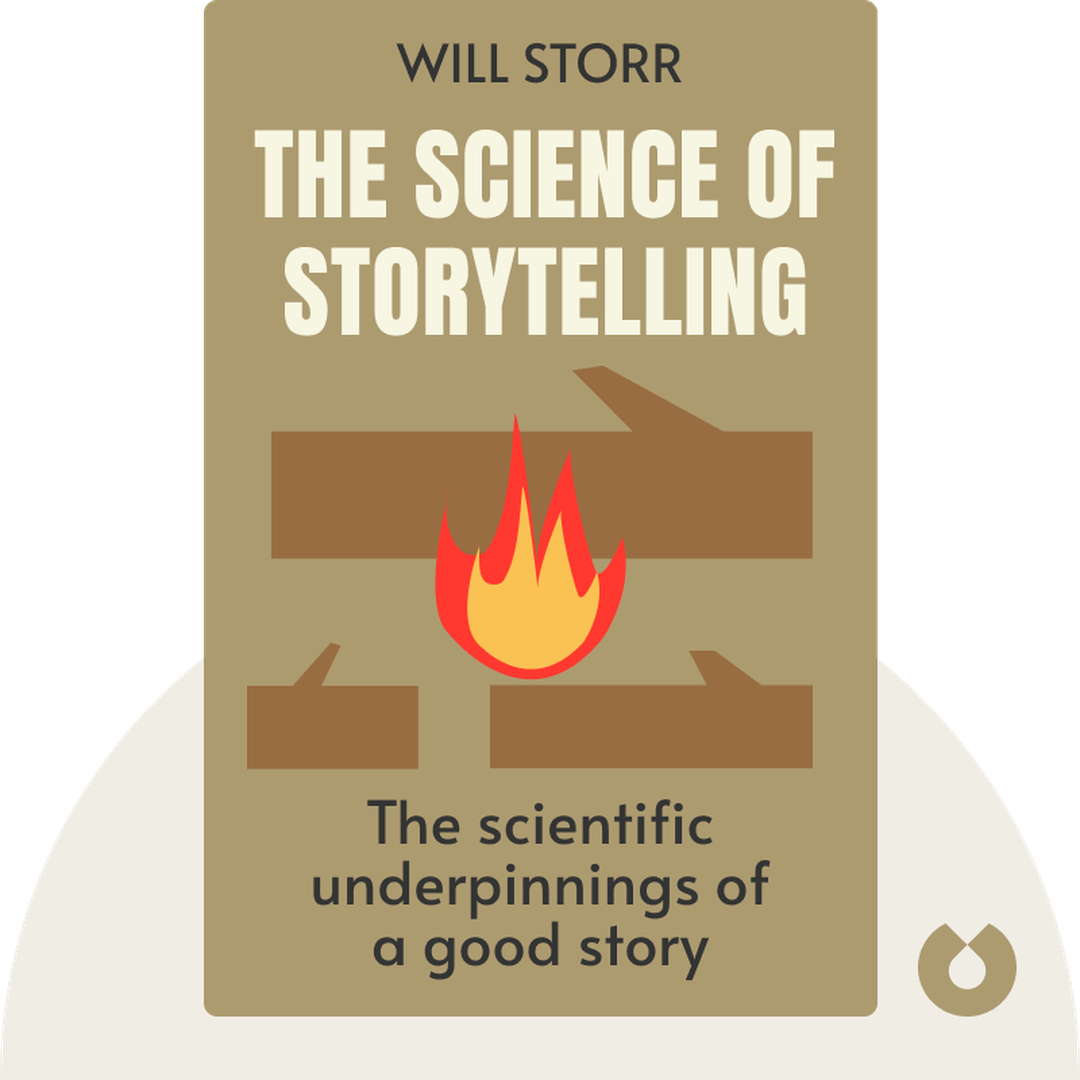
The Science of Storytelling
Start ListeningDownload Try free on iPhoneScan to start in 5 seconds
Categories:
If You're Curious About These Questions...
You should listen to this audiobook
- Did you know that your brain is biologically hardwired to crave specific narrative patterns, and that mastering them can give you near-total control over an audience’s attention?
- Have you ever wondered why the most unforgettable characters are always the most flawed, and how you can use neuroscience to craft a protagonist that feels hauntingly real to your readers?
- What's the secret to using 'stimulating details' to bypass your audience's logic and speak directly to their subconscious mind?
Listen to The Science of Storytelling — Free Audiobook
Loading player...
Key Takeaways from The Science of Storytelling
- Discover how the human brain constantly constructs reality as a narrative, automatically casting you as the morally superior hero and forcing cause-and-effect relationships onto random events.
- Understand why audiences are irresistibly drawn to flawed characters, which provide a safe psychological space to explore our own hidden faults and deeply ingrained beliefs.
- Learn how to keep your audience hooked by emphasizing meaningful goals, a technique proven by best-selling novels that use action words like 'do,' 'need,' and 'want' twice as often as other books.
- Master the art of plotting by giving your protagonist a 'flawed theory of control,' allowing a rich storyline to naturally unfold when their warped worldview is tested by unexpected change.
- Find out why confronting a character's deeply held beliefs creates such gripping conflict, triggering a neurological response in the brain that feels exactly like surviving a physical attack.
Learning Tools
Reinforce what you learned from The Science of Storytelling
Mind Map
The Science of Storytelling
The Brain's Reality Narrative+
The Power of Flawed Characters+
Character-Driven Plot+
Uncovering True Identity+
Stimulating the Brain+
The Drive for Status+
Changing Worldviews+
Actionable Advice+
Quiz — Test Your Understanding
Question 1 of 9
How does the human brain handle our perception of objective reality?
Question 2 of 9
According to the text, why do humans have an overwhelming, deeply rooted urge to understand the minds of others?
Question 3 of 9
What happens in the brain when a person is confronted with evidence that contradicts their deeply held beliefs?
Question 4 of 9
In storytelling, a character's 'theory of control' refers to:
Question 5 of 9
The text suggests that the central question driving our curiosity about a character—'Who is this character, really?'—is ultimately trying to determine what?
Question 6 of 9
How can writers effectively utilize the brain's natural curiosity when describing characters and their environments?
Question 7 of 9
Why do audiences tend to root for the underdog in a story?
Question 8 of 9
What psychological effect occurs when a reader experiences 'transportation' (becoming completely engrossed in a story)?
Question 9 of 9
What is a recommended strategy for developing a compelling, flawed character regarding their desires?
The Science of Storytelling — Full Chapter Overview
- 1Recommendation
- 2Human brains are wired to love stories.
- 3We’re especially drawn to flawed characters.
- 4A well-crafted character is essential; if you shape the right one, a rich plot will inevitably follow.
- 5A compelling plot should spur us to ask, “Who is this character, really?”
- 6You can further energize the story by giving the brain room to fill in the gaps.
- 7In the end, most great stories are fundamentally about a change in status.
- 8Stories possess a singular power to reshape our view of the world.
The Science of Storytelling Summary & Overview
The Science of Storytelling (2019) shows you how to craft a compelling story using lessons from psychology and neuroscience. These blinks walk you through the steps of creating a narrative that grips your audience by subtly manipulating their brains. From demonstrating how to create a perfectly flawed character to explaining the power of stimulating details, Will Storr reveals the crucial elements that go into building a great story.
Who Should Listen to The Science of Storytelling?
- Aspiring writers
- Creatives whose work involves storytelling, like journalists or advertisers
- Anyone who wants to look at stories more critically
Books Similar to The Science of Storytelling
Readers who enjoyed this also liked these titles.