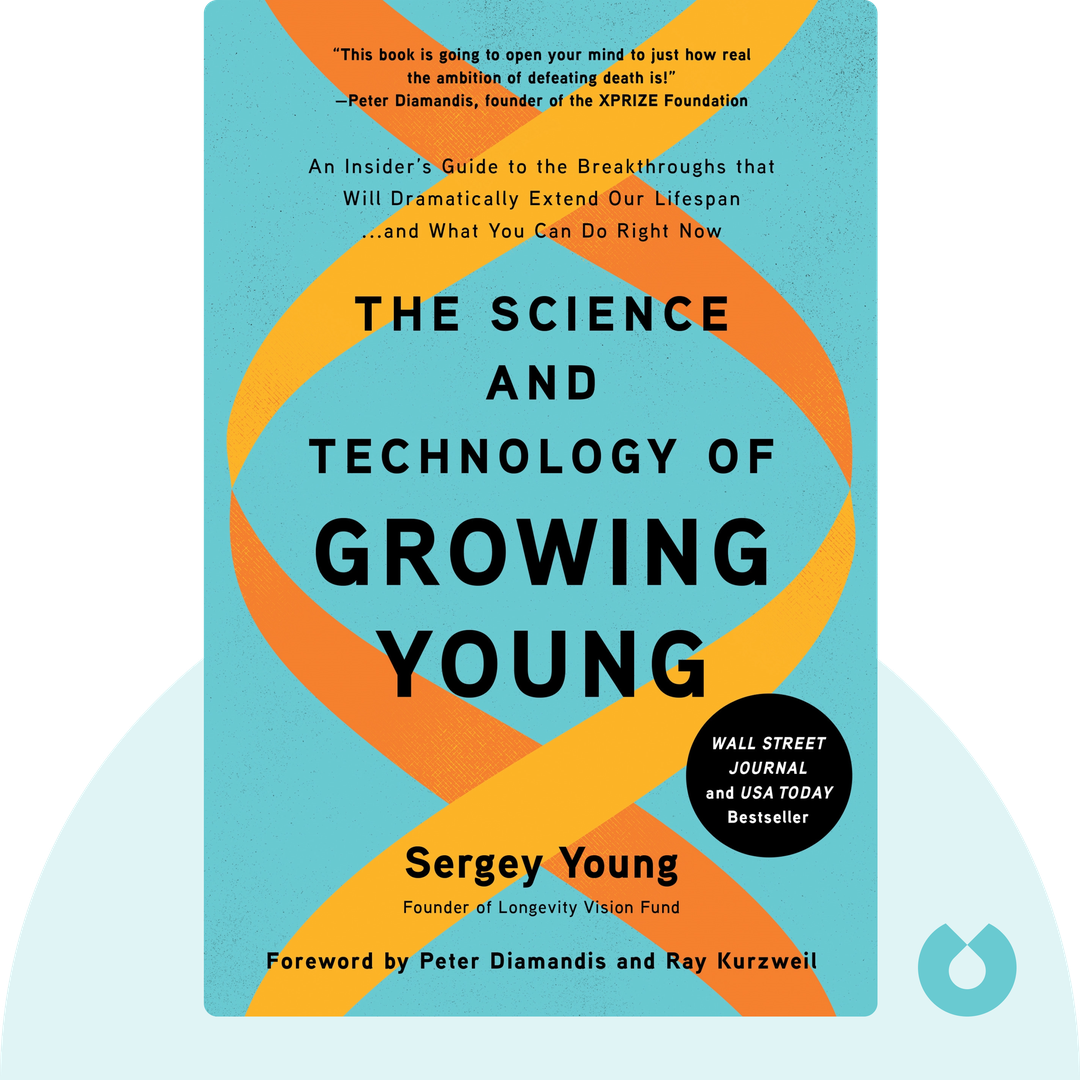
The Science and Technology of Growing Young
Start ListeningDownload Try free on iPhoneScan to start in 5 seconds
Categories:
If You're Curious About These Questions...
You should listen to this audiobook
- What if you could treat your body like a piece of hardware and simply replace aging parts to live a significantly longer, healthier life?
- Did you know that recent breakthroughs in AI and quantum computing are making it possible to stop diseases before they even start?
- Are you curious about how the 'Longevity Revolution' will soon allow humans to blow past the age of 100 while maintaining the vitality of youth?
Listen to The Science and Technology of Growing Young — Free Audiobook
Loading player...
Key Takeaways from The Science and Technology of Growing Young
- Understand how rapid advancements in artificial intelligence, quantum computing, and genetic engineering are fueling a 'Longevity Revolution' that could extend human life to 200 years.
- Discover how everyday wearables and innovative diagnostic devices are creating an 'Internet of Bodies' that shifts healthcare from reacting to sickness to proactively preventing it.
- Learn how artificial intelligence uses Natural Language Processing to scan millions of medical studies and cross-reference them with your personal data to generate highly accurate diagnoses.
- Find out how precision medicine abandons the one-size-fits-all approach by using AI to pinpoint the exact, tailor-made treatments and drugs uniquely suited to your specific genetic makeup.
- Realize that the future of aging isn't just about living longer chronologically, but actively reversing your biological age through continuous health monitoring and preventative care.
Learning Tools
Reinforce what you learned from The Science and Technology of Growing Young
Mind Map
The Science and Technology of Growing Young
The Longevity Revolution+
Proactive Diagnostics+
Precision Medicine+
Genetic Engineering+
Bionic Upgrades+
Digital Immortality+
Ethics & Environment+
Actionable Steps for Today+
Quiz — Test Your Understanding
Question 1 of 8
What does the author identify as the primary driver of the upcoming 'Longevity Revolution'?
Question 2 of 8
How is the field of medical diagnostics expected to change in the near future?
Question 3 of 8
What is the main advantage of using Artificial Intelligence in 'precision medicine'?
Question 4 of 8
How does the Cas9 protein function in the context of genetic engineering?
Question 5 of 8
What is one of the major solutions proposed in the text for the current organ transplant crisis?
Question 6 of 8
What does 'whole brain emulation' refer to in the context of futuristic longevity technologies?
Question 7 of 8
How does the author address the concern that extreme human longevity will lead to overpopulation and environmental catastrophe?
Question 8 of 8
According to the text, what immediate action should individuals take to ensure they survive long enough to benefit from the Longevity Revolution?
The Science and Technology of Growing Young — Full Chapter Overview
- 1Recommendation
- 2We’re on the brink of a Longevity Revolution.
- 3Advances in diagnosing illness will save lives.
- 4With AI, precision medicine finds solutions tailored to each individual.
- 5Genetic engineering can wipe out diseases.
- 6We’ll all become bionic, upgrading our bodies with artificial parts.
- 7Futuristic technologies might let us live forever.
- 8Immortality doesn’t have to cause an environmental catastrophe or an ethical problem.
- 9Do everything you can to stay alive.
- 10Final summary
The Science and Technology of Growing Young Summary & Overview
The Science and Technology of Growing Young (2021) reveals that the Longevity Revolution is just around the corner. Thanks to developments in AI, quantum computing, and genome sequencing, we’re able to engage in genetic engineering, manufacture new body parts, and treat diseases before they’ve even begun to affect us. These developments will soon allow us to live longer and healthier lives than we ever thought possible.
Who Should Listen to The Science and Technology of Growing Young?
- Tech geeks curious about how AI has impacted health care
- Middle-aged people wanting to reverse the effects of aging
- People who want to find out how to optimize their health to live longer, fuller lives
Books Similar to The Science and Technology of Growing Young
Readers who enjoyed this also liked these titles.