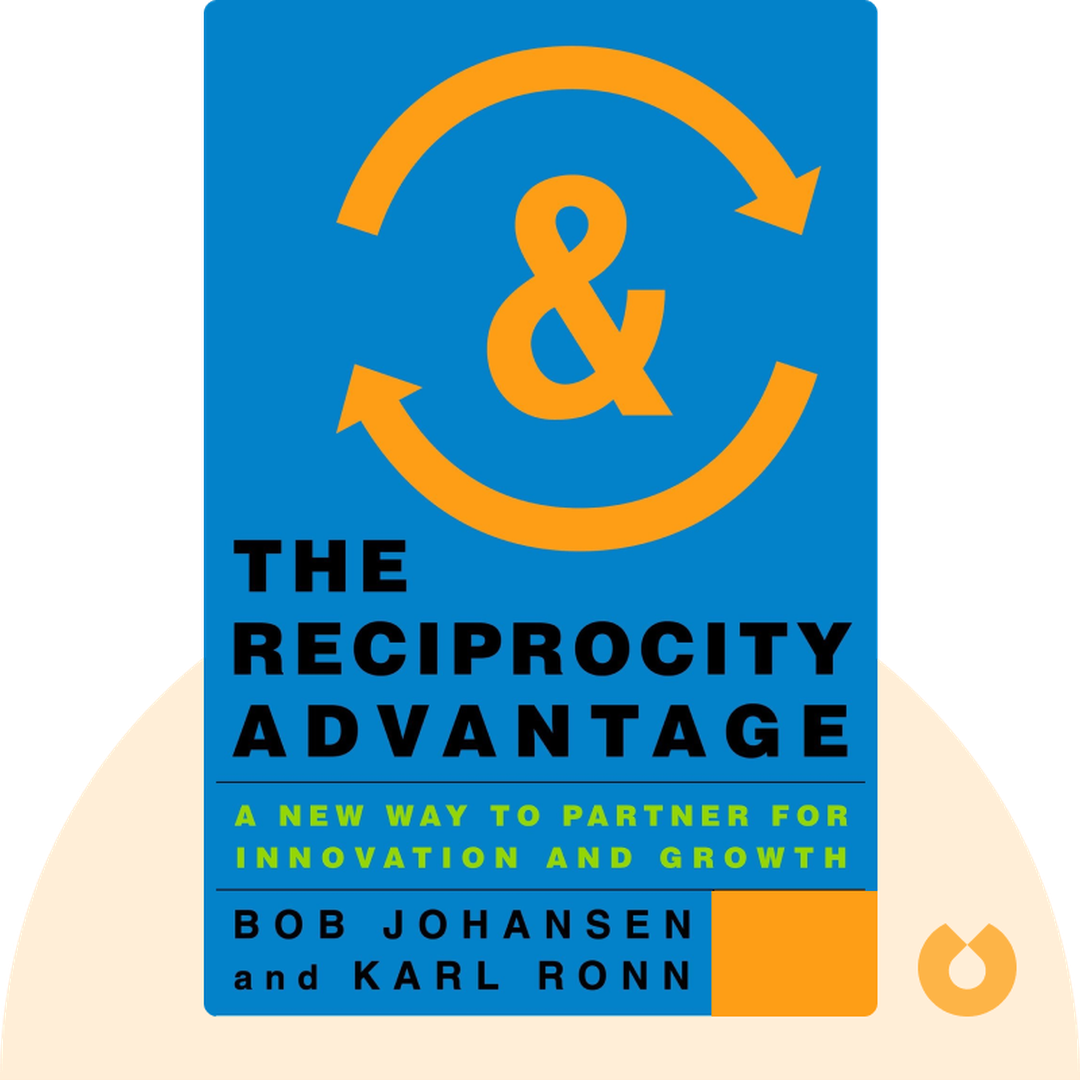
The Reciprocity Advantage
Start ListeningDownload Try free on iPhoneScan to start in 5 seconds
Categories:
If You're Curious About These Questions...
You should listen to this audiobook
- What if you could scale your business faster by giving away your most valuable assets instead of guarding them?
- Are you curious about how the world’s most successful companies are using reciprocity to stay ahead of the global trends that are crushing their competitors?
- Have you ever wondered why traditional business partnerships often fail, and what the new model for future-proof collaboration looks like?
Listen to The Reciprocity Advantage — Free Audiobook
Loading player...
Key Takeaways from The Reciprocity Advantage
- Discover why giving up control, sharing resources, and collaborating actually provides your organization with a major competitive edge in an ever-changing business world.
- Learn how to uncover the underutilized assets in your company's metaphorical basement to pivot toward highly profitable new services.
- Understand why embracing experimentation and partnering with unexpected allies, such as hackers or makers, can dramatically expand your product's reach and applications.
- Find out how sharing your brand and co-creating with others can help you scale massively without hurting your core business, as demonstrated by the global success of TEDx.
- Prepare your business for the future by learning why digital natives oppose traditional intellectual property rights and how you must adapt your monetization strategies to survive.
Learning Tools
Reinforce what you learned from The Reciprocity Advantage
Mind Map
The Reciprocity Advantage
Unutilized Assets+
Experimentation Culture+
Scaling via Co-Creation+
Engaging Digital Natives+
Open Innovation+
The Power of Gaming+
Cloud Infrastructure+
Quiz — Test Your Understanding
Question 1 of 8
What is the primary insight of the 'reciprocity advantage'?
Question 2 of 8
How did IBM successfully pivot when its large computers struggled in the mid-1980s?
Question 3 of 8
What lesson does the book draw from Microsoft's experience with the Kinect gaming platform?
Question 4 of 8
What was Google's primary motivation for introducing high-speed Google Fiber in Kansas City?
Question 5 of 8
How did the creation of the TEDx program affect the core TED business?
Question 6 of 8
According to the book, how will 'digital natives' likely impact the future of intellectual property (IP)?
Question 7 of 8
How does Lego's CUUSOO platform exemplify open innovation?
Question 8 of 8
Based on Edward Castronova's research, what is the primary reason people play large online games?
The Reciprocity Advantage — Full Chapter Overview
- 1Recommendation
- 2Finding unused assets and forming new partnerships are crucial to building a strong reciprocity advantage.
- 3Being willing to experiment is crucial for building a reciprocity advantage.
- 4The reciprocity advantage unlocks remarkably rapid, scalable growth.
- 5Today’s rising generation will upend how companies earn revenue, engage their customers, and establish partnerships across global markets.
- 6An interconnected world will fundamentally reshape the concept of collaboration.
- 7Gaming will transform how companies engage customers and how we learn, now and in the future.
- 8Cloud computing will fundamentally transform how companies scale their businesses worldwide.
The Reciprocity Advantage Summary & Overview
Big changes are coming to the way we live and do business. The Reciprocity Advantage describes the global trends that will disrupt current business partnership models, and explains how you can build advantageous collaborations that’ll stand the test of time. These blinks will equip you with the knowledge you need to succeed in the business world of the future.
Who Should Listen to The Reciprocity Advantage?
- Entrepreneurs looking for new ways to grow their business
- Anyone interested in how global trends will change the way companies operate
Books Similar to The Reciprocity Advantage
Readers who enjoyed this also liked these titles.