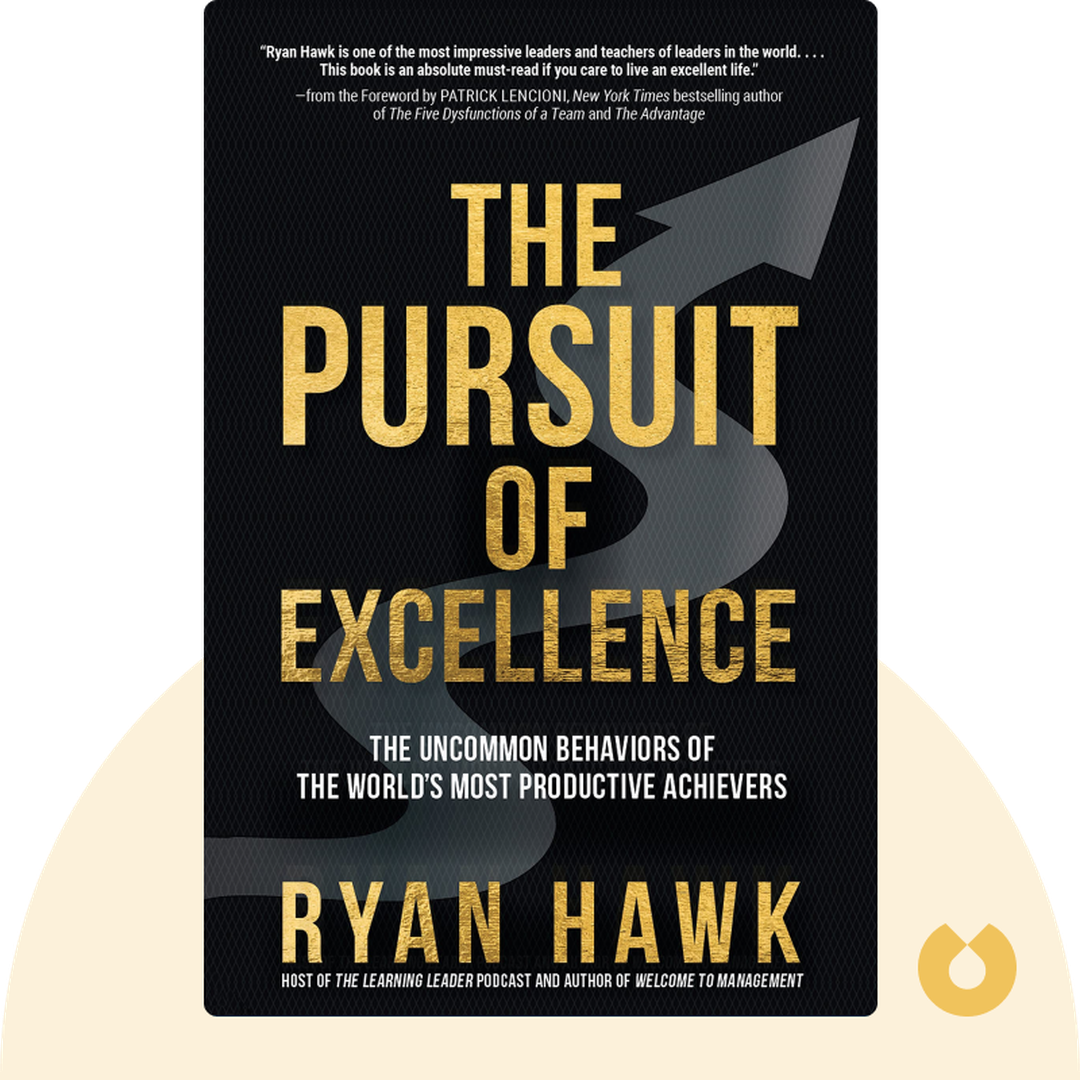
The Pursuit of Excellence
Start ListeningDownload Try free on iPhoneScan to start in 5 seconds
Categories:
If You're Curious About These Questions...
You should listen to this audiobook
- What if you could distill the wisdom of hundreds of the world’s top performers into a single roadmap for your own life and career?
- Have you ever wondered which specific daily habits separate those who are merely busy from those who consistently achieve true excellence?
- What’s the secret to not only reaching the top of your field but also finding profound satisfaction once you get there?
Listen to The Pursuit of Excellence — Cinematic Audio Edition
Loading player...
Key Takeaways from The Pursuit of Excellence
- Understand why chasing excellence instead of fleeting success provides an infinite game of personal growth and lasting fulfillment.
- Discover the flaw in traditional 'follow your passion' advice and learn how adopting a process-focused purpose mindset helps you push through inevitable hard work.
- Learn how true freedom comes from discipline by focusing entirely on your daily preparation and letting the final results take care of themselves.
- Master the art of achieving massive goals by breaking them down into small, actionable daily rituals rather than relying on overwhelming deadlines.
- Find out how to guarantee daily progress by actively removing obstacles and temptations from your environment to support a new lifestyle.
Learning Tools
Reinforce what you learned from The Pursuit of Excellence
Mind Map
The Pursuit of Excellence
Success vs. Excellence+
Habit 1: Purpose Mindset & Process+
Habit 2: Love & Relationships+
Habit 3: Reframing Failure & Learning+
Quiz — Test Your Understanding
Question 1 of 7
According to the text, what is a primary distinction between the pursuit of success and the pursuit of excellence?
Question 2 of 7
Why does the author argue that the common advice to 'follow your passion' is problematic?
Question 3 of 7
How does marathon racer Eliud Kipchoge describe the relationship between freedom and discipline?
Question 4 of 7
Based on the insights from James Clear, which of the following is a crucial step for successfully adopting a new habit or process?
Question 5 of 7
What crucial factor does Jerry Seinfeld say is often overlooked when highly successful people talk about 'willing themselves to greatness'?
Question 6 of 7
How does the text differentiate between transactional and transformational relationships?
Question 7 of 7
What is the core concept of the Feynman Technique mentioned in the text?
The Pursuit of Excellence — Full Chapter Overview
- 1Recommendation
- 2Achieving excellence demands a purpose mindset that prioritizes the daily process.
- 3Do what you love and build transformational relationships around you.
- 4See failures as progress and keep learning and growing always.
The Pursuit of Excellence Summary & Overview
The Pursuit of Excellence (2022) offers a thoughtful approach on how to become the best, most excellent version of yourself. Compiling wisdom from hundreds of interviews with world renowned experts and entrepreneurs, the author lays out the best habits and practices that anyone can use to improve their career and their lives.
Who Should Listen to The Pursuit of Excellence?
- Anyone eager to raise their game and find more satisfaction in life
- People looking for tips on how to achieve more in their career
- Leaders and entrepreneurs eager to perform better
Books Similar to The Pursuit of Excellence
Readers who enjoyed this also liked these titles.