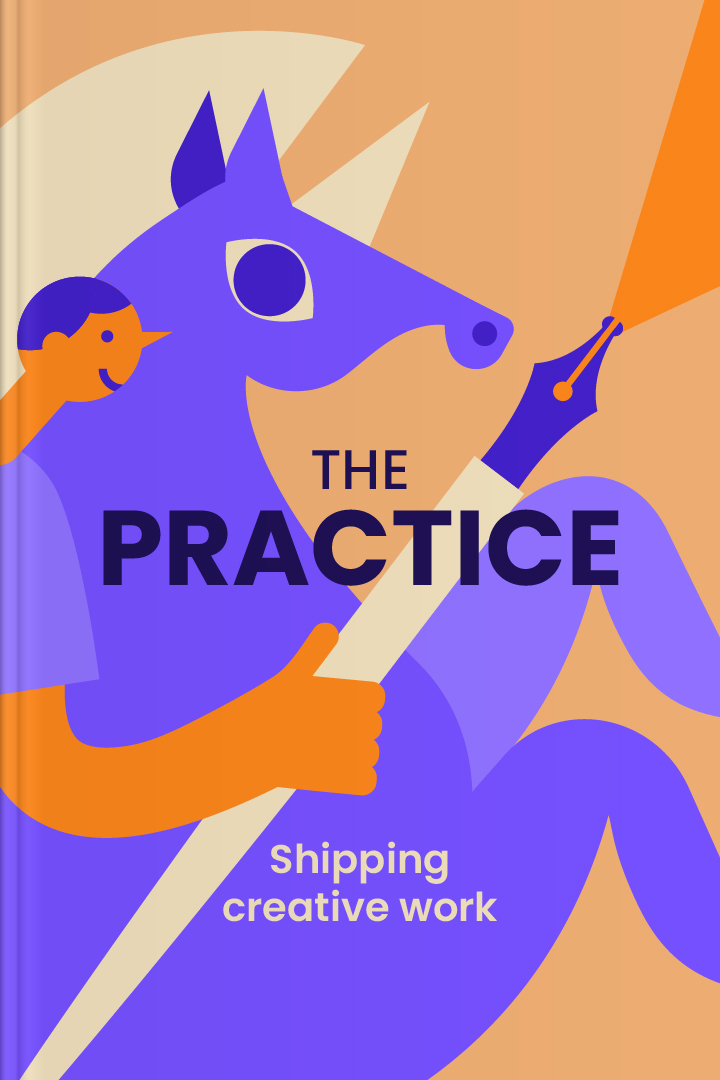
The Practice audiobook cover - This gentle guide invites creators out of hiding, helping them build self-trust, find their voice, practice like professionals, and share their work with the people who truly need it—one brave shipment at a time.

The Practice

This gentle guide invites creators out of hiding, helping them build self-trust, find their voice, practice like professionals, and share their work with the people who truly need it—one brave shipment at a time.

Based on ideas referenced from Seth Godin and others (summary adaptation)

4.5 / 5(408 ratings)

If You're Curious About These Questions...

You should listen to this audiobook

Listen to The Practice — Free Audiobook

Loading player...

Key Takeaways from The Practice

Learning Tools

Reinforce what you learned from The Practice

Mind Map

The Practice
Trust the Process+
Share Generously+
Professionalize Creativity+
Define Artistic Intent+
Overcome Perfectionism+
Navigate Criticism+
Strive for Greatness+
Embrace Constraints+
Persist Through Rejection+

Quiz — Test Your Understanding

Question 1 of 9
According to the text, why is it dangerous for creatives to fixate solely on the outcome of their work?
  • A. It prevents them from developing foundational technical skills.
  • B. It can lead to making shallow, market-driven choices.
  • C. It makes them overly sensitive to negative criticism.
  • D. It causes them to experience severe and permanent creative blocks.
Question 2 of 9
How does the author view the act of bringing your creative work to the market?
  • A. As a necessary evil that dilutes the purity of the art.
  • B. As a way to maximize profit by filling existing gaps in the industry.
  • C. As a means of making the work available so it can create change.
  • D. As a sign that a creative has compromised their values and 'sold out.'
Question 3 of 9
Why does the text argue that creative professionals should insist on getting paid for their work?
  • A. Because money signifies value and demonstrates your worth as a professional.
  • B. Because true art cannot be created without purchasing expensive equipment.
  • C. Because free work is legally unprotected from copyright infringement.
  • D. Because it is the only guaranteed way to attract a larger audience.
Question 4 of 9
When defining the artistic intent of your work, why should you target a specific, ideal audience rather than 'everyone'?
  • A. Because a smaller audience is less likely to leave negative reviews.
  • B. Because reaching a niche group is significantly cheaper than mass marketing.
  • C. Because convincing a core group will lead them to influence the broader public.
  • D. Because specific audiences will pay a premium for customized content.
Question 5 of 9
What does the comparison between the bands Steely Dan and Bruce Springsteen illustrate about creative practice?
  • A. That studio recordings are always technically superior to live performances.
  • B. That aiming for flawless perfection can actually hinder your creative output.
  • C. That rock music requires more technical skill than other musical genres.
  • D. That musicians must tour constantly in order to maintain their popularity.
Question 6 of 9
How should a creative professional handle a 'generous critic'?
  • A. Ignore them, as true artists do not compromise their vision for anyone.
  • B. Argue with them to defend the original artistic intent of the project.
  • C. Implement every change they suggest to ensure the work is commercially successful.
  • D. Appreciate their engagement and consider their feedback, recognizing them as a fan.
Question 7 of 9
What lesson can creatives learn from FedEx's business model regarding achieving greatness?
  • A. To expand their services to cover every possible market need.
  • B. To focus intensely on their 'superpower' skill and leave other areas to competitors.
  • C. To prioritize customer service over the quality of the actual product.
  • D. To offer their services for free initially to build a loyal customer base.
Question 8 of 9
What was the 'magic ingredient' that contributed to the massive success of REM's album 'Out of Time'?
  • A. They finally secured a much larger production budget from their label.
  • B. They intentionally embraced constraints by playing unfamiliar instruments.
  • C. They spent two years polishing the studio recordings until they were flawless.
  • D. They hired a new lead singer to appeal to a more mainstream audience.
Question 9 of 9
What does the story of New Yorker cartoonist Drew Dernavich demonstrate about creative success?
  • A. Successful creatives rarely experience rejection once they are established.
  • B. Success comes from carefully curating a small number of perfect submissions.
  • C. Successful creatives don't get rejected less; they simply submit more work.
  • D. Rejection means you need to completely change your artistic style and intent.

The Practice — Full Chapter Overview

The Practice Summary & Overview

This narration is for anyone who creates—whether through art, writing, leadership, entrepreneurship, or any craft that asks for originality and heart. It explores why so many talented people remain unseen, and how courage and perseverance can quietly change that.

Across seven chapters, the script reframes art as service and leadership, offers ways to strengthen self-trust, encourages professionalism through consistency and better standards, and gently loosens the grip of gatekeepers, credentials, and unhelpful criticism. The overall message is simple: the world is made better when creators show up, practice, and ship.

Who Should Listen to The Practice?

  • Creators who feel stuck in hiding—procrastinating, doubting, or waiting for permission—and want a kinder path into visibility.
  • Writers, artists, entrepreneurs, leaders, and freelancers who want to build consistency, develop a distinct voice, and reach the audience their work is meant to serve.
  • Anyone wrestling with imposter syndrome, criticism, or gatekeepers, and looking for steady encouragement to keep sharing their craft.

About the Author: Based on ideas referenced from Seth Godin and others (summary adaptation)

This script is a warm audio adaptation of the provided summary content, which references ideas and quotations from Seth Godin and also mentions researcher Daniel Chambliss. It is not a biography of a single author, but a narrated interpretation designed to be supportive and listenable.

🎧
Listen in the AppOffline playback & background play
Get App