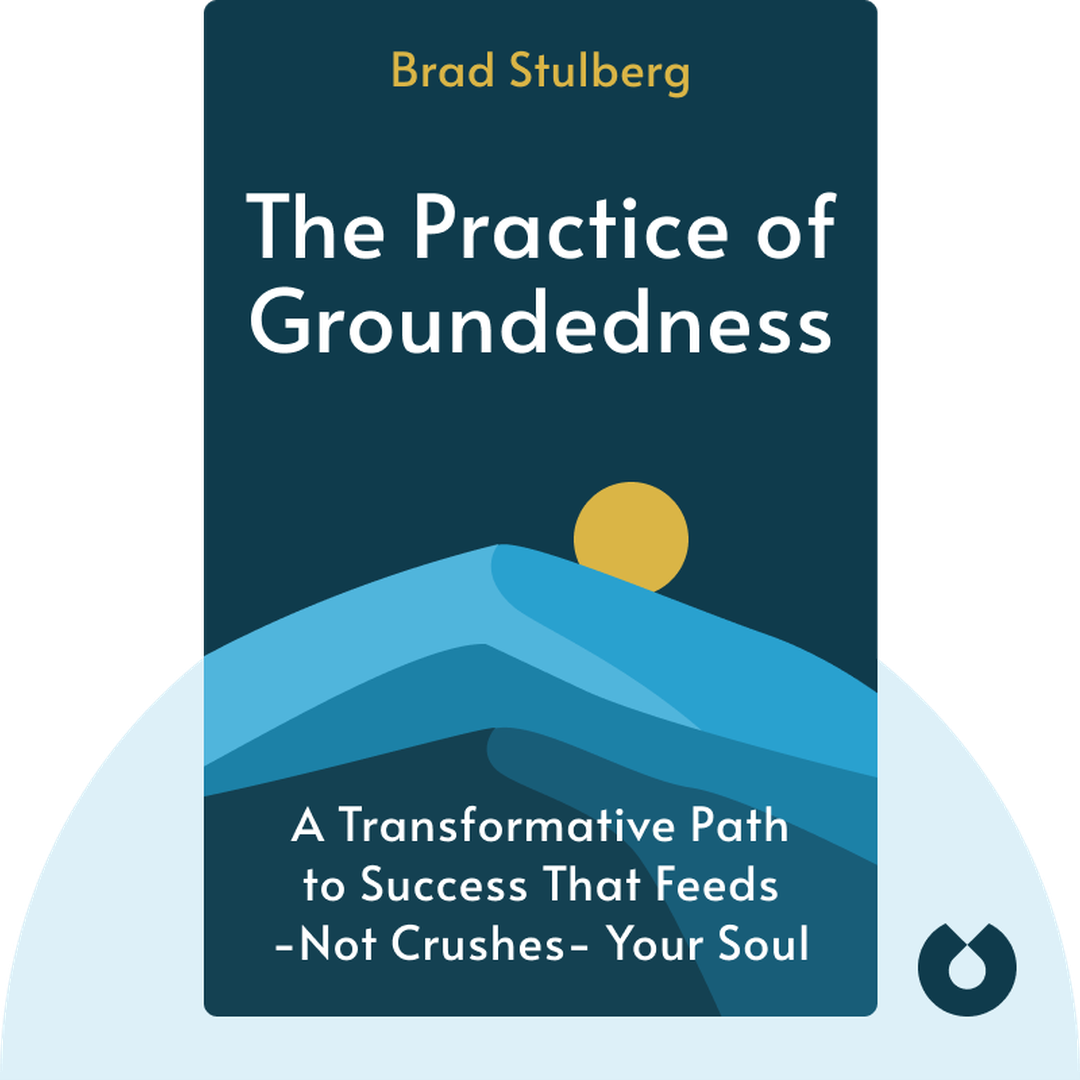
The Practice of Groundedness
Start ListeningDownload Try free on iPhoneScan to start in 5 seconds
Categories:
If You're Curious About These Questions...
You should listen to this audiobook
- What's the secret to achieving success without sacrificing your well-being?
- Are you curious about how to break free from the cycle of constant striving and self-optimization?
- Can you really find a sense of calm and clarity in a world that's always pushing you to do more, faster, and better?
Listen to The Practice of Groundedness — Free Audiobook
Loading player...
Key Takeaways from The Practice of Groundedness
- Understand why 'heroic individualism'—the constant pressure to be more productive and optimized—leads directly to burnout, unhappiness, and mental exhaustion.
- Discover the 'redwood tree' approach to sustainable success, which emphasizes building deep roots of inner strength rather than endlessly striving for external achievements.
- Learn how to cultivate true groundedness by anchoring your time and energy in core values, ensuring your emotional stability doesn't fluctuate with external wins or losses.
- Master the first principle of groundedness by accepting your present reality exactly as it is, allowing you to move past denial and actively work toward the future you desire.
- Find out how to avoid shooting yourself with a 'second arrow' of negative reactions when facing adversity, empowering you to handle life's challenges with a calm and neutral mindset.
Learning Tools
Reinforce what you learned from The Practice of Groundedness
Mind Map
The Practice of Groundedness
The Problem: Heroic Individualism+
The Antidote: Groundedness+
Six Core Principles+
Actionable Implementation+
Quiz — Test Your Understanding
Question 1 of 8
According to the text, what is 'heroic individualism'?
Question 2 of 8
What lesson does the author learn from redwood trees about achieving stability in life?
Question 3 of 8
How does the Buddhist parable of the 'second arrow' relate to the principle of accepting your present reality?
Question 4 of 8
When discussing the principles of staying present and being patient, the author compares human attention to what element?
Question 5 of 8
What event prompted the author to publicly reveal his struggle with OCD, illustrating the principle of embracing vulnerability?
Question 6 of 8
What surprising fact about redwood trees does the author use to illustrate the importance of community?
Question 7 of 8
According to the text, why is physical exercise considered a crucial principle of groundedness?
Question 8 of 8
What actionable advice does the author give for initially putting the six principles of groundedness into practice?
The Practice of Groundedness — Full Chapter Overview
- 1Recommendation
- 2Heroic individualism results in burnout and misery.
- 3The remedy for heroic individualism is to focus on your roots—the principles and the practices that keep you grounded.
- 4Accept your current reality as it is, so you can work on changing it into the future you truly want.
- 5To stay grounded in what matters to you and grow things to fruition, remain present and practice patience.
- 6To attain true strength, embrace vulnerability.
- 7To ensure you’re truly grounded, surround yourself with a supportive community.
- 8To keep your mind grounded, keep your body active.
The Practice of Groundedness Summary & Overview
The Practice of Groundedness (2021) provides some counterbalance to all those self-help books that extol us to never stop optimizing ourselves, becoming more productive, and pushing ourselves toward more success. Drawing from both ancient wisdom and modern science, it identifies six principles of a more grounded way of living. It also tells the personal story of how the author came to understand these principles while struggling to overcome mental health issues.
Who Should Listen to The Practice of Groundedness?
- Highly-driven people feeling burnt out, scattered, or restless
- Professionals looking for a more sustainable approach to success
- Anyone who wants to be more grounded
Books Similar to The Practice of Groundedness
Readers who enjoyed this also liked these titles.