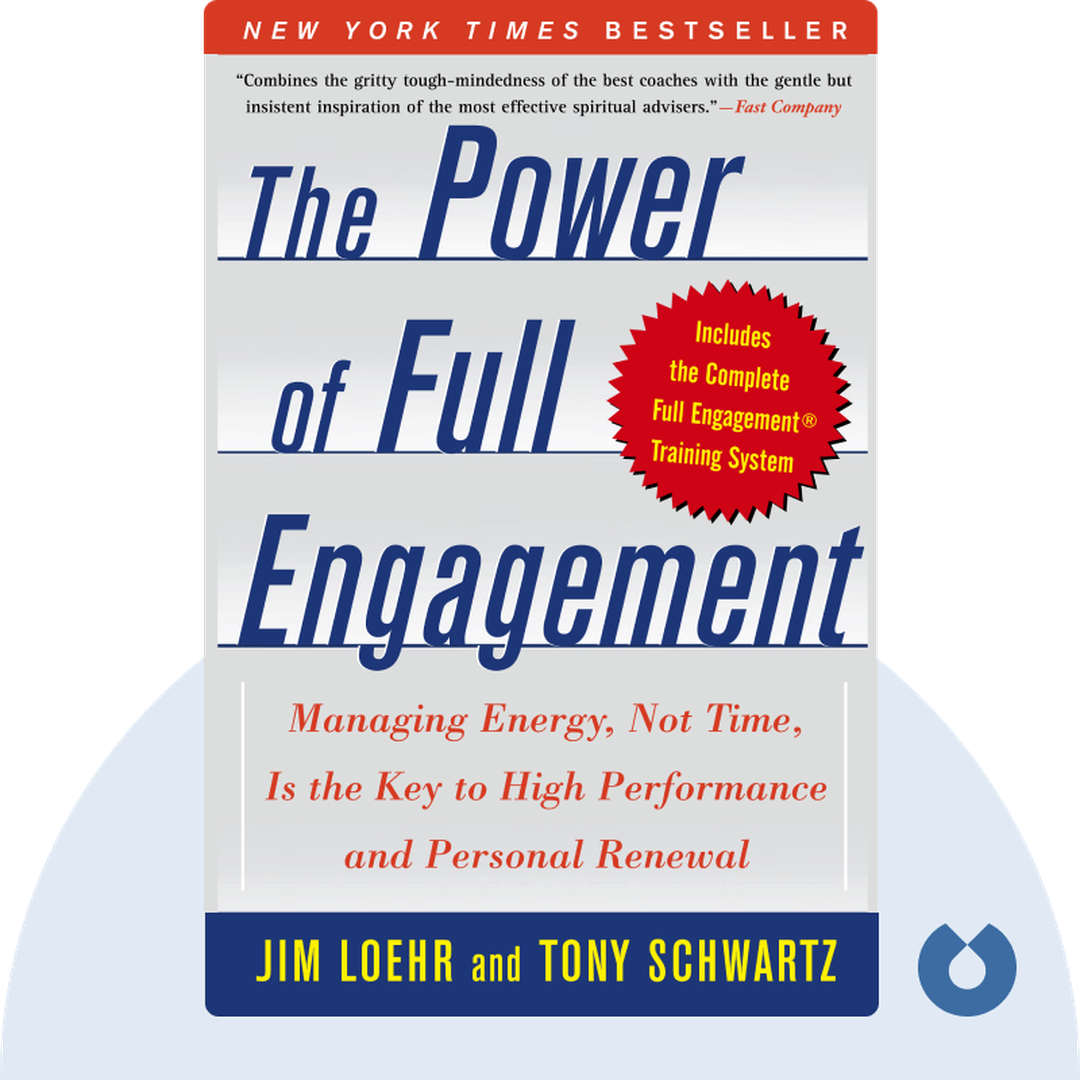
The Power of Full Engagement
Start ListeningDownload Try free on iPhoneScan to start in 5 seconds
Categories:
If You're Curious About These Questions...
You should listen to this audiobook
- Have you ever wondered why traditional time management often fails, and what the true 'currency' of high performance really is?
- What if the key to avoiding burnout isn't working less, but mastering the specific rhythm of stress and recovery used by world-class athletes?
- Are you curious about the four distinct sources of energy you need to tap into to stay fully engaged and productive throughout the day?
Listen to The Power of Full Engagement — Cinematic Audio Edition
Loading player...
Key Takeaways from The Power of Full Engagement
- Discover why managing your energy, rather than your time, is the true key to unlocking peak performance and maintaining a healthy work-life balance.
- Learn how to reach your full potential by maximizing your four distinct energy levels: physical, emotional, mental, and spiritual.
- Understand the biological necessity of taking relaxing breaks every 90 to 120 minutes to prevent burnout and sustain high productivity.
- Find out how to expand your energetic capacity by intentionally pushing yourself beyond your comfort zone and allowing time for recovery.
- Master the foundation of high performance by fueling your physical energy with slow-release foods and maintaining proper hydration.
Learning Tools
Reinforce what you learned from The Power of Full Engagement
Mind Map
The Power of Full Engagement
Core Paradigm Shift+
The Four Energy Dimensions+
Energy Management Mechanics+
Values & Alignment+
The Power of Rituals+
Quiz — Test Your Understanding
Question 1 of 10
According to the book, what is the fundamental shift in focus required to increase performance and efficiency?
Question 2 of 10
The book describes four types of energy essential for full engagement. They are:
Question 3 of 10
How does the book recommend building our energy capacity in any dimension (emotional, mental, etc.)?
Question 4 of 10
What is the primary reason the book advocates for prioritizing activities you genuinely enjoy?
Question 5 of 10
The book suggests that our best ideas often come when we are relaxed (e.g., in the shower). What is the stated reason for this?
Question 6 of 10
What does the book identify as a powerful source of spiritual energy?
Question 7 of 10
According to the text, why can external rewards like money sometimes undermine motivation?
Question 8 of 10
What is the primary function of developing positive rituals, as described in the book?
Question 9 of 10
What tool does the book recommend for translating personal values into daily actions?
Question 10 of 10
In addition to improving physical performance, what is another significant benefit of maintaining high physical energy mentioned in the text?
The Power of Full Engagement — Full Chapter Overview
- 1Recommendation
- 2To boost performance, we must prioritize managing our energy instead of obsessing over our time each day.
- 3We can attain full engagement by maximizing all four of our energy sources.
- 4To sustain our energy levels, we must train our energetic muscles and allow them adequate time to recover fully.
- 5To realize your full potential, you must build and sustain strong physical energy.
- 6To sustain positive emotional energy, never overlook what you enjoy, nor neglect maintaining your physical health either.
- 7Training your mental energy helps you stay both focused and creative together at once.
- 8Spiritual energy fuels motivation, arising from commitments made both to others as well as to ourselves.
- 9To live fully engaged, you must find a positive, intrinsically motivating sense of purpose.
- 10We must connect with our deepest values to fuel the energy that gives our lives true purpose.
- 11Rituals are powerful tools for effectively managing energy capacity.
The Power of Full Engagement Summary & Overview
The Power of Full Engagement (2005) investigates the formula for peak performance by examining the causes and qualities of our many energy sources of energy. The authors offer tricks and methods on how to nurture those sources of energy in a way that helps us live fulfilling lives that adhere to our deepest values.
Who Should Listen to The Power of Full Engagement?
- Anyone who wants to get more out of life, be it in their performance or happiness level
- Anyone who believes there just isn’t enough time to get everything done
- Anyone looking for a new and creative approach to time management
Books Similar to The Power of Full Engagement
Readers who enjoyed this also liked these titles.