If You're Curious About These Questions...
You should listen to this audiobook
- Did you know that the feeling of 'never having enough time' is often a trick of your perception rather than a lack of actual hours in the day?
- What’s the secret to reclaiming hours of your life without sacrificing your career goals or professional ambitions?
- What if you could stop managing your clock and start managing your energy to unlock a hidden surplus of free time?
Listen to The Free-Time Formula — Free Audiobook
Loading player...
Key Takeaways from The Free-Time Formula
- Discover why the concept of "free time" is a myth and learn to maximize your efficiency by treating all your waking hours as yours to command.
- Understand how the human brain struggles with multitasking and why focusing on a single daily priority is the ultimate cure for procrastination.
- Learn how to edit your to-do list by eliminating, delaying, or delegating tasks so you can tune out distractions and focus deeply on what matters most.
- Find out why scheduling a short, intense 15-minute daily workout should be your top priority to significantly boost your overall productivity and focus.
- Master the art of minimalism by decluttering your physical space and ditching perfectionism to free up valuable headspace and time.
Learning Tools
Reinforce what you learned from The Free-Time Formula
Mind Map
The Free-Time Formula
Redefining Time+
Prioritization+
Productivity Tactics+
Health and Well-being+
Rest and Spontaneity+
Quiz — Test Your Understanding
Question 1 of 9
According to Jeff Sanders, what is the most common error people make regarding their perception of time?
Question 2 of 9
Why does the author suggest we should return to using the word 'priority' in the singular?
Question 3 of 9
How does the author recommend incorporating exercise into a busy schedule?
Question 4 of 9
What lesson did Jeff Sanders learn from his attempt to landscape his yard in Nashville?
Question 5 of 9
If you cannot devote an entire 'theme day' to a single project, what alternative strategy does the author suggest?
Question 6 of 9
What is the purpose of creating a 'just in case' list?
Question 7 of 9
According to the book, what is a simple and effective way to deal with meandering thoughts that interrupt your work?
Question 8 of 9
How does the author suggest professionals combat the exhaustion and poor decision-making caused by workaholism?
Question 9 of 9
What actionable advice does the author give regarding goal-setting to avoid a 'scattershot approach'?
The Free-Time Formula — Full Chapter Overview
- 1Recommendation
- 2Making the most of your waking hours is about prioritizing, not just enjoying your “free time.”
- 3Choosing one priority for the day helps you focus on your most important commitments.
- 4A brief, intense workout plan is the best way to make room for both work and exercise.
- 5Decluttering your life and letting go of perfectionism can free up valuable mental space.
- 6You can make better use of your time by creating themed days and batching similar tasks.
- 7Planning for the unexpected helps you make the most of your time away from work.
- 8Social media and distracting thoughts are two major obstacles to using your time well.
- 9Regular sabbaticals can help you overcome burnout.
- 10Final summary
The Free-Time Formula Summary & Overview
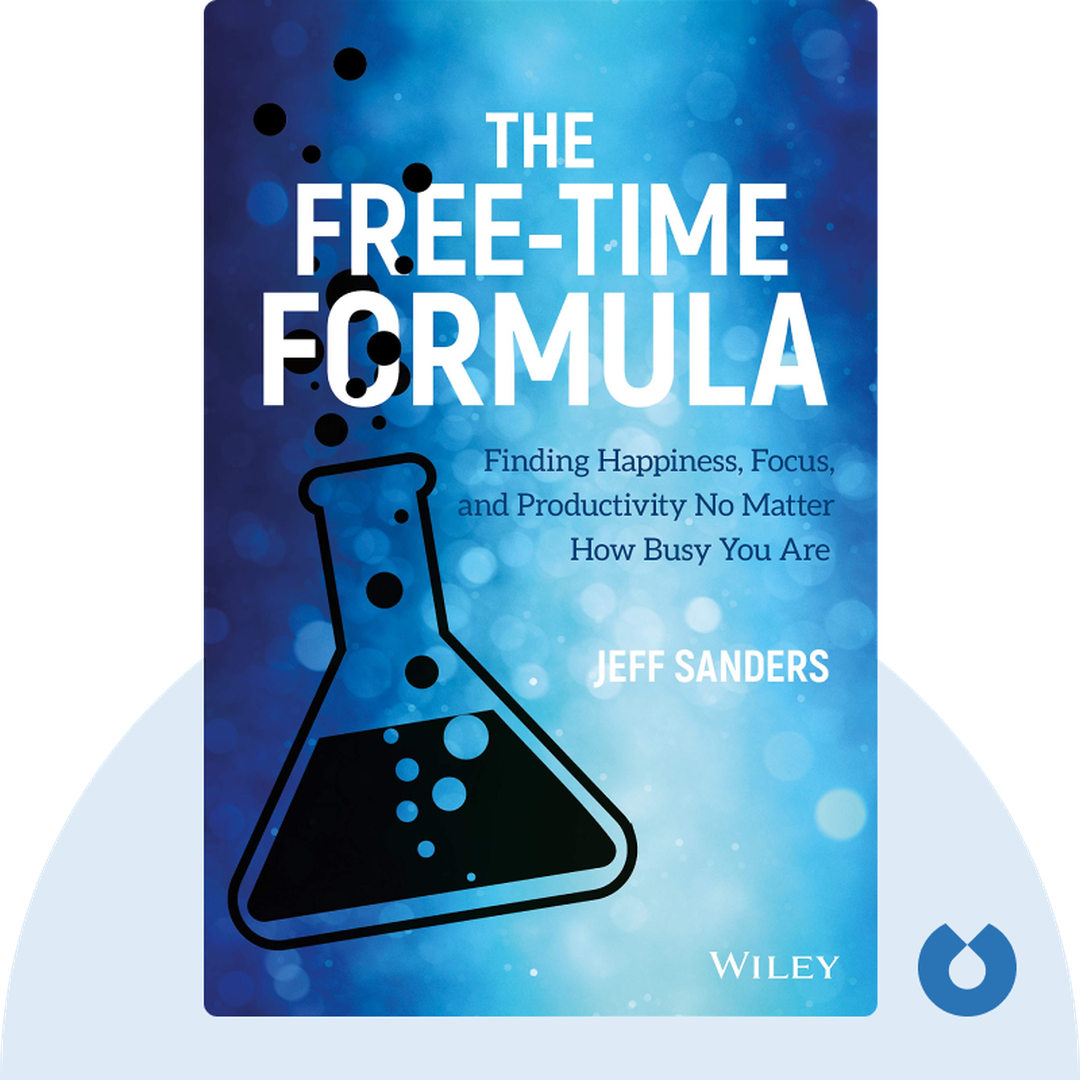
The Free-Time Formula (2018) is a practical guide to better time management, addressing a problem we’ve all grappled with: the feeling that there just aren’t enough hours in the day to do the things we value most. These blinks show that the problem usually isn’t time itself but perception. Once we reframe our concept of time, Jeff Sanders argues, we can start setting realistic priorities and getting the most out of our days.
Who Should Listen to The Free-Time Formula?
- Busy professionals
- Workaholics
- Self-development aficionados
Books Similar to The Free-Time Formula
Readers who enjoyed this also liked these titles.