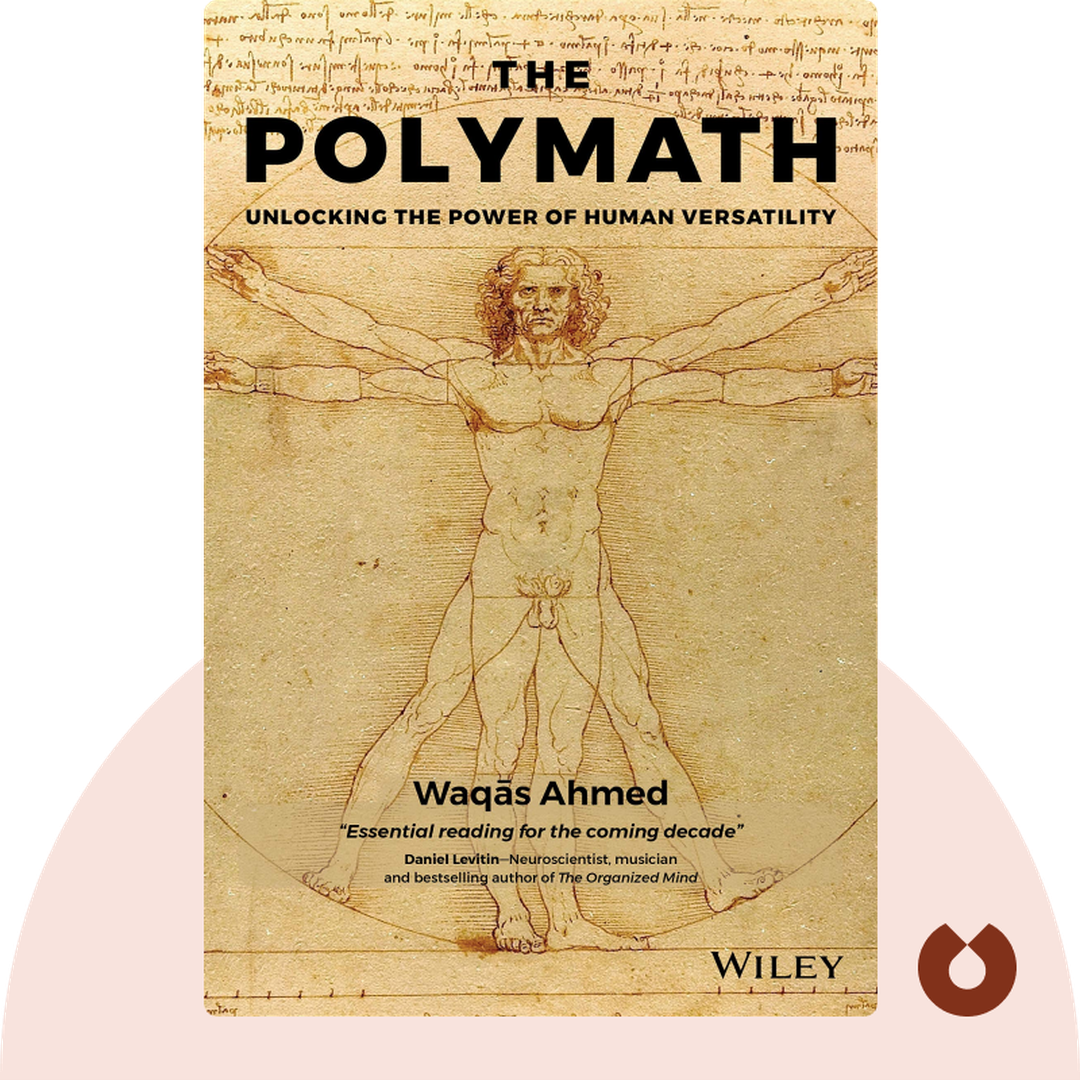
If You're Curious About These Questions...
You should listen to this audiobook
- Have you ever wondered why society pushes us to become "specialists," and what if this narrow focus is actually the biggest obstacle to your creative potential?
- Did you know that humans are naturally hardwired to excel in multiple fields, and that suppressing your varied interests could be holding back your professional fulfillment?
- What if you could bridge the gap between your seemingly unrelated passions to solve complex problems that traditional specialists simply can’t see?
Listen to The Polymath — Cinematic Audio Edition
Loading player...
Key Takeaways from The Polymath
- Discover why human beings are naturally wired to be polymaths, and how embracing our innate curiosity for diverse skills can unlock our full potential.
- Understand how the modern 'Cult of Specialization' and sedentary work culture stifle our natural need for variety, leading to widespread physical and mental dissatisfaction.
- Learn how interconnected, polymathic thinking is the crucial key to solving complex global challenges like climate change and making meaningful societal contributions.
- Explore how history's most influential leaders and innovators, from Winston Churchill to Steve Jobs, leveraged their multifaceted knowledge to achieve unparalleled success.
- Realize why shifting your focus from narrow specialization to broad generalization can actually provide greater job security, cure career boredom, and lead to a richer life.
Learning Tools
Reinforce what you learned from The Polymath
Mind Map
The Polymath
The Cult of Specialization+
The Case for Polymathy+
Core Traits of a Polymath+
Reforming Education+
Structuring a Polymathic Career+
Quiz — Test Your Understanding
Question 1 of 8
Why does the author argue that human beings are inherently polymaths?
Question 2 of 8
According to the text, why is polymathic thinking essential for solving modern crises like climate change?
Question 3 of 8
What does the text suggest is the root cause of the widespread unhappiness and disillusionment in modern white-collar jobs?
Question 4 of 8
How does the author use the comparison between raccoons and koalas to illustrate career survival in the modern world?
Question 5 of 8
According to a University of Toronto study mentioned in the text, how can diversifying activities, such as taking drum lessons, affect an individual?
Question 6 of 8
How did Renaissance master Leonardo da Vinci view the relationship between different fields of knowledge?
Question 7 of 8
What is the original meaning of the Latin word 'universitas', from which the word 'university' is derived?
Question 8 of 8
What is a 'portfolio career' as described in the text?
The Polymath — Full Chapter Overview
- 1Recommendation
- 2By prioritizing the pursuit of multiple interests, talents, and modes of self-expression, polymathy empowers us to realize our entire human potential.
- 3Embracing polymathy lets you contribute more meaningfully to your community and to society at large.
- 4The widespread “Cult of Specialization” within our society leaves the majority of people unfulfilled and frustrated.
- 5Specialization leaves you less equipped to survive changing and volatile workplace circumstances.
- 6The traits you must deliberately cultivate in order to develop a truly polymathic mind are individuality, curiosity, and intelligence.
- 7In order to realize the complete polymathic potential of our minds, we also need to cultivate the qualities of versatility, creativity, and unity.
- 8Education should promote the values of curiosity, unity, and creativity in order to better encourage children’s innate polymathic capacities.
- 9You ought to pursue multiple careers simultaneously or sequentially to fully nurture a polymathic professional life.
The Polymath Summary & Overview
The Polymath (2019) explains how the hyper-specialization encouraged by society stifles people’s development, creativity and self-fulfilment. Instead, the book argues that everyone should nurture their polymathic capacities, and that educational and professional structures need to be reconfigured to reflect our innate human potential to think, learn and work across multiple fields and in varied ways.
Who Should Listen to The Polymath?
- Employees interested in achieving a more fulfilling professional life
- Entrepreneurs or organizational leaders seeking to improve the work cultures of their companies or organizations
- Anyone with varied, unrelated interests looking for ways to juggle them all
Books Similar to The Polymath
Readers who enjoyed this also liked these titles.