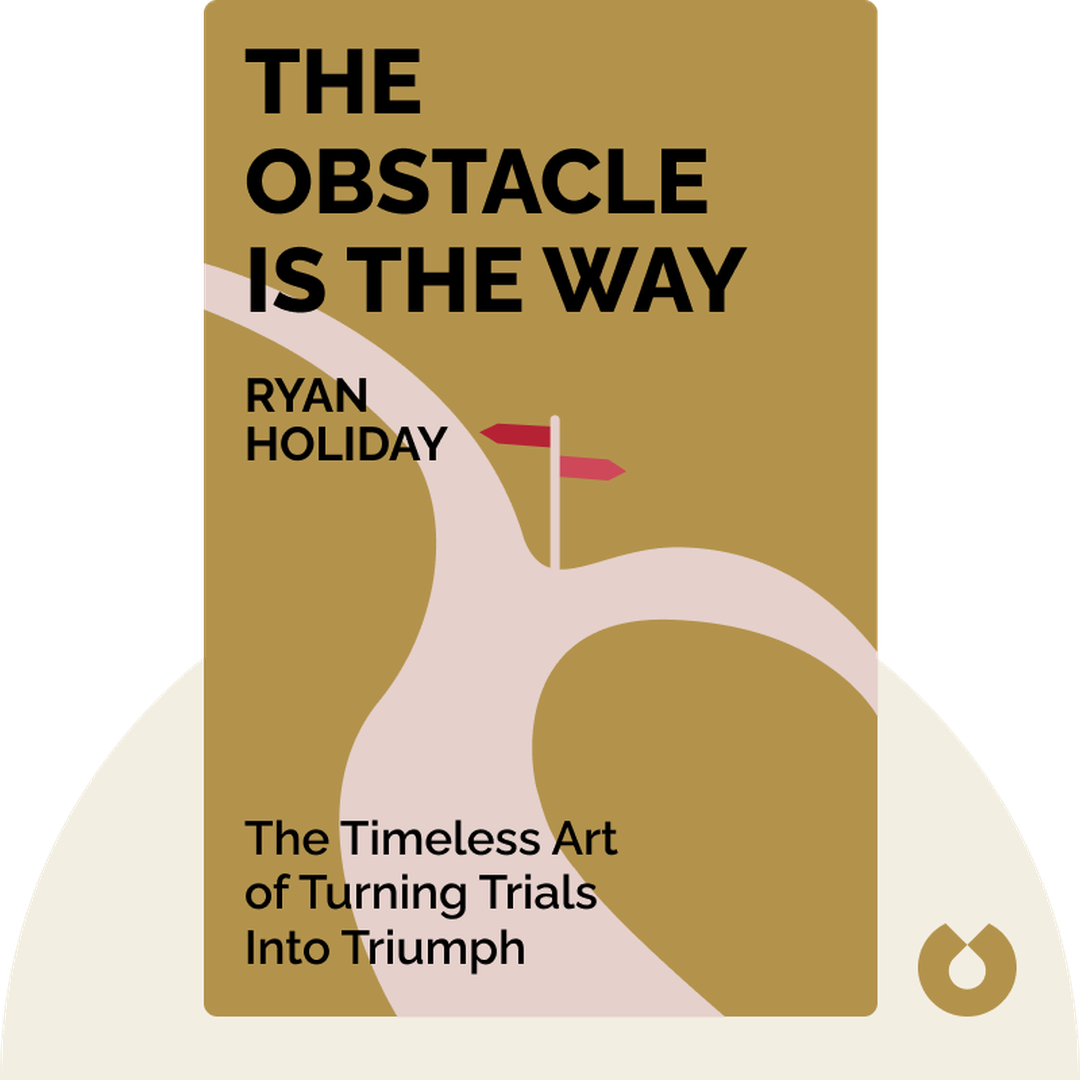
The Obstacle is the Way
Start ListeningDownload Try free on iPhoneScan to start in 5 seconds
Categories:
If You're Curious About These Questions...
You should listen to this audiobook
- What's the secret to turning obstacles into opportunities, just like the most resilient leaders in history?
- Are you curious about how to transform roadblocks into stepping stones for success?
- What if you could use adversity to fuel your growth and achieve your goals faster?
Listen to The Obstacle is the Way — Cinematic Audio Edition
Loading player...
Key Takeaways from The Obstacle is the Way
- Discover the three interwoven disciplines of perception, will, and action that will help you transform everyday barriers into stepping stones for success.
- Learn how to master your perception to strip away negative emotions and uncover the hidden opportunities thriving within chaotic situations.
- Understand the critical difference between subjective panic and objective reality, allowing you to view an 'impossible' dead end as simply a closed door waiting to be unlocked.
- Find out why you must stop waiting for perfect conditions and instead take calculated, persistent action to capitalize on the faintest hints of success.
- Master the art of patience by treating your journey as a process, where every failure and trial-and-error serves as an essential lesson to refine your strategy.
Learning Tools
Reinforce what you learned from The Obstacle is the Way
Mind Map
The Obstacle is the Way
Core Philosophy+
Perception+
Action+
Will+
Quiz — Test Your Understanding
Question 1 of 9
What does the concept 'the obstacle is the way' mean in the context of the book?
Question 2 of 9
How did John D. Rockefeller utilize the power of perception during the Panic of 1857?
Question 3 of 9
According to the story of Rubin 'Hurricane' Carter, what power can never be taken away from you, even in prison?
Question 4 of 9
How did George Clooney alter his perspective to finally achieve success in Hollywood auditions?
Question 5 of 9
What does 'the process', as used by figures like Demosthenes and Nick Saban, entail?
Question 6 of 9
According to the book, what should you do if you encounter an obstacle that is truly insurmountable and cannot be overcome?
Question 7 of 9
What do the Stoics mean by the concept of the 'Inner Citadel'?
Question 8 of 9
How does the book distinguish between 'persistence' and 'perseverance' using the example of Odysseus?
Question 9 of 9
Why does the author recommend meditating on death?
The Obstacle is the Way — Full Chapter Overview
- 1Recommendation
- 2Perception: Finding Opportunity in Adversity
- 3Perception: Recognizing Your Own Power
- 4Perception: Changing Your Perspective
- 5Action: The Strength of Discipline
- 6Action: Trusting the Process
- 7Action: It May Not Work
- 8Will: Accept What You Can’t Change, and Change What You Can
- 9Will: Prepare to Persevere
- 10Will: Reflect on Death and Prepare to Begin Again
- 11Final summary
The Obstacle is the Way Summary & Overview
In The Obstacle is the Way (2014), Ryan Holiday brings the age-old wisdom of Stoic philosophy up to date. By examining the struggles of historical figures of inspiring resilience, Holiday shows not only how obstacles couldn’t stop them, but more importantly, how these people thrived precisely because of the obstacles. Holiday shows how we can turn obstacles to our advantage, and how we can transform apparent roadblocks into success, both in our businesses and our personal lives.
Who Should Listen to The Obstacle is the Way?
- Anyone working for a business during tough economic times
- Anyone working at a start-up facing great challenges to get off the ground
- Anyone who wants to learn how to better deal with inevitable hardships
Books Similar to The Obstacle is the Way
Readers who enjoyed this also liked these titles.