If You're Curious About These Questions...
You should listen to this audiobook
- Did you know that keeping even one high-performing "asshole" on your team could be costing your company a fortune in hidden, measurable expenses?
- Have you ever wondered what the two specific tests are for identifying whether a coworker is just having a bad day or is a certified workplace bully?
- What if you could master a proven set of survival techniques to protect your productivity and sanity when you’re forced to work with toxic people?
Listen to The No Asshole Rule — Free Audiobook
Loading player...
Key Takeaways from The No Asshole Rule
- Understand the difference between a 'temporary' asshole having a bad day and a 'certified' asshole, and learn how chronic bullies manipulate superiors while abusing subordinates.
- Discover why tolerating hostile behavior is a costly mistake that destroys workplace morale, tanks productivity, and drives your most talented employees out the door.
- Learn how to implement the 'No Asshole Rule' by treating a toxic attitude as sheer incompetence, refusing to excuse bad behavior even for your most talented or difficult-to-replace workers.
- Find out how steep hierarchies and high-status positions naturally encourage bullying, and see why minimizing social distance and wage gaps can dramatically improve workplace culture.
- Realize why ruling by fear and cut-throat internal competition ultimately hamstring a company, and discover how to retain top talent through positive incentives and cooperation instead.
Learning Tools
Reinforce what you learned from The No Asshole Rule
Mind Map
The No Asshole Rule
Identifying Assholes & Their Harm+
Company Strategies & Culture+
Individual Survival & Application+
Quiz — Test Your Understanding
Question 1 of 9
What distinguishes a 'certified asshole' from someone who is just having a bad day?
Question 2 of 9
Why is tolerating assholes considered a costly mistake for businesses?
Question 3 of 9
How should a company view an employee who is highly talented or difficult to replace, but constantly makes colleagues feel upset?
Question 4 of 9
According to the text, what is one effective way a company can reduce the status differences that lead to workplace bullying?
Question 5 of 9
Why are aggressive people often mistakenly regarded as competent in the business world?
Question 6 of 9
What subtle approach is recommended to foster a culture of cooperation rather than internal competition?
Question 7 of 9
What does the author mean by comparing being an asshole to a 'virus'?
Question 8 of 9
What strategy is suggested for dealing with an asshole when you cannot physically avoid them?
Question 9 of 9
Why is it so crucial to have zero tolerance for assholes, even if they are vastly outnumbered by nice people?
The No Asshole Rule — Full Chapter Overview
- 1Recommendation
- 2Jerks hurt businesses, especially when they occupy management and leadership roles.
- 3To build a great workplace, companies should adopt the No Asshole Rule.
- 4Greater equality means fewer assholes.
- 5Being an asshole can offer some advantages, but motivating employees with incentives works better overall.
- 6To build a civilized, productive workplace, strongly emphasize cooperation instead of internal competition.
- 7Avoid assholes or you’ll become one, yourself.
- 8Don’t let assholes rattle you — create strong emotional distance.
- 9Everyone should apply the No Asshole Rule at all times.
The No Asshole Rule Summary & Overview
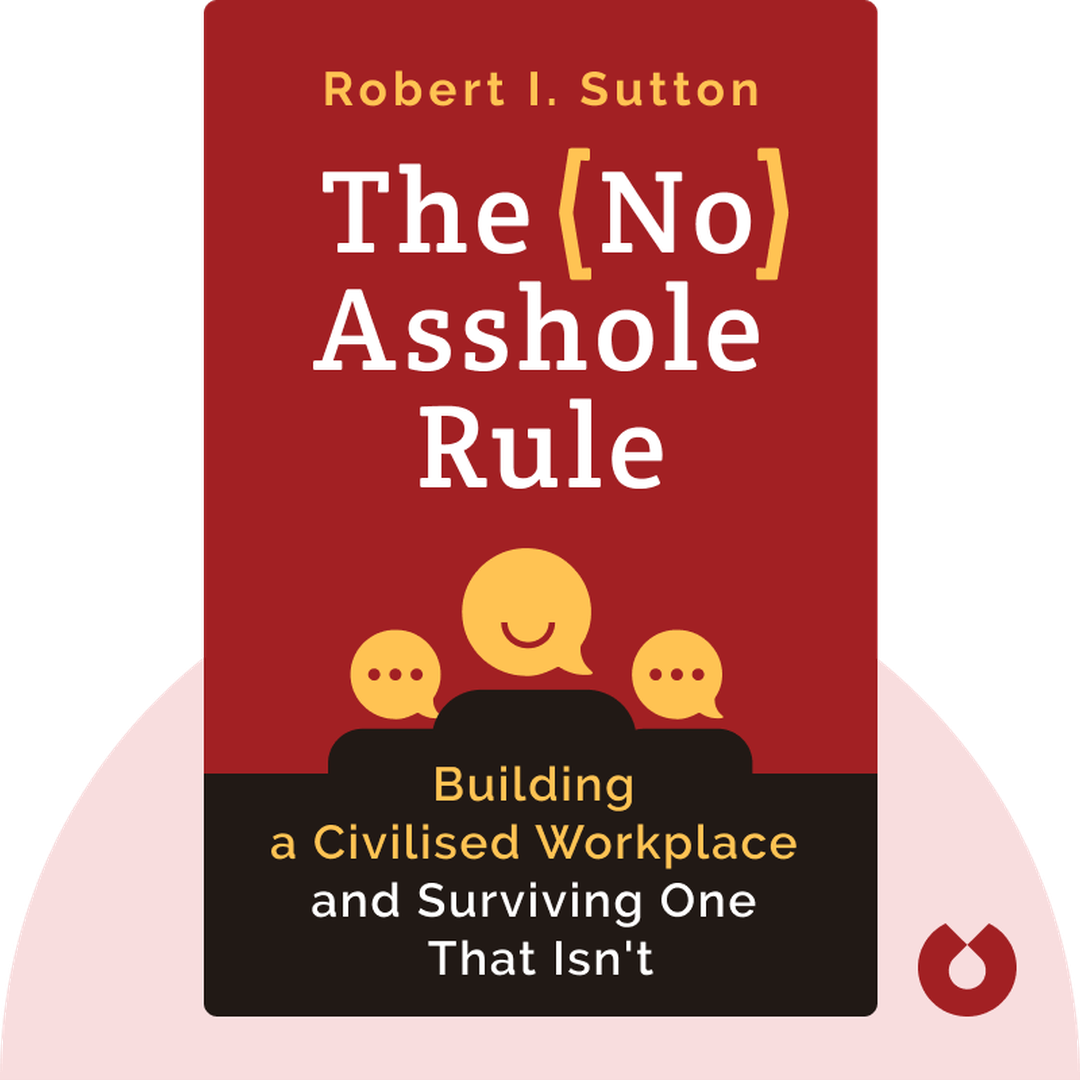
The No Asshole Rule delves into the problem of bullying or aggressive co-workers, who in many cases rise to management positions. Sutton provocatively labels them assholes.
The book lays out the effect these employees can have on a business, and gives advice on how to develop an asshole-free environment.
Who Should Listen to The No Asshole Rule?
- Anyone who wants to learn how to identify and deal with assholes in the workplace
- Every office worker, whether employee, manager, consultant or intern
- Anyone who wants to avoid being seen as an asshole
Books Similar to The No Asshole Rule
Readers who enjoyed this also liked these titles.