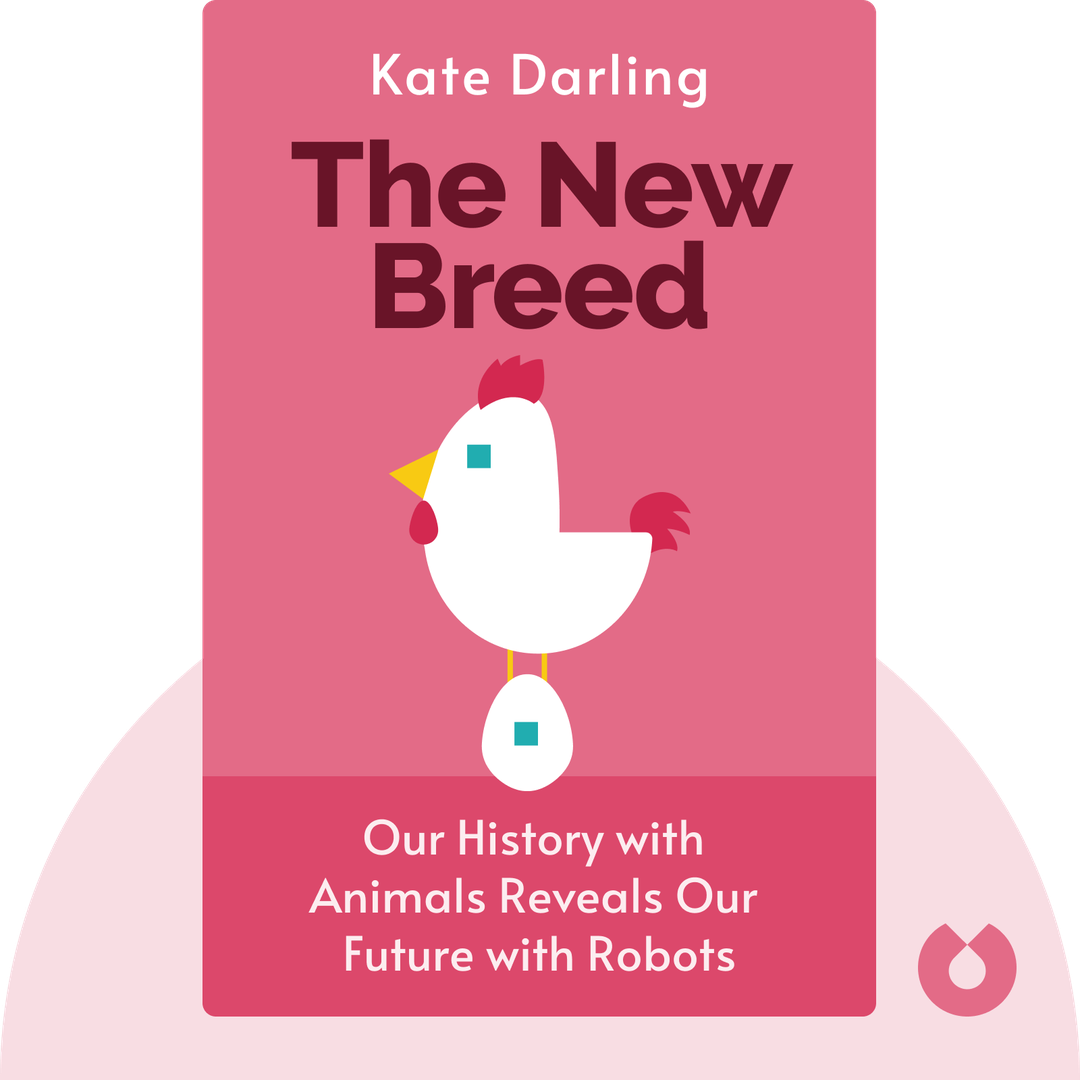
If You're Curious About These Questions...
You should listen to this audiobook
- Did you know that the most accurate way to understand our future with robots isn't by comparing them to humans, but to the animals we’ve worked alongside for centuries?
- Have you ever wondered why our ancient relationship with dogs, horses, and oxen might be the secret to solving the modern ethical dilemmas of artificial intelligence?
- What if the key to overcoming your fear of a robot takeover is simply changing the way you categorize the machines in your life?
Listen to The New Breed — Free Audiobook
Loading player...
Key Takeaways from The New Breed
- Understand why future robots are more likely to function as helpful animal companions and pets rather than fully autonomous human replacements.
- Discover why the fear of artificial intelligence stealing human jobs is overblown, as AI currently lacks the complex, contextual decision-making of the human mind.
- Learn how our long history of training animals for singular tasks, like ferrets running cables or rats detecting landmines, provides a practical blueprint for utilizing modern AI.
- Find out why designing human-like, bipedal robots is inefficient, and how avoiding 'fauxtomation' can lead to more practical, highly useful workplace technologies.
- Explore how historical laws regarding animal behavior, such as putting livestock on trial in the Middle Ages, can inspire better legal frameworks for robot accountability.
Learning Tools
Reinforce what you learned from The New Breed
Mind Map
The New Breed
Paradigm Shift: Robots as Animals+
Autonomous Assistants at Work+
Better Design and Law+
Companionship and Therapy+
Ethical Dilemmas of Attachment+
Rights, Empathy, and Society+
Quiz — Test Your Understanding
Question 1 of 7
What is the central analogy the author uses to help us understand our future relationship with robots?
Question 2 of 7
How does the author view the comparison between modern AI systems, like Watson, and working animals?
Question 3 of 7
What does the term 'fauxtomation' refer to in the context of the book?
Question 4 of 7
Why does the author mention the historical practice of putting animals on trial in the Middle Ages?
Question 5 of 7
According to the text, why was Microsoft's virtual assistant 'Clippy' so widely disliked compared to animal companions?
Question 6 of 7
What potential risk does the author identify regarding the strong emotional attachments people form with robots, such as Roombas or AIBO dogs?
Question 7 of 7
According to the author, what should be the primary focus when considering the ethical treatment and 'rights' of robots or animals?
The New Breed — Full Chapter Overview
- 1Recommendation
- 2Tomorrow’s robots will resemble animals and pets more than human beings in form.
- 3Humanity has long worked alongside programmed, autonomous assistants in many fields.
- 4By considering animals, we can devise far better designs and stronger legal frameworks for robots today.
- 5Good companion robots take cues from animals and are making strides in helping people.
- 6The deep bonds we form with robots may result in ethical dilemmas.
- 7By creating laws to protect robots, we might also strengthen our animal rights laws.
The New Breed Summary & Overview
The New Breed (2021) offers new insights into the ongoing debate surrounding robots and artificial intelligence. Instead of looking at robots as a human replacement or threat, the author sees a more accurate comparison in the long relationship we’ve had with autonomous animals, which have helped us feel better and get work done.
Who Should Listen to The New Breed?
- Popular science enthusiasts
- Panicking futurists
- Technophobes
Books Similar to The New Breed
Readers who enjoyed this also liked these titles.