If You're Curious About These Questions...
You should listen to this audiobook
- Have you ever wondered what it’s really like to navigate the high-stakes, eccentric world of Masayoshi Son, where billion-dollar decisions are made in the blink of an eye?
- What happens when the disciplined strategies of traditional Wall Street banking collide with the raw, visionary chaos of global tech investing?
- Are you curious about the hidden psychological 'traps' that await even the most successful dealmakers when the pursuit of the next big disruption becomes an all-consuming obsession?
Listen to The Money Trap — Free Audiobook
Loading player...
Key Takeaways from The Money Trap
- Discover how SoftBank utilized a 'time machine strategy' to identify successful US business models and replicate them in emerging markets with developmental time lags.
- Learn the mechanics behind 'blitzscaling,' a bold strategy that relies on heavily subsidized loss-leaders to rapidly achieve market dominance and control industry pricing.
- Master high-stakes negotiation tactics by seeing how strategic visibility, like staging a meeting with a rival buyer, can manufacture competitive tension and maximize deal value.
- Find out how elegant financial engineering, such as multi-billion dollar exchangeable bonds, can help liquidate massive corporate assets without spooking Wall Street investors.
- Understand the critical importance of maintaining substantial cash reserves for opportunistic investments, a hard-won lesson born from missing out on early tech IPOs.
Learning Tools
Reinforce what you learned from The Money Trap
Mind Map
The Money Trap
Key Protagonists+
Core Investment Strategies+
Masterful Dealmaking+
The Vision Fund Era+
Crisis & Downfall+
Quiz — Test Your Understanding
Question 1 of 7
What catalyst prompted Alok Sama to leave traditional investment banking and transition into tech finance with SoftBank?
Question 2 of 7
Which of the following best describes SoftBank's 'time machine strategy' developed by Sama?
Question 3 of 7
How did SoftBank's 'blitzscaling' strategy originate?
Question 4 of 7
How did Sama and his team successfully liquidate a portion of SoftBank's stake in Alibaba without alarming Wall Street?
Question 5 of 7
Why was Masayoshi Son willing to pay $30-35 billion to acquire Arm Holdings?
Question 6 of 7
What was Alok Sama's primary concern regarding SoftBank's massive $4.4 billion investment in WeWork?
Question 7 of 7
What combination of factors ultimately led Alok Sama to step down from SoftBank?
The Money Trap — Full Chapter Overview
- 1Recommendation
- 2introducing Alok Sama
- 3Sama joins SoftBank
- 4high-octane deal-making
- 5SoftBank's AI shift
- 6SoftBank in turmoil
The Money Trap Summary & Overview
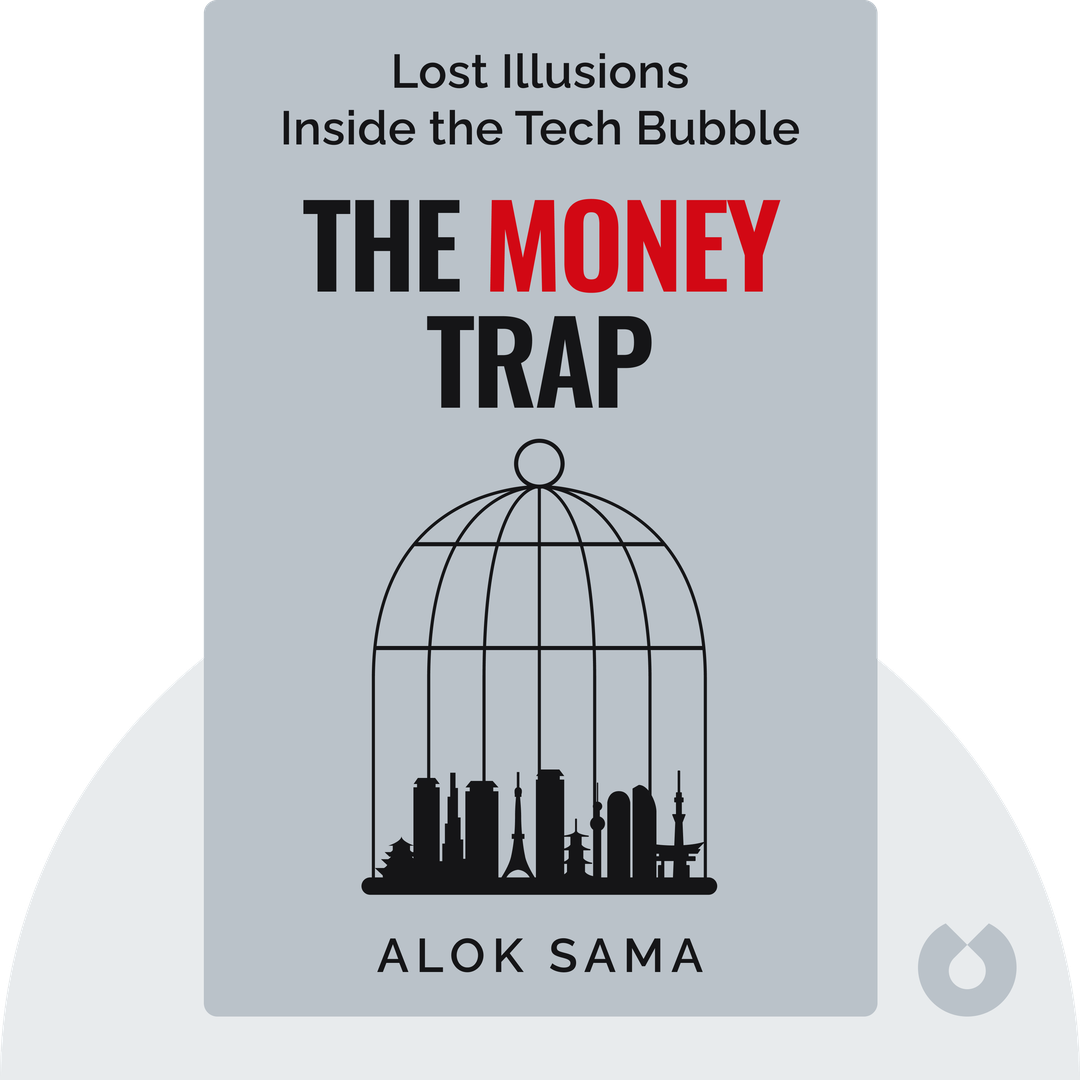
The Money Trap (2024) is a gripping memoir that offers a behind-the-scenes look at the high-stakes world of global business and technology investing. It recounts Alok Sama’s journey from veteran Morgan Stanley banker to chief dealmaker at SoftBank, navigating mega-deals, billionaire CEOs, and the visionary but eccentric leadership of Masayoshi Son.
Who Should Listen to The Money Trap?
- Finance professionals interested in high-stakes tech dealmaking
- Tech enthusiasts curious about transformative tech investments
- Entrepreneurs ready to learn about scaling and disruption
Books Similar to The Money Trap
Readers who enjoyed this also liked these titles.