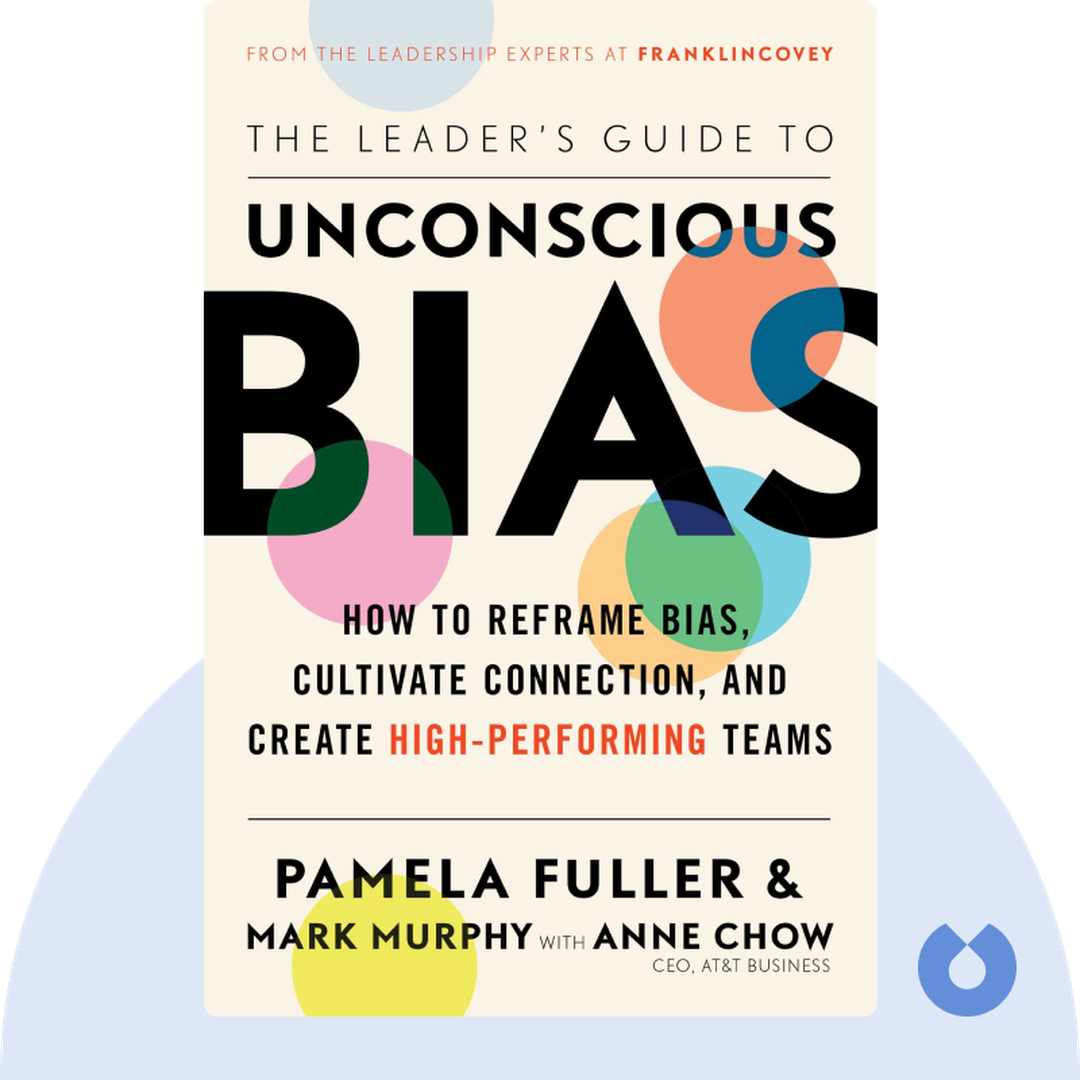
The Leader's Guide to Unconscious Bias
Start ListeningDownload Try free on iPhoneScan to start in 5 seconds
Categories:
If You're Curious About These Questions...
You should listen to this audiobook
- Did you know that even the most well-intentioned leaders are constantly influenced by hidden mental shortcuts they aren't even aware of?
- Have you ever wondered how your brain’s instinctive patterns might be unintentionally sabotaging who you hire, promote, and trust?
- What if you could master a simple mental framework to interrupt your biases in real-time and lead a more innovative, inclusive team?
Listen to The Leader's Guide to Unconscious Bias — Free Audiobook
Loading player...
Key Takeaways from The Leader's Guide to Unconscious Bias
- Understand how normal human preferences can morph into damaging unconscious biases that secretly drive workplace inequalities, such as pay gaps and skewed leadership demographics.
- Discover how to pinpoint the 'origin stories' of your personal biases by actively examining your identity, upbringing, and background.
- Master a proven four-step model for tackling workplace bias: Identify Bias, Cultivate Connection, Choose Courage, and apply these practices across the entire talent lifecycle.
- Recognize how high-pressure work environments trigger specific cognitive traps like attribution bias, where you unfairly judge yourself by your good intentions but others by their flawed results.
- Learn how to 'cultivate connection' with colleagues and job candidates to actively short-circuit snap judgments and prevent your unconscious biases from dictating professional decisions.
Learning Tools
Reinforce what you learned from The Leader's Guide to Unconscious Bias
Mind Map
The Leader's Guide to Unconscious Bias
Understanding Unconscious Bias+
Step 1: Identify Bias+
Step 2: Cultivate Connection+
Step 3: Choose Courage+
Step 4: Apply Across Talent Lifecycle+
Daily Action+
Quiz — Test Your Understanding
Question 1 of 7
According to the book, what is the first step in moving beyond your unconscious biases?
Question 2 of 7
What type of bias occurs when you judge your own mistakes based on your good intentions, but judge others' mistakes as evidence that they are disorganized or untrustworthy?
Question 3 of 7
When recruiting, why does the book warn against focusing too heavily on whether a candidate is a good 'fit'?
Question 4 of 7
If you are on the receiving end of bias at work, what two strategies does the text strongly recommend for coping?
Question 5 of 7
What is the book's stance on allies joining Employee-Resource Groups (ERGs) that focus on specific marginalized groups?
Question 6 of 7
How can the language used in job descriptions, such as terms like 'heavy hitter' or 'rockstar,' negatively impact the recruitment process?
Question 7 of 7
According to research mentioned in the book, what unconscious bias frequently occurs during the salary negotiation phase for new hires?
The Leader's Guide to Unconscious Bias — Full Chapter Overview
- 1Recommendation
- 2Move past your biases by uncovering their true origin stories.
- 3The first step toward tackling unconscious bias is to identify your biases clearly.
- 4The second step to tackling unconscious bias is to Cultivate Connection effectively.
- 5The third step to tackling unconscious bias is to Choose Courage boldly.
- 6Be courageous for others as well. Be an ally.
- 7The final step to tackling your unconscious bias is applying the first three steps across the entire Talent Lifecycle.
The Leader's Guide to Unconscious Bias Summary & Overview
The Leader’s Guide to Unconscious Bias (2020) is a guide to unconscious bias at work: how to identify it, and what to do about it. Leaders and managers have a particular responsibility to ensure unconscious bias doesn’t harm the careers of their team members.
Who Should Listen to The Leader's Guide to Unconscious Bias?
- Workplace leaders who want to take good care of their teams
- Workers curious about how unconscious bias affects them
- People looking to deepen their understanding of bias
Books Similar to The Leader's Guide to Unconscious Bias
Readers who enjoyed this also liked these titles.