Theme Song
If You're Curious About These Questions...
You should listen to this audiobook
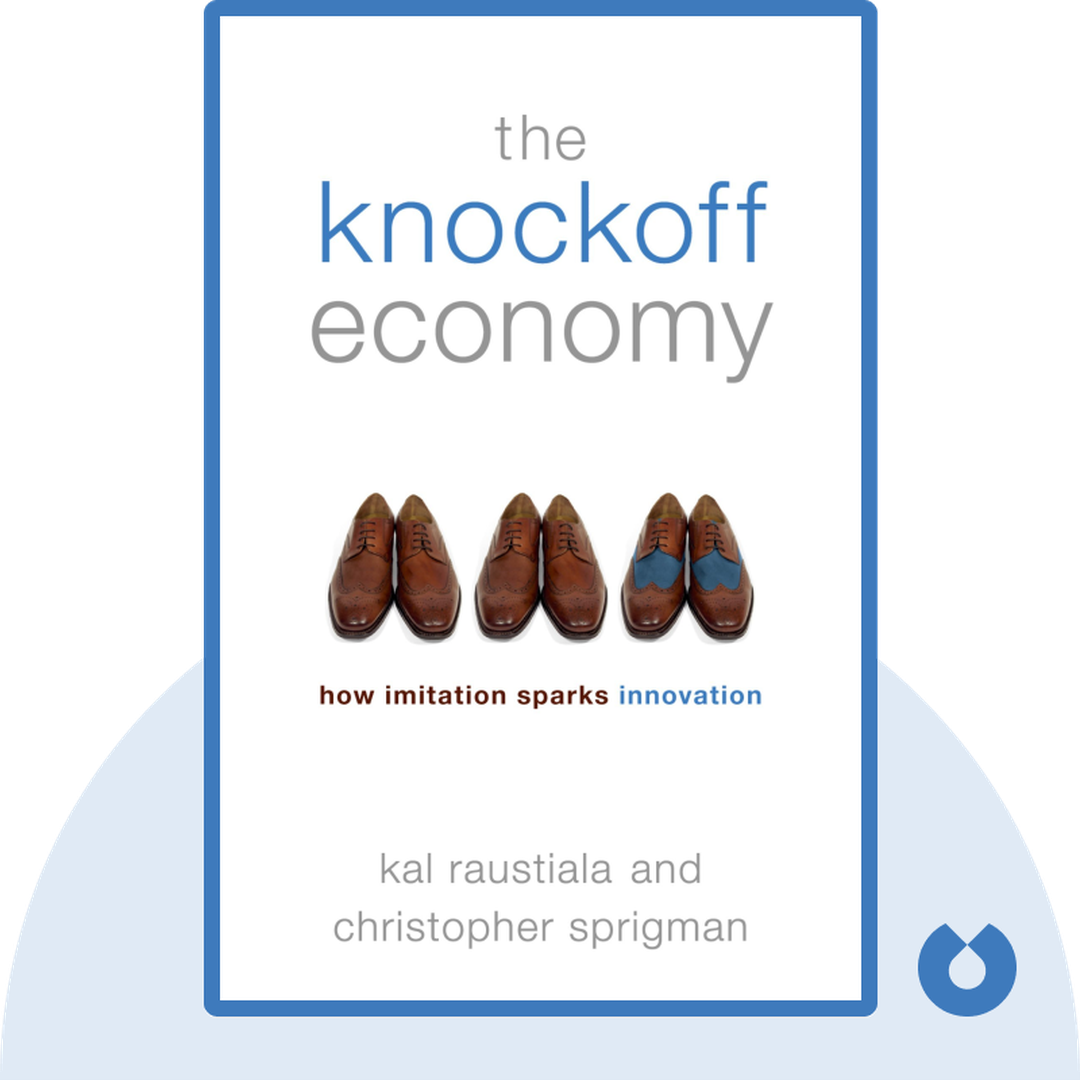
- Have you ever wondered why some of the world’s most creative industries, like fashion and high-end dining, actually thrive when their ideas are copied?
- What if the very thing you fear most—competitors stealing your best ideas—is actually the secret fuel that keeps your industry moving forward?
- Are you curious about how 'knockoffs' can actually spark a massive wave of innovation rather than killing it?
Listen to The Knockoff Economy — Cinematic Audio Edition
Loading player...
Key Takeaways from The Knockoff Economy
- Discover why copying and imitation actually drive innovation rather than stifle it, allowing unprotected industries like fashion and culinary arts to thrive.
- Learn how open-source sharing serves as the foundation for massive creative success, empowering collaborative platforms like Wikipedia to outperform heavily copyrighted competitors.
- Understand how imitating and tweaking existing ideas accelerates market cycles, forcing creators to constantly innovate to stay ahead of the competition.
- Find out how social norms and peer pressure effectively self-regulate intellectual property in fields like stand-up comedy, proving that strict laws aren't always necessary.
- Recognize why strict copyright protections can actually hinder market growth, whereas freely sampling existing work leads to an explosion of new products and ideas.
Learning Tools
Reinforce what you learned from The Knockoff Economy
Mind Map
The Knockoff Economy
The Myth of Copyright+
Copying as Creative Foundation+
The Power of Tweaking+
Self-Regulation via Social Norms+
Evolving Business Models+
Harnessing Imitation+
Quiz — Test Your Understanding
Question 1 of 8
What is the central argument of 'The Knockoff Economy' regarding copying and imitation?
Question 2 of 8
According to the book, what do the highly creative fashion and culinary industries have in common?
Question 3 of 8
Why is the comparison between Wikipedia and Microsoft's Encarta significant in the text?
Question 4 of 8
How does copying affect the market cycle in the fashion industry?
Question 5 of 8
In industries without copyright protection, like stand-up comedy, how is copying kept in check?
Question 6 of 8
What did Radiohead's release of the album 'In Rainbows' demonstrate about the music industry?
Question 7 of 8
According to the MIT study on counterfeit handbags, what is a surprising benefit of knockoffs for the original creators?
Question 8 of 8
Why do tech giants like IBM and Google invest heavily in free, open-source software like Linux and Android?
The Knockoff Economy — Full Chapter Overview
- 1Recommendation
- 2Copying and imitation need not suppress creativity and can spur innovation.
- 3Copying can act as a foundation for creativity.
- 4Copying current inventions and tweaking them can generate entirely new innovations.
- 5Social norms can effectively regulate copying without requiring any intellectual property regulations.
- 6In the future, competition will drive innovation via tweaking.
- 7Creativity itself will carry on, even if some businesses will not.
- 8Copying is not disappearing, so businesses need to harness the power of imitation to thrive and prosper in the future.
The Knockoff Economy Summary & Overview
The Knockoff Economy challenges the idea that copying and imitation pose serious barriers for industries. Instead, it uses concrete examples to demonstrate how, in an age where copying is easier than ever before, innovation is at its historical zenith.
Who Should Listen to The Knockoff Economy?
- Anyone interested in the creative industries, like fashion, music or food
- Creatives who want a fresh perspective on driving innovation
- Anyone interested in open-source models and their implications for innovation
Books Similar to The Knockoff Economy
Readers who enjoyed this also liked these titles.