If You're Curious About These Questions...
You should listen to this audiobook
- Have you ever wondered why the modern demand to "be creative" often feels less like a gift and more like a requirement to do more with less?
- Did you know that the way we define creativity today might actually be a clever trap designed to serve corporate interests rather than human expression?
- Are you curious about how reclaiming the true meaning of creativity could be the secret weapon needed to challenge the status quo and spark real societal change?
Listen to Against Creativity — Cinematic Audio Edition
Loading player...
Key Takeaways from Against Creativity
- Discover how neoliberal capitalism has co-opted the concept of creativity to fuel continuous economic growth rather than genuine artistic expression.
- Learn why the modern creative workplace, from funky open offices to remote freelance setups, often disguises longer working hours and deeper exploitation.
- Understand how the concept of the 'creative class' is manipulated by employers to cut costs, rely on precarious contracts, and pay workers in mere exposure.
- Find out how worker-owned cooperatives offer a radical alternative to the capitalist grind by fostering genuine innovation through collaboration instead of cutthroat competition.
- Explore why true creativity stems from embracing radically different ways of being and marginalized perspectives, rather than idolizing the traditional Silicon Valley genius.
Learning Tools
Reinforce what you learned from Against Creativity
Mind Map
Against Creativity
Capitalist Appropriation+
The Reality of Creative Work+
Redefining True Creativity+
Creativity as Austerity Policy+
Big Tech's Monetization of Life+
The Illusion of the Creative City+
Conclusion: Reclaiming Creativity+
Quiz — Test Your Understanding
Question 1 of 7
How did the concept of creativity change during the rise of neoliberalism in the 1980s and 1990s?
Question 2 of 7
According to the text, how have employers exploited Richard Florida's concept of the 'creative class'?
Question 3 of 7
What alternative to the competitive freelance market does the author highlight using examples like the Coffee Cranks Cooperative?
Question 4 of 7
How does the author suggest society should view conditions like blindness or deafness to foster true creativity?
Question 5 of 7
Following the 2008 financial crisis, what did the demand for public institutions to be 'creative' actually mean in practice?
Question 6 of 7
How has the 'sharing economy' (e.g., Uber, Airbnb) squandered the emancipatory potential of modern digital technology?
Question 7 of 7
What is a major criticism of the 'creative city' movement, such as the artistic rebranding of Wynwood, Miami?
Against Creativity — Full Chapter Overview
- 1Recommendation
- 2Neoliberal capitalism has co-opted the idea of creativity.
- 3Under capitalism, creative work means working longer and harder.
- 4True creativity embraces radically different ways of being.
- 5After the financial crisis, creativity became shorthand for austerity.
- 6For big tech, creativity means monetizing your life.
- 7The creative city movement actually makes communities more alike.
- 8Final summary
Against Creativity Summary & Overview
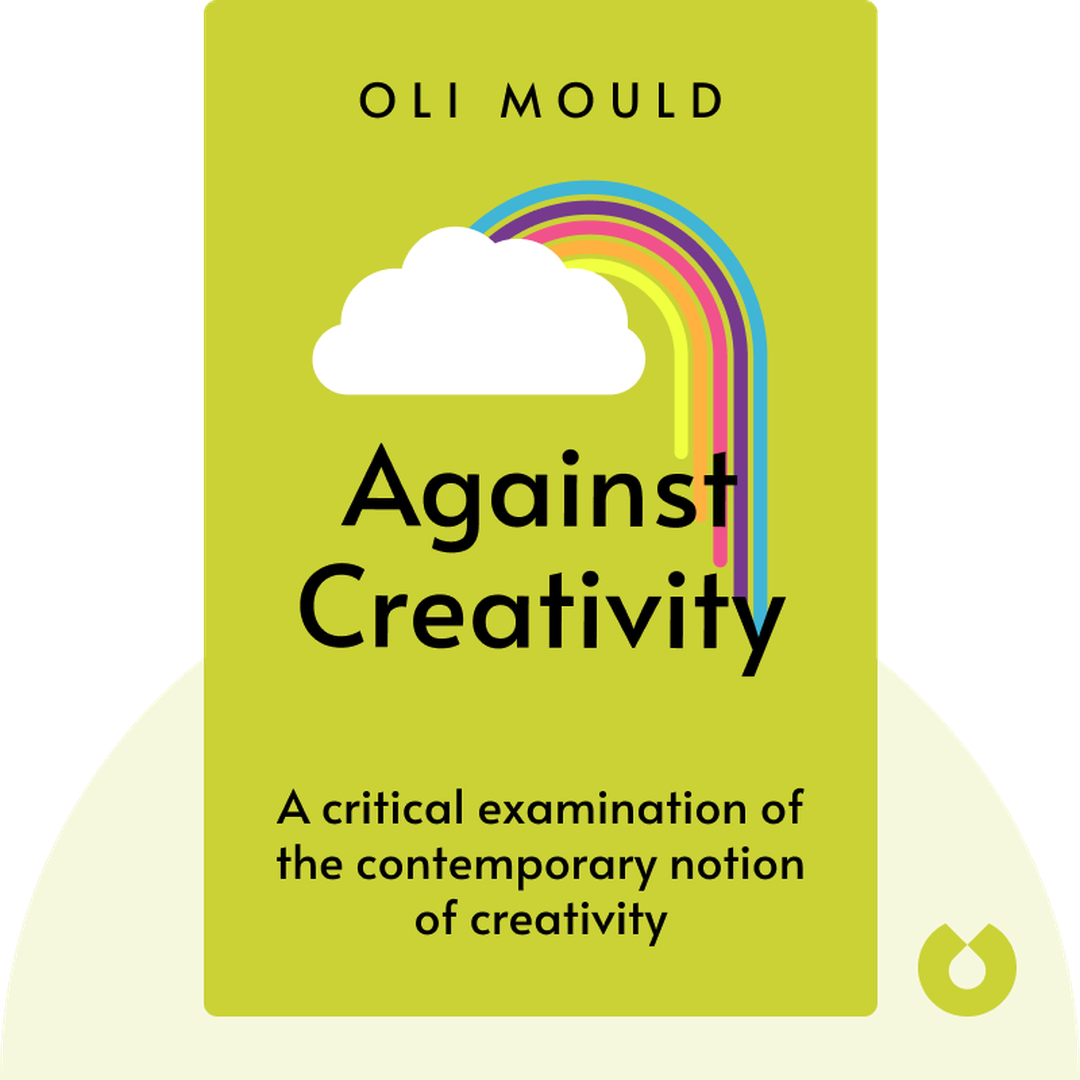
Against Creativity (2018) is a critical examination of the contemporary notion of creativity. This counterintuitive treatise proposes that the modern mandate to “be creative” might harbor hidden downsides.
Who Should Listen to Against Creativity?
- Workers tired of having to do more with less
- Activists seeking real solutions to contemporary problems
- Anyone interested in understanding the negatives of neoliberalism
Books Similar to Against Creativity
Readers who enjoyed this also liked these titles.