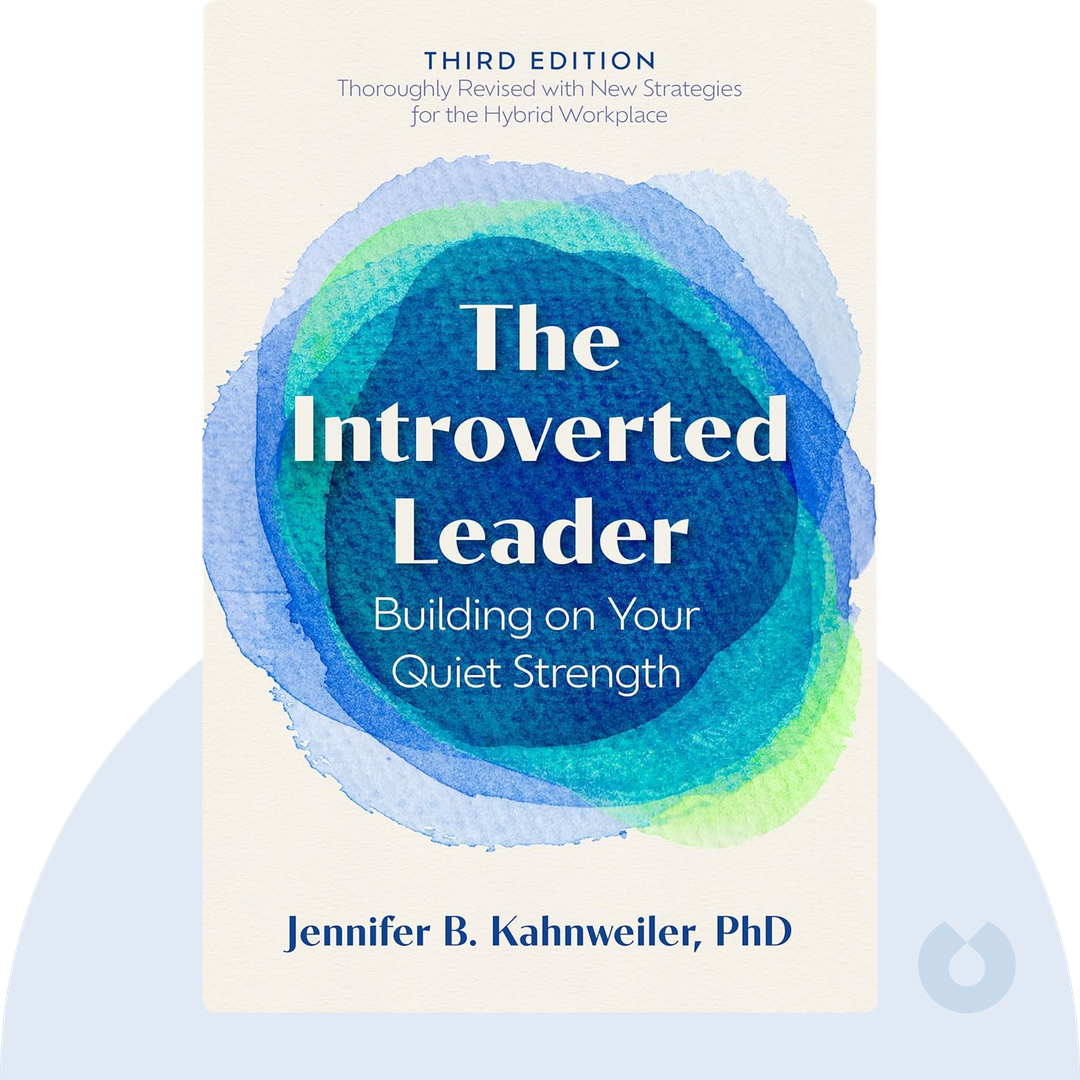
The Introverted Leader
Start ListeningDownload Try free on iPhoneScan to start in 5 seconds
Categories:
If You're Curious About These Questions...
You should listen to this audiobook
- Have you ever wondered why some of the most effective and influential leaders are actually the quietest people in the room?
- What’s the secret to commanding a high-stakes meeting without having to be the loudest voice in the conversation?
- What if you could leverage your natural introverted traits to become a more powerful leader than your extroverted peers?
Listen to The Introverted Leader — Free Audiobook
Loading player...
Key Takeaways from The Introverted Leader
- Discover the four predictable challenges introverted leaders face—stress, perception gaps, career derailers, and invisibility—and learn how to navigate them without changing your fundamental personality.
- Understand how to close damaging 'perception gaps' where your thoughtful silence is misread as aloofness, ensuring your quiet competence is clearly seen and valued by others.
- Learn why setting firm boundaries to protect your limited social energy is a healthy, essential leadership skill rather than a sign of laziness.
- Master the 4 P's framework—Preparation, Presence, Push, and Practice—to steadily expand your leadership capacity through small, manageable experiments.
- Find out how to transform public speaking from a dreaded energy drain into a powerful asset by adopting an actor's mindset and stepping into a deliberate, purposeful version of yourself.
Learning Tools
Reinforce what you learned from The Introverted Leader
Mind Map
The Introverted Leader
Introvert Reality & Traits+
Challenges in an Extroverted World+
Introverted Leadership Strengths+
Strategies for Success+
Quiz — Test Your Understanding
Question 1 of 10
How do introverts and extroverts primarily differ in how they recover their mental energy?
Question 2 of 10
Why might an introvert miss out on desirable assignments and project funds in a typical office environment?
Question 3 of 10
According to the text, what can happen if an introvert goes too long without spending time alone?
Question 4 of 10
Why are introverts sometimes mistakenly perceived as slow thinkers or less intelligent by their extroverted colleagues?
Question 5 of 10
How might an extrovert misinterpret an introvert's lack of outward emotional expression in the workplace?
Question 6 of 10
What is a major professional advantage of an introvert's tendency to carefully process their thoughts before sharing them?
Question 7 of 10
How do an introvert's natural observational and listening skills contribute to effective leadership?
Question 8 of 10
Which of the following is described as an effective 'introverted way' of networking?
Question 9 of 10
How can introverts overcome the challenge of being perceived as slow to respond during fast-paced meetings?
Question 10 of 10
Why does the author caution introverted leaders against relying entirely on email for communication?
The Introverted Leader — Full Chapter Overview
- 1Recommendation
- 2There are more introverts than you think, even among society's most influential people.
- 3Introverts miss out on chances because they don't step into the limelight.
- 4An introvert’s need for solitude can sometimes become a disadvantage.
- 5Extroverts may misread a cautious, quiet, and reserved colleague.
- 6Carefully choosing words is one of an introvert’s core assets.
- 7Introverts’ keen listening and observing skills can make them excellent leaders.
- 8Networking is often viewed as an exclusively extrovert chore — yet there’s an introvert-friendly way to do it.
- 9In today’s extroverted business culture, introverted leaders must push their limits hard to succeed.
- 10Preparation and practice can help advance an introverted leader’s career.
The Introverted Leader Summary & Overview
Kahnweiler explores the specific challenges introverts face in an extroverted business world. She then sets out to show how introverted executives can push their limits, employ their characteristic strengths and still become great leaders.
Who Should Listen to The Introverted Leader?
- Anyone who is introverted and interested in leadership
- Anyone who is extroverted and wants to better understand their introverted colleagues
- Anyone coaching or mentoring prospective leaders
Books Similar to The Introverted Leader
Readers who enjoyed this also liked these titles.