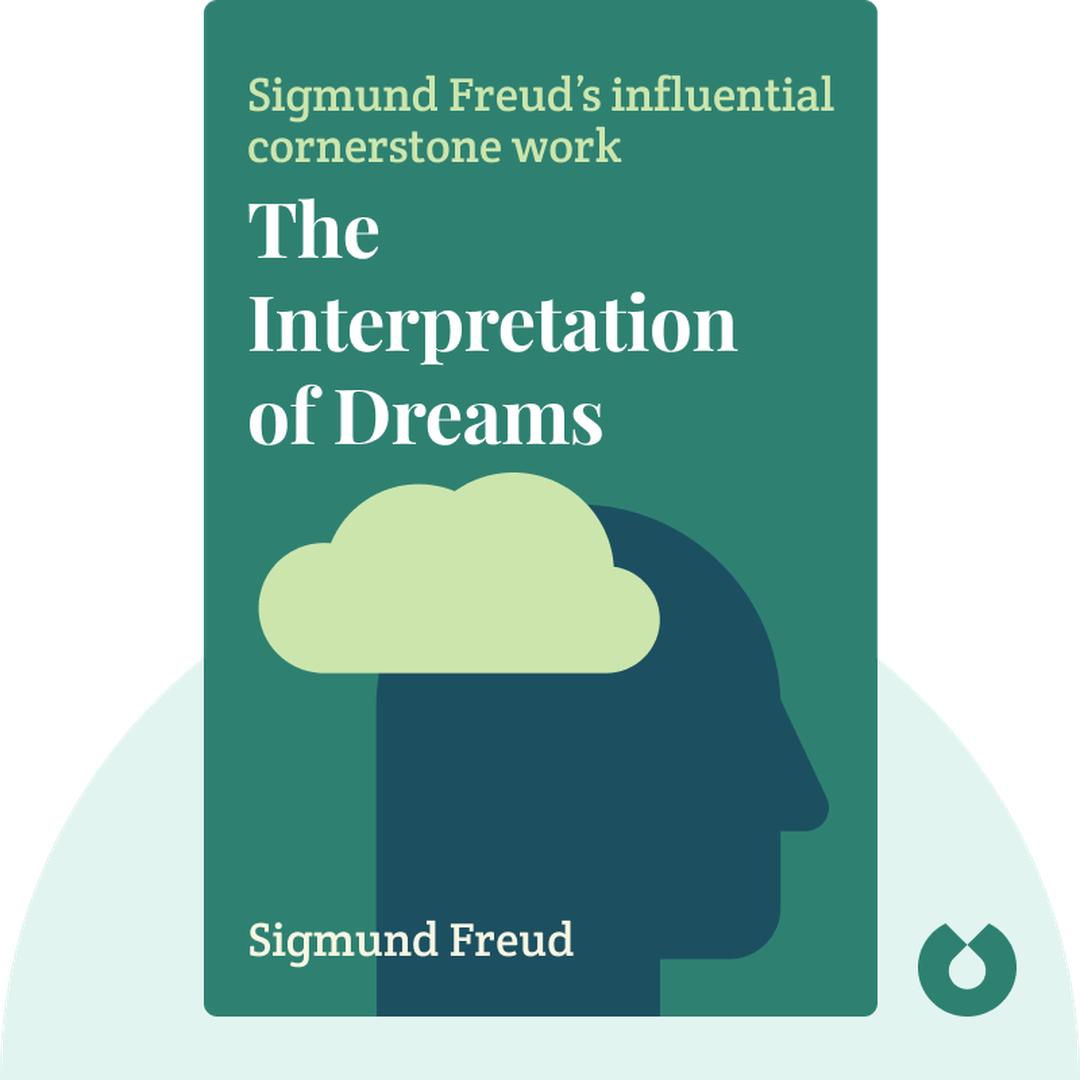
The Interpretation of Dreams
Start ListeningDownload Try free on iPhoneScan to start in 5 seconds
Categories:
If You're Curious About These Questions...
You should listen to this audiobook
- Have you ever wondered why your dreams often feel like a coded message, hiding deep-seated desires behind a mask of bizarre imagery?
- What if you could decode the secret language of your mind and discover the hidden connection between your daily life and your most vivid dreams?
- Are you curious about how your brain transforms forgotten childhood memories and forbidden wishes into the strange stories you experience every night?
Listen to The Interpretation of Dreams — Free Audiobook
Loading player...
Key Takeaways from The Interpretation of Dreams
- Discover why ancient interpretations of dreams as prophecies are unscientific, and how relating them to your real memories unlocks your unconscious mind.
- Understand that all dreams, even confusing or deeply painful ones, ultimately serve as a form of wish fulfillment for our hidden desires.
- Learn how the psyche acts as an internal censor, forcing dreams to distort and disguise their true meanings to protect you from suppressed emotions.
- Find out how your mind sources dream material from a combination of recent daily experiences, profound childhood memories, and physical bodily stimuli during sleep.
- Master the mechanisms of dream synthesis by recognizing how the brain uses condensation to compress details and displacement to shift focus from significant issues to trivial elements.
Learning Tools
Reinforce what you learned from The Interpretation of Dreams
Mind Map
The Interpretation of Dreams
Core Premise+
Wish Fulfillment+
Sources of Content+
Dream Synthesis+
Symbols & Indirect Representation+
Common Dreams+
Clinical Value+
Quiz — Test Your Understanding
Question 1 of 8
How did Sigmund Freud's approach to interpreting dreams differ from ancient classical methods?
Question 2 of 8
According to the text, why do many dreams disguise their true meaning, often resulting in distorted or painful imagery?
Question 3 of 8
If a person experiences a physical stimulus during sleep, such as needing to use the bathroom, how is this likely to manifest in a dream according to Freud?
Question 4 of 8
What does Freud mean by the psychological process of 'displacement' in dream formation?
Question 5 of 8
In Freud's theory of indirect representation, what do objects like a 'king' and 'queen' typically symbolize in a dream?
Question 6 of 8
Based on the text, what repressed childhood desire is fulfilled by the common dream of being naked in public?
Question 7 of 8
Why might a child unconsciously wish for the death of a parent, according to Freud's interpretation of childhood desires?
Question 8 of 8
How does the psychoanalytic interpretation of dreams assist in the treatment of psychological conditions like psychosis or neuroses?
The Interpretation of Dreams — Full Chapter Overview
- 1Recommendation
- 2Ancient dream interpretations were unscientific; a better method is to link dreams to real psychic memories.
- 3All dreams satisfy wishes, though most of them appear in disguise.
- 4The material of dreams can arise from several different sources.
- 5Dream content is compressed, shifted, and woven together into coherence by the psyche.
- 6Dreams convey thoughts indirectly or by means of symbols.
- 7Certain dreams are universal; they even arise from identical roots.
- 8Children may yearn for a parent’s death to be closer to the parent of the opposite sex.
- 9Understanding dreams is crucial for grasping the psyche and resolving its problems.
The Interpretation of Dreams Summary & Overview
Sigmund Freud’s cornerstone work, The Interpretation of Dreams (1900), was one of the most influential books of the twentieth century and continues to shape the way we think and create. These blinks offer a fascinating insight into Freud’s understanding of dreams: what they mean, where they come from, how they are formed and how we can understand them.
Who Should Listen to The Interpretation of Dreams?
- Students of psychology, neuroscience or history
- Dreamers who want to understand what their minds are trying to tell them
Books Similar to The Interpretation of Dreams
Readers who enjoyed this also liked these titles.