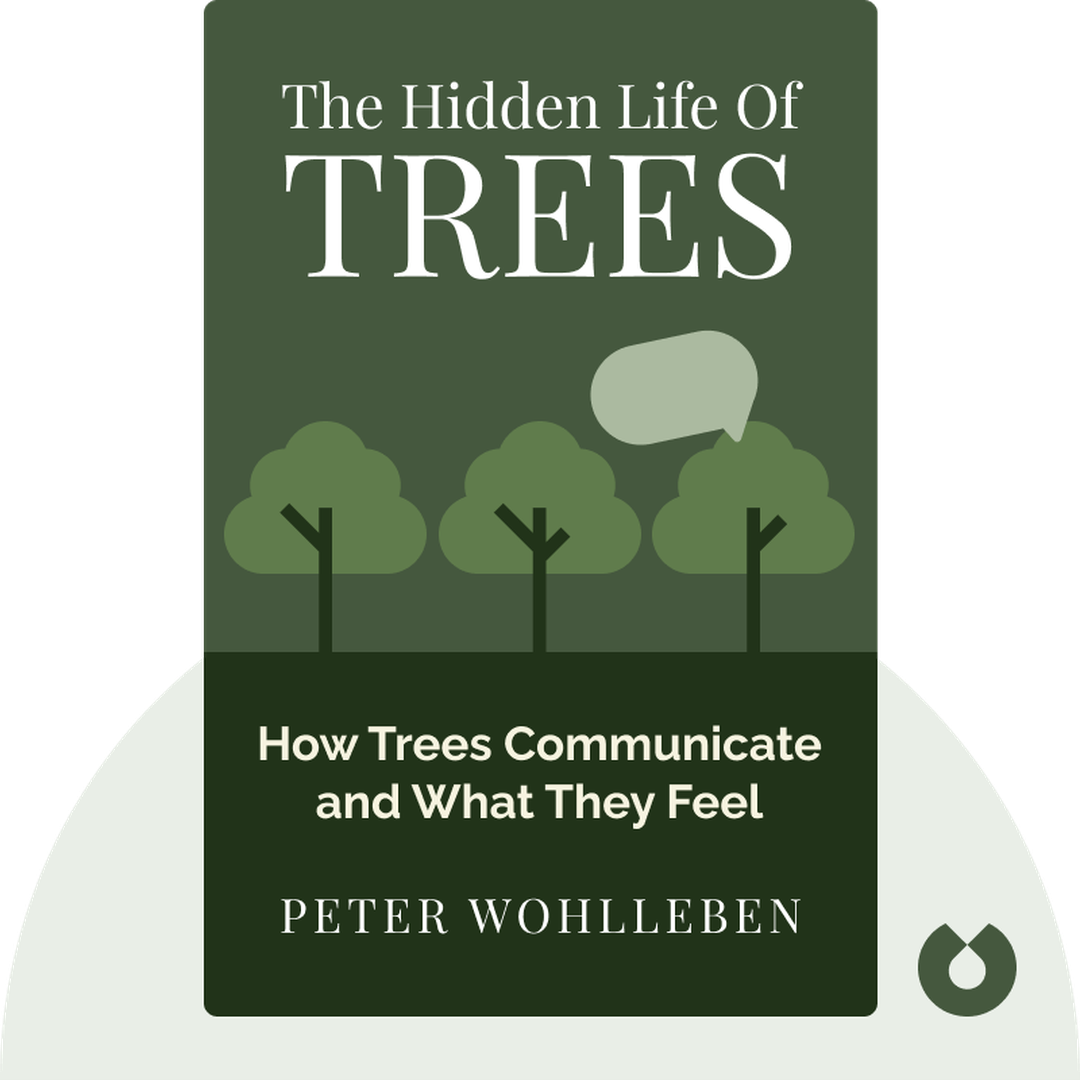
The Hidden Life of Trees
Start ListeningDownload Try free on iPhoneScan to start in 5 seconds
Categories:
If You're Curious About These Questions...
You should listen to this audiobook
- Did you know that trees use a complex, underground 'social network' to send warnings and share food with their neighbors?
- Have you ever wondered how trees can remember past events and use that knowledge to prepare for the future?
- What if you could discover the secret ways trees support their weakest members to ensure the survival of the entire forest?
Listen to The Hidden Life of Trees — Free Audiobook
Loading player...
Key Takeaways from The Hidden Life of Trees
- Discover how trees communicate and support each other through an intricate underground fungal network to exchange nutrients and warn neighbors of danger.
- Understand the surprising parenting habits of trees, including how older trees deliberately shade their offspring to slow their growth and ensure long-term resilience.
- Learn how trees exhibit remarkable adaptive learning by taking in environmental information and altering their physical structure, such as thickening their bark to resist strain.
- Explore the powerful symbiotic partnerships trees form with specific fungal species to optimize water absorption, driving complex biological processes that still puzzle scientists today.
- Uncover the ruthless yet balanced survival tactics of various tree species and understand their vital role in regulating the climate by removing massive amounts of carbon dioxide.
Learning Tools
Reinforce what you learned from The Hidden Life of Trees
Mind Map
The Hidden Life of Trees
Global Ecosystem Role+
Lifecycle & Growth+
Personality & Intelligence+
Communication Methods+
Community & Cooperation+
The Fungal Network+
Threats & Defenses+
Human Impact & Forestry+
Quiz — Test Your Understanding
Question 1 of 8
According to the text, what crucial role do trees play in the global water cycle?
Question 2 of 8
What biological process is the author referring to when he says a tree is 'basically using the toilet'?
Question 3 of 8
Despite living for several hundred years and producing countless seeds, how many offspring does an average tree successfully raise to adulthood?
Question 4 of 8
How do trees demonstrate 'personality' and the ability to learn from past experiences, according to the author's observations of oak trees?
Question 5 of 8
How does an elm or Scots pine tree cleverly defend itself against a caterpillar infestation?
Question 6 of 8
Why did a 400-year-old tree stump observed by the author still have living wood on its outside despite having no leaves for photosynthesis?
Question 7 of 8
What is the primary exchange that occurs in the symbiotic relationship between trees and fungi?
Question 8 of 8
According to the text, what is a major misconception held by the traditional forestry industry regarding tree growth?
The Hidden Life of Trees — Full Chapter Overview
- 1Recommendation
- 2The planet’s lungs: Trees play a vital role in Earth’s water and carbon dioxide cycles.
- 3Deep roots: Trees interact with forest soil in many different ways.
- 4High child mortality: Young trees lead dangerous lives.
- 5Nursery school: Trees have personalities and can learn.
- 6Chatterbox: Trees communicate in different ways, both with their own kind and other creatures.
- 7A tree as a friend: Trees help one another.
- 8Lucky mushrooms: Trees deliberately work with fungi.
- 9That hurts! Trees protect themselves from injury.
- 10Respect: Trees should be treated humanely, just like animals.
- 11Final summary
The Hidden Life of Trees Summary & Overview
Trees are engaged in countless complex cycles and they constantly struggle for water, light and their own survival. This struggle has led to some astonishing abilities: trees communicate with one another, give each other assistance, collaborate with fungi and other creatures, have memories and have even developed their own version of the internet!
Who Should Listen to The Hidden Life of Trees?
- Anyone who’d like to experience the woods in a very new way
- Students of biology and ecosystems
- People who work in farming or forestry, or who have their own garden
Books Similar to The Hidden Life of Trees
Readers who enjoyed this also liked these titles.