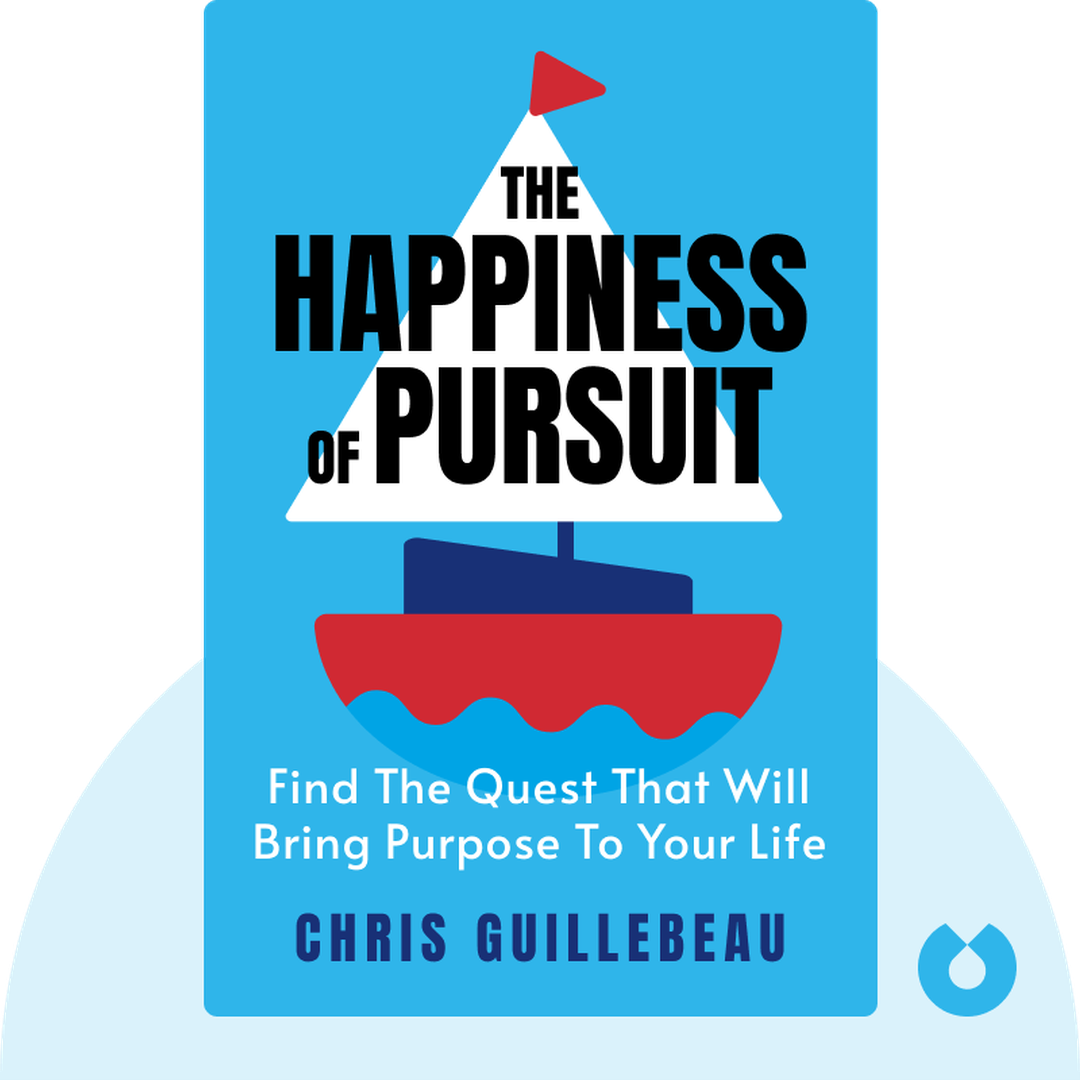
The Happiness of Pursuit
Start ListeningDownload Try free on iPhoneScan to start in 5 seconds
Categories:
If You're Curious About These Questions...
You should listen to this audiobook
- What if the secret to lasting happiness isn't finding peace, but embarking on a 'quest' that challenges everything you know?
- Are you curious about how ordinary people—from tree-dwellers to global cooks—find extraordinary purpose through one singular, audacious goal?
- Have you ever wondered why the most difficult personal journeys often lead to the most life-affirming rewards?
Listen to The Happiness of Pursuit — Free Audiobook
Loading player...
Key Takeaways from The Happiness of Pursuit
- Understand what constitutes a true life quest and why embracing difficult challenges is essential for profound self-discovery.
- Discover how to pinpoint your true calling using a simple formula: combine personal dissatisfaction with a big idea and the willingness to take action.
- Learn how to maintain motivation for big goals by breaking your journey into manageable, gamified tasks that let you 'level up' in real life.
- Master the fear of failure by actively seeking out rejection and transforming it into an empowering source of energy and courage.
- Find out how to pursue ambitious dreams on a limited budget or tight schedule by creatively adapting your goals to fit your current circumstances.
Learning Tools
Reinforce what you learned from The Happiness of Pursuit
Mind Map
The Happiness of Pursuit
The Anatomy of a Quest+
Finding Your Calling+
Sustaining Motivation+
Managing Constraints+
The Value of the Journey+
Personal Transformation+
Life After the Quest+
Actionable Steps+
Quiz — Test Your Understanding
Question 1 of 8
What formula does the author use to describe how some quests arise from a sense of discontent?
Question 2 of 8
How did Steve Kamb stay motivated to complete his quest of changing his boring life into an exciting one?
Question 3 of 8
What is the primary lesson from Jia Jiang’s 100 days of seeking out rejection?
Question 4 of 8
If a desired quest seems too expensive or time-consuming, what does the author recommend doing?
Question 5 of 8
According to the book, why do people who turn their quest into a vocation, like comedian Jerry Seinfeld, continue to practice their craft even after achieving huge success?
Question 6 of 8
How does the author view the role of failure within the pursuit of a quest?
Question 7 of 8
What is the author's advice for dealing with the feelings of emptiness or lack of direction after completing a major quest?
Question 8 of 8
What actionable advice does the author give to those who want a change but are not yet ready to commit to a massive quest?
The Happiness of Pursuit — Full Chapter Overview
- 1Recommendation
- 2Many people feel compelled to embark upon a truly life-affirming journey.
- 3A quest begins when an inner calling is sparked and propelled by external forces.
- 4Trust yourself and welcome rejection to remain strongly motivated to finish your quest.
- 5Whatever your passions or personal situation, no quest is too large or too costly.
- 6Chasing what you love is its own intrinsic reward.
- 7If your life feels aimless, you must discover your own quest.
- 8Quests can improve your life for the better, and they also transform people for the better.
- 9Once you complete a quest, finding another will restore a renewed sense of purpose to your life again.
The Happiness of Pursuit Summary & Overview
The Happiness of Pursuit is about embarking on a quest to fill your life with a sense of purpose. It explains how the process of finding and following a personal journey can be deeply rewarding and life-affirming. The reader can expect to come across many interesting case studies of people who have followed their passions – from a young environmentalist who spent a year living in a Tasmanian tree to an Oklahoma woman who dedicated herself to cooking a meal from every country in the world.
Who Should Listen to The Happiness of Pursuit?
- Anyone who wants to pursue their dreams
- Anyone who’s dissatisfied with their current life
- Anyone who lacks the courage to make a big change
- Anyone who’s struggling with a personal journey
Books Similar to The Happiness of Pursuit
Readers who enjoyed this also liked these titles.