If You're Curious About These Questions...
You should listen to this audiobook
- Have you ever wondered why it feels so difficult to bridge the gap between a traditional upbringing and your own modern identity?
- What if you could find a "greater freedom" by simply refusing to fit into the narrow boxes that society and culture have built for you?
- Are you curious about how women are successfully redefining beauty, faith, and independence when their family’s expectations don't align with their own?
Listen to The Greater Freedom — Free Audiobook
Loading player...
Key Takeaways from The Greater Freedom
- Understand how growing up in a tug-of-war between Arab and Western cultures compels diaspora women to forge a unique identity amidst conflicting societal expectations.
- Discover why the severe lack of positive media representation and the reliance on lazy caricatures actively harm the self-image and development of children in immigrant communities.
- Learn how relentless Eurocentric beauty standards pressure Arab women into painful physical conformity, such as toxic hair straightening and intense waxing routines.
- Explore the stifling contradictions of Middle Eastern societies, where community gossip heavily polices female sexuality and places the immense burden of abstaining while appearing sexy solely on women.
- Find out how internalizing the strict social judgments of Arab culture while living in Western societies leads young women into fraught relationships with rebellion, their bodies, and their own sexuality.
Learning Tools
Reinforce what you learned from The Greater Freedom
Mind Map
The Greater Freedom
Identity & Representation+
Beauty Standards+
Sexuality & Shame+
Marriage Expectations+
Religion & Islamophobia+
Feminism & Sexism+
Immigration & Belonging+
Quiz — Test Your Understanding
Question 1 of 8
Why does Alya argue that poor media representation is especially harmful to children in immigrant communities?
Question 2 of 8
How did the rise in popularity of Kim Kardashian affect Alya's perception of beauty?
Question 3 of 8
According to the book, what is a major difference in how teenage sexuality is handled in Cairo compared to London?
Question 4 of 8
How did Alya ultimately find liberation from the internalized shame and trauma she associated with sex?
Question 5 of 8
What is a legal consequence mentioned in the book if Alya were to marry a non-Muslim man and have children with him?
Question 6 of 8
Why did Alya and other Arab diaspora members often describe themselves as 'moderate' or 'technically' Muslim?
Question 7 of 8
What point does Alya make regarding Islam and gender equality?
Question 8 of 8
What does Alya identify as a subconscious belief held by many immigrants regarding their status in a new country?
The Greater Freedom — Full Chapter Overview
- 1Recommendation
- 2As a British-raised Arab girl, Alya felt torn between two distinct cultures for years.
- 3Arab women face immense pressure to look good; a beauty ideal largely defined by European physical features and standards.
- 4Alya experienced puberty in Cairo and London, tuning her into the contradictions young Arab women face each day across cultures.
- 5Alya’s internalized shame around sex set her up for years of traumatic experiences in her sexual life.
- 6Across the Arab world, marriage becomes another minefield of suffocating expectations for women.
- 7Between rising Islamophobia in Britain and her Muslim identity, Alya struggled to find belonging and her voice.
- 8Alya’s embrace of feminism grew from troubling experiences she faced in both the West and Middle East alike.
- 9Alya has learned that, as an immigrant, making a home is ultimately about perspective.
The Greater Freedom Summary & Overview
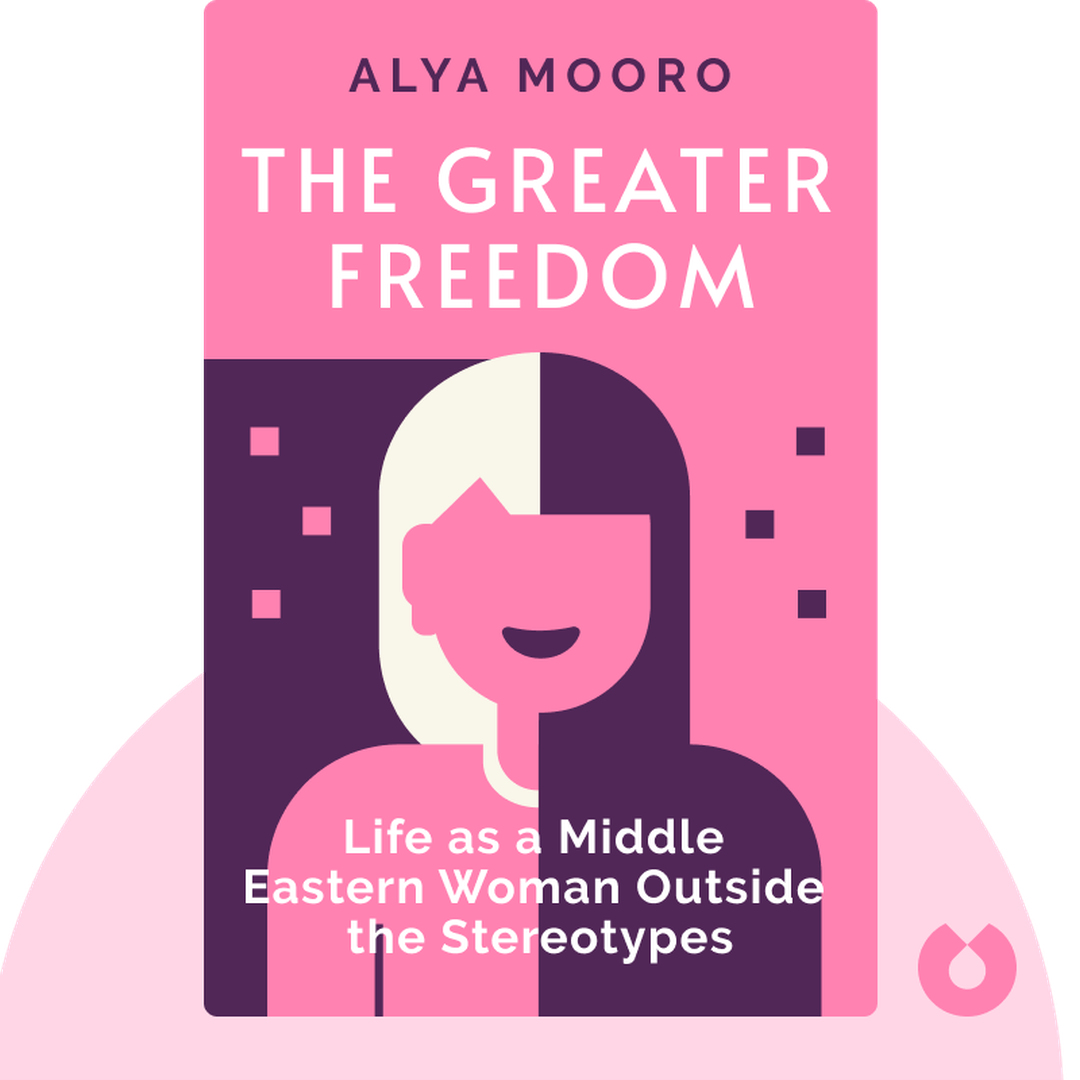
The Greater Freedom (2019) chronicles one British-Egyptian woman’s struggle to forge her own identity from the two cultures that raised her. Using stories from her own background, detailed research, and interviews with fellow women of the Arab diaspora, author Alya Mooro examines issues including sexuality, Islam, beauty standards, and immigration. She ultimately finds that there is freedom in choosing to exist in-between established tropes of culture, nationality, and identity.
Who Should Listen to The Greater Freedom?
- Modern women reckoning with their conservative upbringing
- Anyone who has ever felt self-conscious about their appearance
- Anyone whose family is more religious than they are
Books Similar to The Greater Freedom
Readers who enjoyed this also liked these titles.