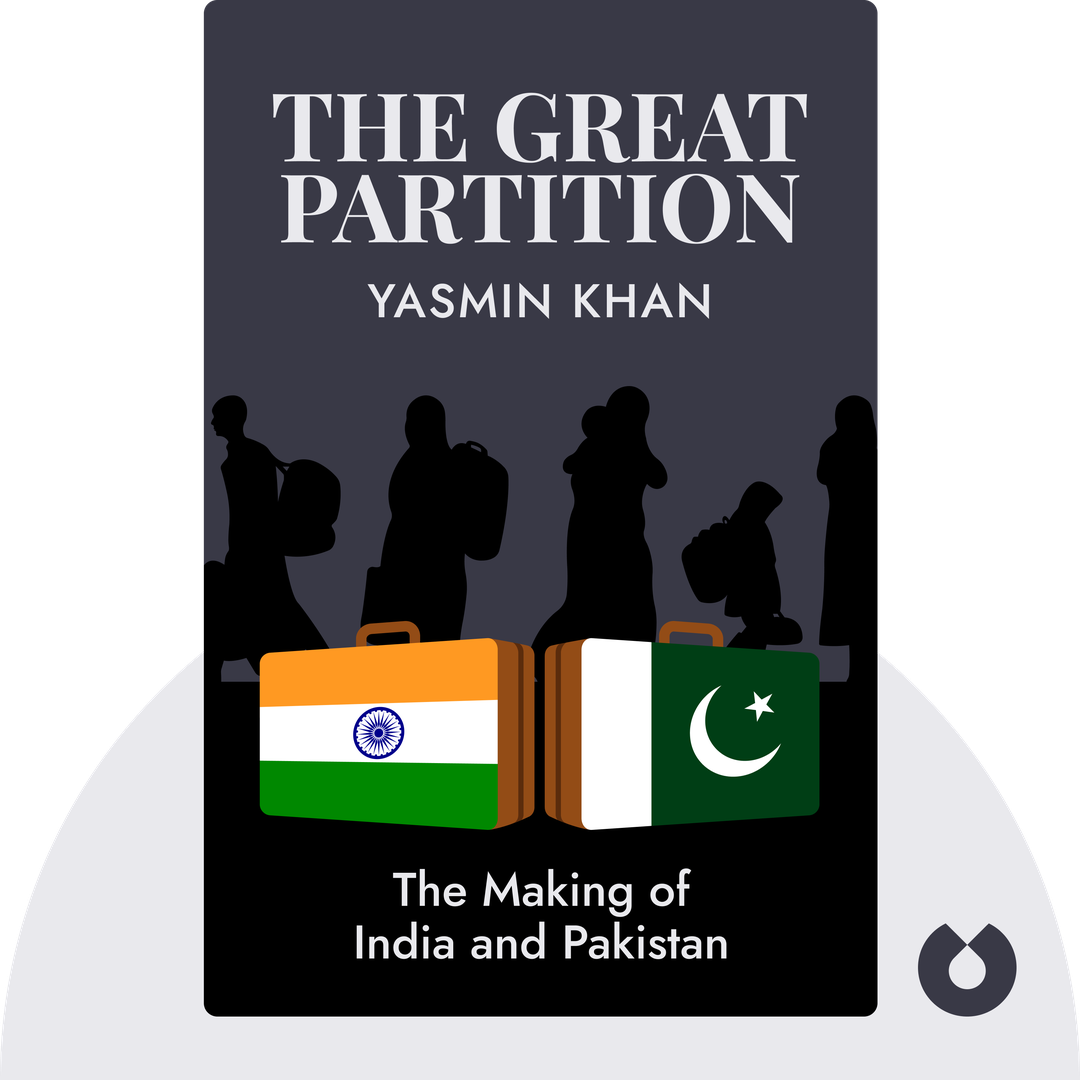
If You're Curious About These Questions...
You should listen to this audiobook
- Did you know that the borders of two modern nations were drawn in just a few weeks by a man who had never even visited the region before?
- Have you ever wondered how centuries of peaceful coexistence between neighbors could collapse into widespread communal violence in a matter of months?
- Are you curious about the secret political pressures that forced the sudden end of the British Empire and still fuel international tensions today?
Listen to The Great Partition — Cinematic Audio Edition
Loading player...
Key Takeaways from The Great Partition
- Discover how centuries of peaceful coexistence between diverse communities were destroyed in just two years by top-down political decisions.
- Understand how World War II bankrupted the British Empire, transforming India's methodical fight for independence into a rushed and chaotic withdrawal.
- Learn why the winter elections of 1945–1946 fractured the subcontinent along religious lines, giving the demand for a separate Pakistan an undeniable democratic mandate.
- Explore how the collapse of constitutional negotiations in 1946 triggered a fatal shift from political disagreement to devastating communal warfare.
- Examine the frightening speed at which institutional neutrality dissolved, as local police and civil servants succumbed to religious nationalism and left everyday citizens defenseless.
Learning Tools
Reinforce what you learned from The Great Partition
Mind Map
The Great Partition
Post-WWII Geopolitical Shift+
Political Collapse (1945-1946)+
Administrative Breakdown+
Social Transformation+
The Myth of Neat Partition+
Quiz — Test Your Understanding
Question 1 of 8
What was the primary reason the British government, led by Clement Attlee, decided to rapidly decolonize India after World War II?
Question 2 of 8
What was the critical political outcome of the winter elections of 1945–46?
Question 3 of 8
How did the British Cabinet Mission of 1946 attempt to solve the political deadlock before the partition?
Question 4 of 8
What was the intended purpose of 'Direct Action Day' declared by Jinnah on August 16, 1946, and what was the actual result?
Question 5 of 8
According to the text, how did the escalating communal violence affect social hierarchies, such as those experienced by Begum Ikramullah in Delhi?
Question 6 of 8
How were humanitarian efforts, such as Fatima Begum’s rescue of Muslim women in Bihar, utilized politically?
Question 7 of 8
Which of the following is cited as a direct economic consequence of the new international borders created by Partition?
Question 8 of 8
What is the text's central conclusion regarding the historical narrative of the Partition of India?
The Great Partition — Full Chapter Overview
- 1Recommendation
- 2A world remade
- 3The Raj unravels
- 4Crossed the point of no return
- 5History at a human scale
- 6The myth of a tidy partition
The Great Partition Summary & Overview
The Great Partition (2007) The story of how British India was divided into two separate nations in 1947 exposes the human cost of political decisions made under impossible pressure. Drawing on survivor testimonies and historical records, it demonstrates how centuries of coexistence on the subcontinent collapsed into communal violence and permanent separation
Who Should Listen to The Great Partition?
- History buffs interested in 20th-century decolonization and the end of the British Empire
- Current affairs followers trying to understand the historical roots of contemporary India-Pakistan tensions
- Anyone who enjoys accessible historical narratives that connect past events to present-day issues
Books Similar to The Great Partition
Readers who enjoyed this also liked these titles.