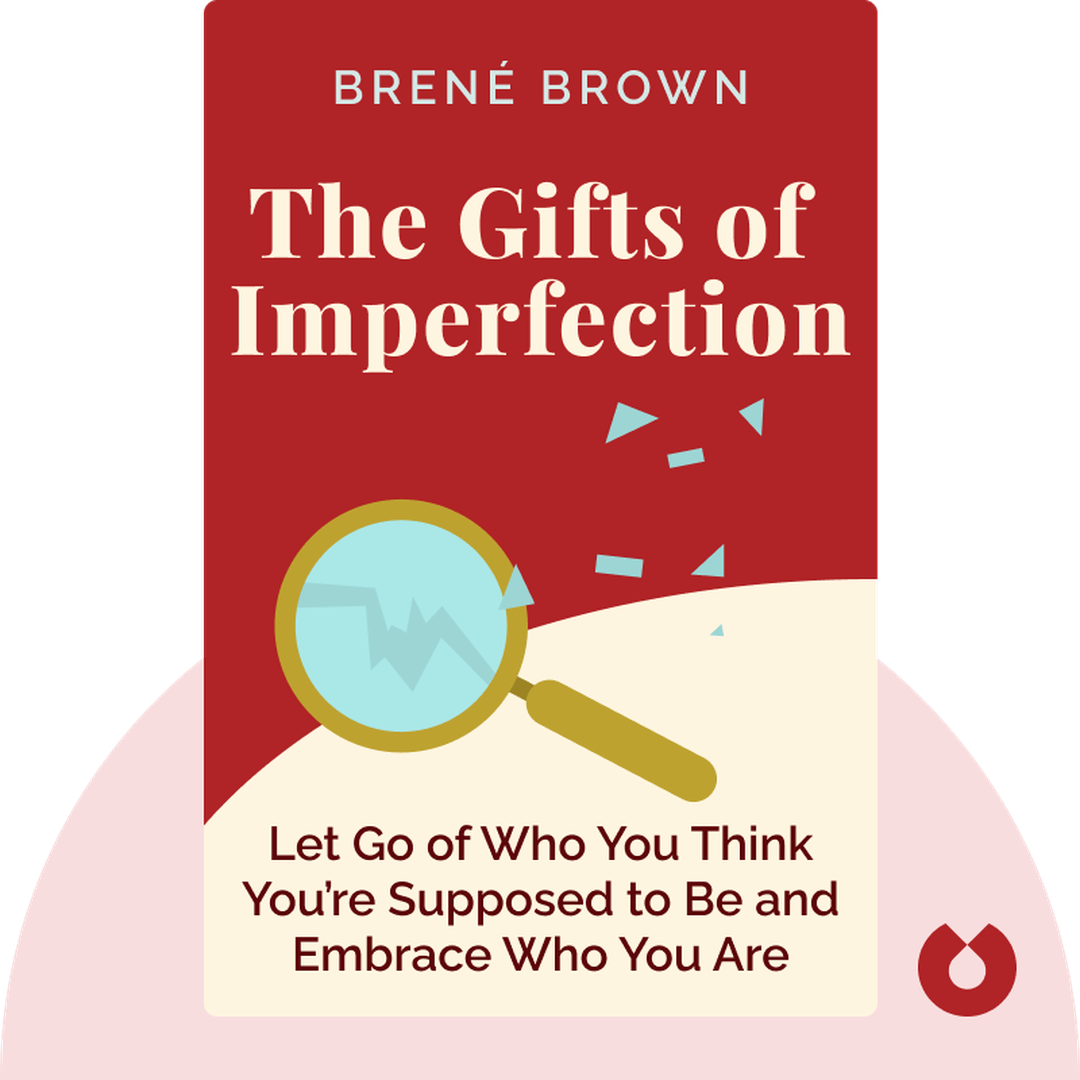
The Gifts of Imperfection
Start ListeningDownload Try free on iPhoneScan to start in 5 seconds
Categories:
If You're Curious About These Questions...
You should listen to this audiobook
- What's the secret to living a wholehearted life, where you can be your authentic self without apology?
- Are you curious about how to break free from the expectations of others and cultivate self-acceptance?
- What if you could let go of the need for perfection and instead find the courage to be vulnerable and truly connect with others?
Listen to The Gifts of Imperfection — Cinematic Audio Edition
Loading player...
Key Takeaways from The Gifts of Imperfection
- Discover why imperfection is not a problem to solve, but the necessary starting point for living with genuine courage, compassion, and connection.
- Learn how to practice authenticity as a daily habit rather than a fixed personality trait, empowering you to let go of who you think you are supposed to be.
- Understand why perfectionism is not a protective shield, but a heavy burden driven by the fear of judgment and the fragile need for others' approval.
- Find out how true empathy for others must start with self-compassion, allowing you to respond to your own struggles with kindness instead of shame.
- Master the art of vulnerability by realizing that courage is not the absence of fear, but the daily choice to be seen and connected despite the risk of criticism.
Learning Tools
Reinforce what you learned from The Gifts of Imperfection
Mind Map
The Gifts of Imperfection
Authenticity+
Overcoming Perfectionism+
Cultivating Resilience+
Gratitude & Joy+
Intuition & Decision Making+
Creativity vs. Comparison+
Play & Rest+
Managing Anxiety+
Identity & Connection+
Quiz — Test Your Understanding
Question 1 of 10
What does the author say about authenticity?
Question 2 of 10
According to the text, what is the fundamental driver behind perfectionism?
Question 3 of 10
How does researcher C.R. Snyder define 'hope' in the context of building resilience?
Question 4 of 10
What is the key to practicing gratitude according to the book?
Question 5 of 10
How does the author describe the relationship between intuition and reason?
Question 6 of 10
Why does comparing ourselves to others often lead to conformity?
Question 7 of 10
According to the author's research, what is the true opposite of play?
Question 8 of 10
What is the recommended approach for dealing with anxiety?
Question 9 of 10
What does the author mean by advising readers to define themselves with 'slashes'?
Question 10 of 10
Why does the author encourage readers to 'be uncool'?
The Gifts of Imperfection — Full Chapter Overview
- 1Recommendation
- 2Authenticity is a choice that takes courage, compassion, and connection.
- 3Fear of shame often hides behind perfectionism.
- 4Build purpose and perspective to stay resilient in the face of adversity.
- 5Practice gratitude for life’s ordinary moments.
- 6To make better decisions, let go of the need for certainty and trust your intuition.
- 7Embrace your creative potential to let go of comparison.
- 8For your well-being, play and rest matter just as much as work.
- 9Learn to manage your anxiety instead of trying to get rid of it.
- 10Recognize the gifts and talents you can share with the world.
- 11Don’t be afraid to be uncool.
- 12Final summary
The Gifts of Imperfection Summary & Overview
The Gifts of Imperfection offers an accessible and engaging walk through the ten principles that you can follow to live a more fulfilling life, defined by courage, connection and compassion towards others. Filled with relatable anecdotes and actionable advice, the book is a useful resource for readers both young and old.
Who Should Listen to The Gifts of Imperfection?
- Anyone who wants to live a more meaningful life
- Anyone who has a great idea, but is afraid to share it with the world
- Anyone troubled by feelings of inadequacy and vulnerability
Books Similar to The Gifts of Imperfection
Readers who enjoyed this also liked these titles.