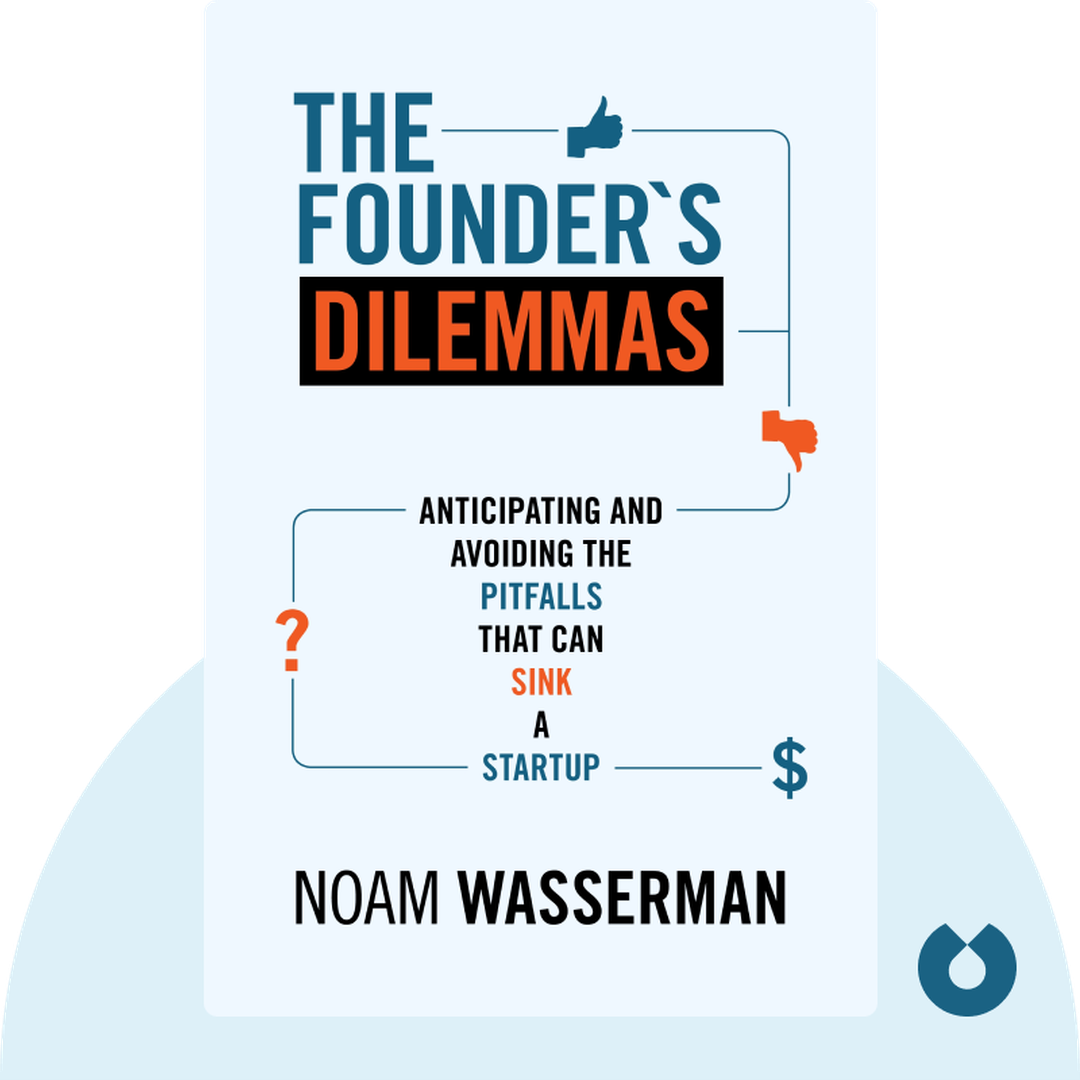
The Founder’s Dilemmas
Start ListeningDownload Try free on iPhoneScan to start in 5 seconds
Categories:
If You're Curious About These Questions...
You should listen to this audiobook
- Did you know that most entrepreneurs face a heartbreaking choice between becoming "rich" or staying "king"—and that trying to achieve both often leads to failure?
- Have you ever wondered why starting a business with your closest friends or family members is statistically one of the most dangerous moves a founder can make?
- What’s the secret to dividing equity among co-founders so that it motivates the team instead of tearing the company apart as it grows?
Listen to The Founder’s Dilemmas — Cinematic Audio Edition
Loading player...
Key Takeaways from The Founder’s Dilemmas
- Discover the distinct motivations that separate career employees from true entrepreneurs, and understand how male and female founders prioritize drivers like autonomy, influence, and altruism.
- Understand the critical role of human capital in a startup, and learn why you must acquire industry-specific expertise or hire talent to cover your crucial weak spots.
- Learn how to build essential social capital through your professional network without falling into the trap of over-specializing or lingering too long in a corporate career.
- Find out how to effectively audit your human, social, and financial resources so you can identify exactly when and why to bring on a co-founder to fill your blind spots.
- Explore the tough decisions and dilemmas startup leaders face daily, including why successful founders often choose to retain company control over accepting massive financial buyouts.
Learning Tools
Reinforce what you learned from The Founder’s Dilemmas
Mind Map
The Founder’s Dilemmas
Founder Motivations+
The Three Capitals+
Co-founder Dynamics+
Hiring Strategies+
Funding Decisions+
Quiz — Test Your Understanding
Question 1 of 8
According to the text, what is a key difference in the top motivations of female entrepreneurs compared to male entrepreneurs?
Question 2 of 8
Why did Curt Schilling's gaming start-up, 38 Studios, face potentially fatal problems?
Question 3 of 8
What is the risk of a potential founder lingering too long at a corporate job before starting a business?
Question 4 of 8
How does the book suggest the title of CEO should ideally be decided among co-founders?
Question 5 of 8
Why does the author advise against splitting company equity immediately at the start of a venture?
Question 6 of 8
What is a proven advantage of hiring employees from a founder's personal network, according to the text?
Question 7 of 8
Why are generalists generally preferred over specialists as early-stage start-up employees?
Question 8 of 8
When might a founder choose to aggressively pursue venture capital instead of bootstrapping?
The Founder’s Dilemmas — Full Chapter Overview
- 1Recommendation
- 2Entrepreneurs are driven to go out on their own for power, influence, autonomy and freedom.
- 3Entrepreneurs require human capital to launch a business. Add talent to reinforce your vulnerable areas well.
- 4New ventures need social capital. Build your network, but don’t linger too long at your old job.
- 5Adequate human, social, and financial capital is crucial. If all else fails, add co-founders to help.
- 6Don’t assign titles arbitrarily. Co-founder roles must be crystal clear right from the beginning for everyone.
- 7Be very cautious when dividing equity. What feels fair today may not remain fair tomorrow.
- 8Hiring within your personal network is simple yet risky. Could you fire your closest friend someday if necessary?
- 9Generalists feel comfortable wearing many hats and adapt quite readily to early startup challenges.
- 10Raising funds can speed product development, but it puts you squarely on the hook to your investors.
The Founder’s Dilemmas Summary & Overview
The Founder’s Dilemmas (2013) reveals exactly what it takes to become the founder of a start-up company. Drawn from the author’s research and case studies, this step-by-step guide will help you navigate the rough waters of your company’s early stages.
Who Should Listen to The Founder’s Dilemmas?
- Budding entrepreneurs ready to start a new business
- Experienced business owners ready for a new challenge
- Investors looking for advice on evaluating start-up companies
Books Similar to The Founder’s Dilemmas
Readers who enjoyed this also liked these titles.