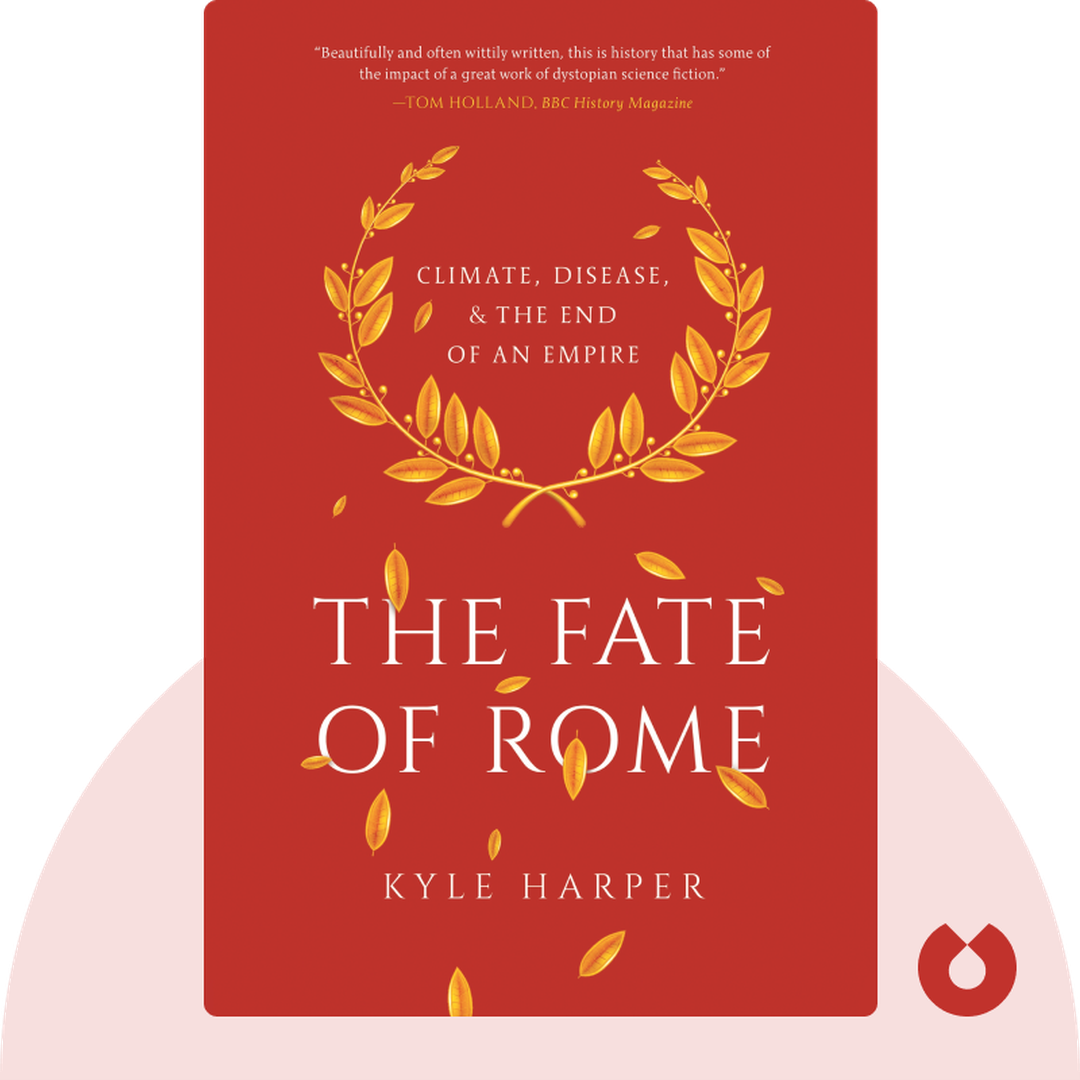
If You're Curious About These Questions...
You should listen to this audiobook
- Did you know that the fall of the Roman Empire was driven as much by shifts in the Earth’s climate as it was by the swords of invading barbarians?
- Have you ever wondered how invisible pathogens and ancient pandemics managed to cripple the most powerful civilization of the Mediterranean?
- What if the secret to Rome's collapse isn't found in political records, but in the silent testimony of tree rings, ice cores, and DNA?
Listen to The Fate of Rome — Free Audiobook
Loading player...
Key Takeaways from The Fate of Rome
- Understand how climate records hidden in tree rings and glaciers are rewriting history by revealing nature's massive role in the Roman Empire's rise and fall.
- Discover how the Roman Empire hit the 'climate lottery' during a period of unusually warm, wet, and stable weather that allowed for unprecedented agricultural prosperity.
- Learn why average Romans were remarkably short despite protein-rich diets, as dense populations and extensive trade routes created perfect conditions for chronic diseases.
- Explore how poor urban sanitation and the agricultural use of human waste exposed Romans to rampant intestinal parasites and deadly seasonal illnesses.
- Uncover the devastating consequences of the Antonine Plague, a catastrophic epidemic likely caused by smallpox that decimated the population and crippled the Roman economy.
Learning Tools
Reinforce what you learned from The Fate of Rome
Mind Map
The Fate of Rome
Nature's Role in History+
Roman Climate Optimum (Rise)+
Endemic Disease & Public Health+
The Antonine Plague (Economic Crisis)+
The First Fall (3rd Century)+
Western Collapse+
Bubonic Plague (Eastern Blow)+
Late Antique Little Ice Age (Final Collapse)+
Quiz — Test Your Understanding
Question 1 of 7
What was the 'Roman Climate Optimum' (RCO) and how did it affect the Roman Empire?
Question 2 of 7
According to the text, what was the primary reason the average Roman citizen was remarkably short compared to modern standards?
Question 3 of 7
What were the broader economic consequences of the Antonine Plague in the late second century AD?
Question 4 of 7
Which combination of factors contributed to the Roman Empire's 'first fall' during the third century?
Question 5 of 7
What environmental factor in the Eurasian steppe indirectly led to the catastrophic Roman military defeat at Adrianople in AD 378?
Question 6 of 7
How did the bubonic plague first infiltrate the Roman Empire's eastern capital of Constantinople in AD 541?
Question 7 of 7
What caused the 'year without summer' in AD 536, which contributed to the final collapse of the Roman Empire?
The Fate of Rome — Full Chapter Overview
- 1Recommendation
- 2An exceptionally favorable climate greatly fueled the Roman Empire’s prosperity.
- 3Disease and poor health were always parts of Roman life.
- 4The Antonine Plague sparked an economic crisis across the Roman Empire.
- 5During the third century, the Roman Empire endured its first fall.
- 6The Roman Empire rebuilt after the first fall, yet it didn’t last.
- 7Bubonic plague delivered the first of two fatal blows to the eastern Roman Empire.
- 8The Roman Empire never rebounded from the Late Antique Little Ice Age.
The Fate of Rome Summary & Overview
Over the years, countless historians have theorized about the causes of the fall of the Roman Empire. The Fate of Rome (2017) tells this story from a slightly different angle, taking into consideration new information about the climate and epidemiological events that played a major role in the prosperity and downfall of one of the largest empires in history.
Who Should Listen to The Fate of Rome?
- Roman history enthusiasts
- Environmentalists and others interested in climate change
- Anyone curious about the causes of the Roman Empire’s fall
Books Similar to The Fate of Rome
Readers who enjoyed this also liked these titles.