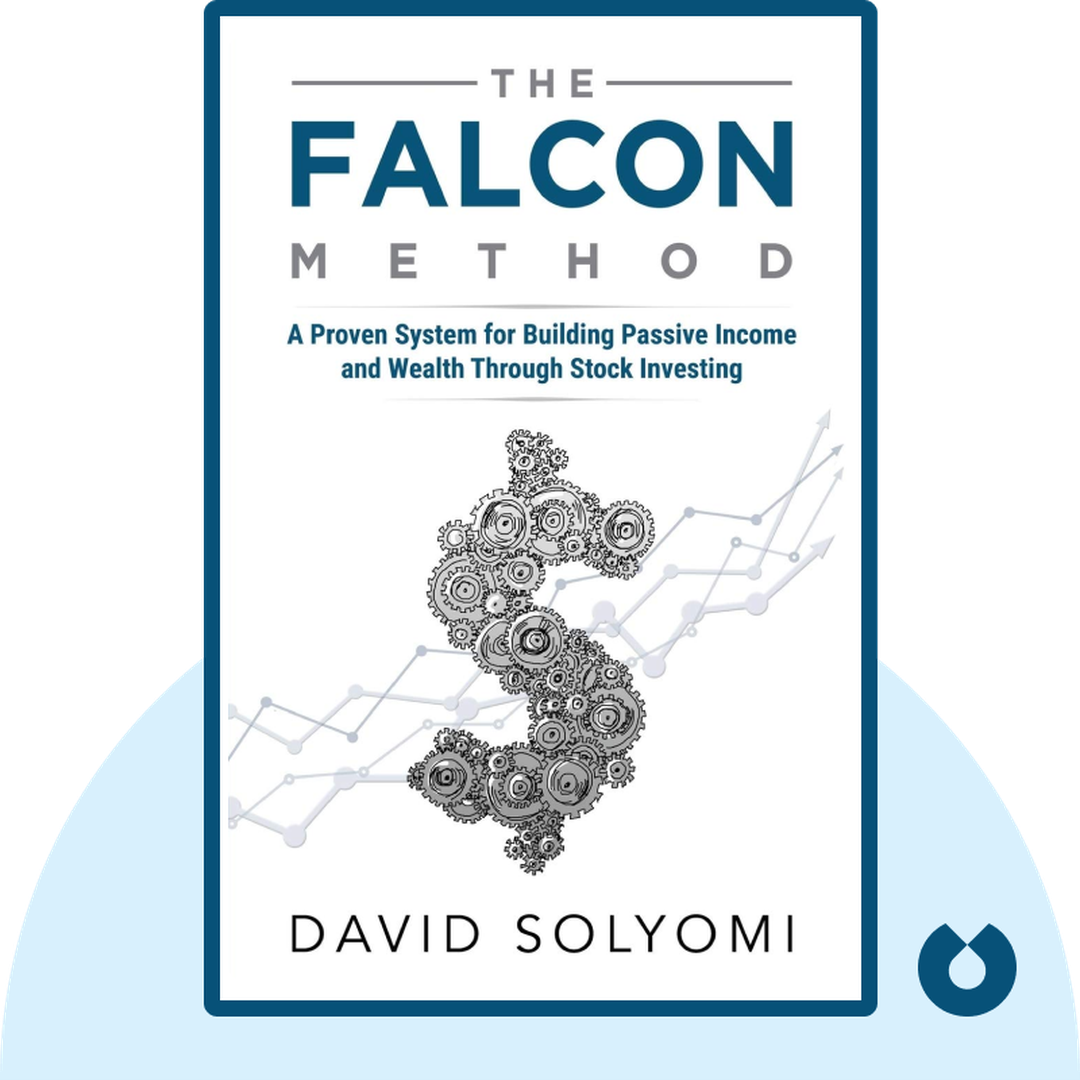
If You're Curious About These Questions...
You should listen to this audiobook
- What’s the secret to removing the hidden psychological biases that lead most casual investors to make costly mistakes?
- Did you know that focusing on a specific set of reliable financial indicators can take the guesswork out of finding the best wealth-building opportunities?
- What if you could follow a structured, numbers-driven process to create a reliable stream of passive income that grows over time?
Listen to The FALCON Method — Free Audiobook
Loading player...
Key Takeaways from The FALCON Method
- Discover why productive assets like company shares are superior to currency-based or unproductive investments for generating reliable, long-term wealth.
- Learn how to evaluate businesses using the 'black box' metaphor by focusing your attention on a company's visible financial inputs and outputs.
- Understand the three telltale signs of a great investment opportunity by identifying companies that strategically use their profits for dividends, share buybacks, and retained earnings.
- Master the FALCON Method's 'buy and hold' strategy to protect your portfolio from emotional decision-making and the short-term inconsistencies of classic active trading.
- Find out how to use objective, quantitative equations to effectively rank stocks and reveal which businesses are truly ripe for your investment.
Learning Tools
Reinforce what you learned from The FALCON Method
Mind Map
The FALCON Method
Core Philosophy+
The 5-Step Process+
Quiz — Test Your Understanding
Question 1 of 9
According to Warren Buffett's classification of investments, what is the fatal flaw of currency-based investments like bonds?
Question 2 of 9
In the 'black box' metaphor used to describe companies, what does the issuance of new shares represent?
Question 3 of 9
How does the FALCON Method primarily differ from the classic 'quant' investing method?
Question 4 of 9
During the first step of the FALCON Method, why is a company's dividend history prioritized over its revenue reports?
Question 5 of 9
Why does the FALCON Method look beyond the S&P 500's 'Dividend Aristocrats' list when selecting top-quality companies?
Question 6 of 9
According to the text, what creates the opportunity for an investor to buy shares of a valuable company at a discount?
Question 7 of 9
Which of the following correctly describes how 'shareholder yield' is calculated in the third step of the FALCON Method?
Question 8 of 9
When ranking the surviving stocks in step four, why does the FALCON Method suggest using a modified version of the Chowder Rule instead of metrics like dividend yield and free cash flow yield?
Question 9 of 9
During the final step of the FALCON Method, subjective judgment is allowed. Which type of stock does the text advise investors to avoid during this step?
The FALCON Method — Full Chapter Overview
- 1Recommendation
- 2Among the various investment types, stocks stand out as clearly superior.
- 3Investing effectively in shares requires a grasp of how companies generate and deploy cash.
- 4The FALCON Method recommends a buy-and-hold portfolio for the best odds of success over time.
- 5Using the FALCON Method, the first step is selecting an initial group of top-quality companies.
- 6The FALCON Method’s second step is finding stocks that can be bought cheaply.
- 7The third step in the FALCON Method is creating reliable filters to refine your shortlisted stocks.
- 8Fourth step of the FALCON Method: Rank the survivors.
- 9In the fifth step of the FALCON Method, apply your own judgment.
The FALCON Method Summary & Overview
The FALCON Method (2017) offers up a precise, numbers-driven investment strategy perfect for the casual investor. The FALCON Method helps investors evaluate a set of assets to find the best opportunities, doing so by using reliable financial indicators and a structured approach designed to limit psychological bias.
Who Should Listen to The FALCON Method?
- People looking to build their wealth
- Those desiring a reliable passive income
- Casual investors in search of a structured process
Books Similar to The FALCON Method
Readers who enjoyed this also liked these titles.