If You're Curious About These Questions...
You should listen to this audiobook
- Have you ever wondered if the world's most successful 'geniuses' possess a secret talent, or if their creative breakthroughs are actually the result of a predictable formula?
- Did you know there’s a precise 'sweet spot' between the familiar and the brand new that determines whether an idea will become a massive hit or a total flop?
- What if you could stop waiting for a 'lightbulb moment' and instead learn the four specific laws that allow anyone to manufacture creative success on demand?
Listen to The Creative Curve — Free Audiobook
Loading player...
Key Takeaways from The Creative Curve
- Discover why an exceptionally high IQ isn't required for innovation, as research reveals that anyone with an IQ over 86 shares the same creative potential as celebrated geniuses.
- Learn how to unlock your inner creativity through purposeful practice by setting tangible goals, challenging your skills, and consistently seeking critical feedback.
- Understand the crucial role of timing and urgency in achieving success, and see how acting quickly on your ideas can elevate you above the competition.
- Recognize how historical context dictates creative success, proving that groundbreaking ideas must perfectly align with the cultural era to be appreciated.
- Master the 'creative curve' by balancing your audience's paradoxical desire for both familiarity and novelty to ensure your ideas don't become a short-lived fad.
Learning Tools
Reinforce what you learned from The Creative Curve
Mind Map
The Creative Curve
Demystifying Genius+
Purposeful Practice+
The Creative Curve Concept+
Timing and Context+
Mass Consumption (The 20% Rule)+
The Social Ecosystem+
Quiz — Test Your Understanding
Question 1 of 8
What is the relationship between intelligence (IQ) and creative potential (divergent thinking) according to the text?
Question 2 of 8
According to Professor K. Anders Ericsson's research, what specific type of practice is necessary to unleash your creative potential?
Question 3 of 8
Why is Charles Darwin widely remembered as a genius for discovering natural selection, while his contemporary Alfred Wallace is largely forgotten?
Question 4 of 8
The 'creative curve' describes humanity's paradoxical desire for which two elements?
Question 5 of 8
How much time do successful creative professionals typically spend consuming material related to their industry in order to understand the creative curve?
Question 6 of 8
How did Beverly Jenkins achieve massive success as a romance novelist despite having no prior writing experience?
Question 7 of 8
What did a 1992 study by the University of California reveal about the careers of innovators and scientists?
Question 8 of 8
According to the book's actionable advice, what specific type of person is crucial to have on your journey to achieving societal recognition as a creative genius?
The Creative Curve — Full Chapter Overview
- 1Recommendation
- 2Creativity thrives on deliberate practice, not intelligence alone.
- 3Achieving genius truly demands impeccable timing and the right historical context.
- 4The creative curve explains our paradoxical craving for both familiarity and novelty.
- 5Maximizing your cultural intake is crucial to understanding the creative curve.
- 6Authors landing in the sweet spot on the creative curve have become publishing sensations today.
- 7Massive success needs the right kind of social network to help you along the way.
The Creative Curve Summary & Overview
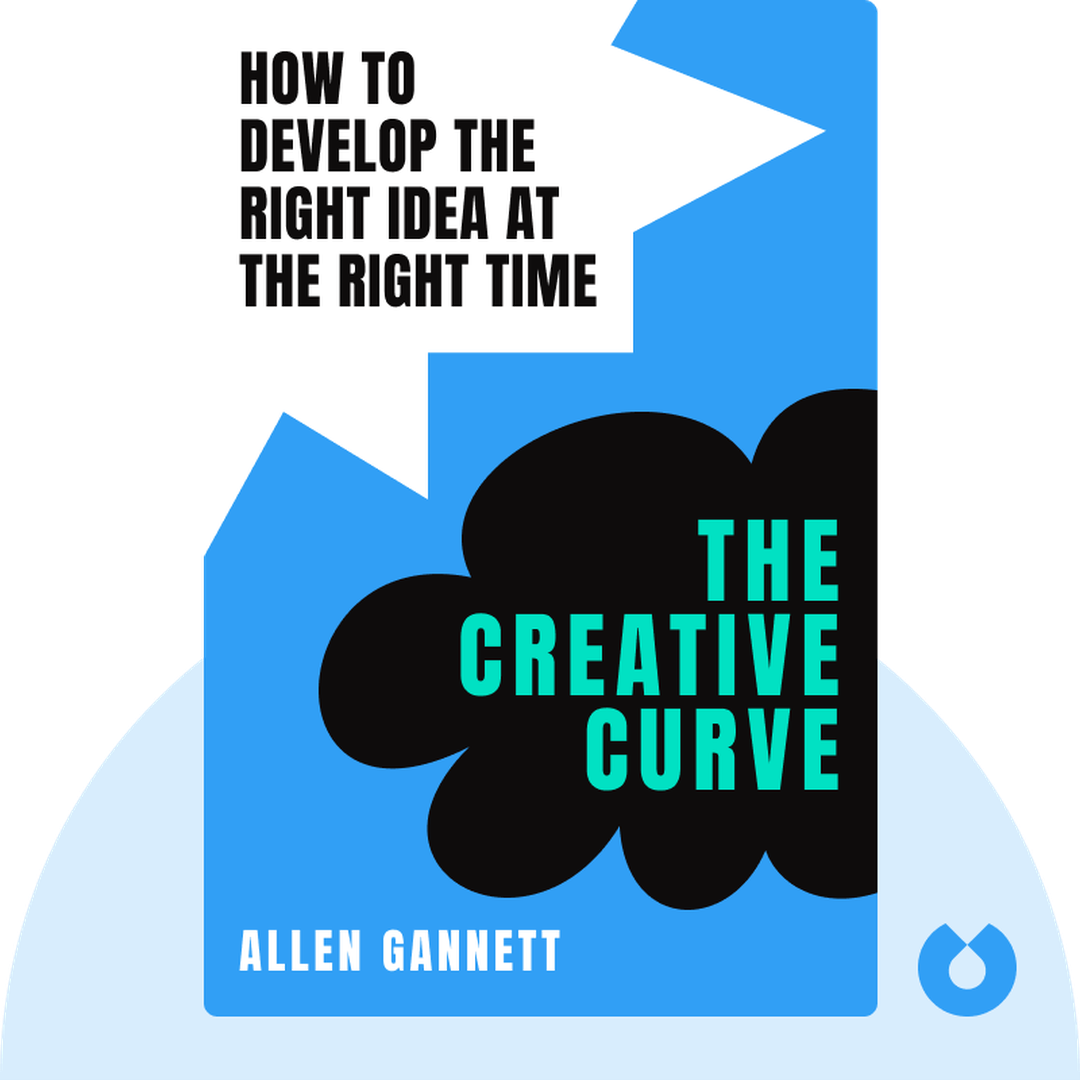
The Creative Curve (2018) provides valuable insights into the true nature of talent. Using examples from scientific research, as well as anecdotal evidence from the careers of certified geniuses, these blinks explore whether creative success is the result of unique inspiration or something far more predictable.
Who Should Listen to The Creative Curve?
- People looking to up their creativity
- Psychology enthusiasts looking for new insights
- Marketers seeking a fresh perspective on what consumers want
Books Similar to The Creative Curve
Readers who enjoyed this also liked these titles.